

Ready & Packaged Foods
All →Vegetables & Legumes
All →Desserts & Confectionery
All →Meat & Protein
All →Grains & Bakery
All →Beverages
All →Milk & Dairy
All →

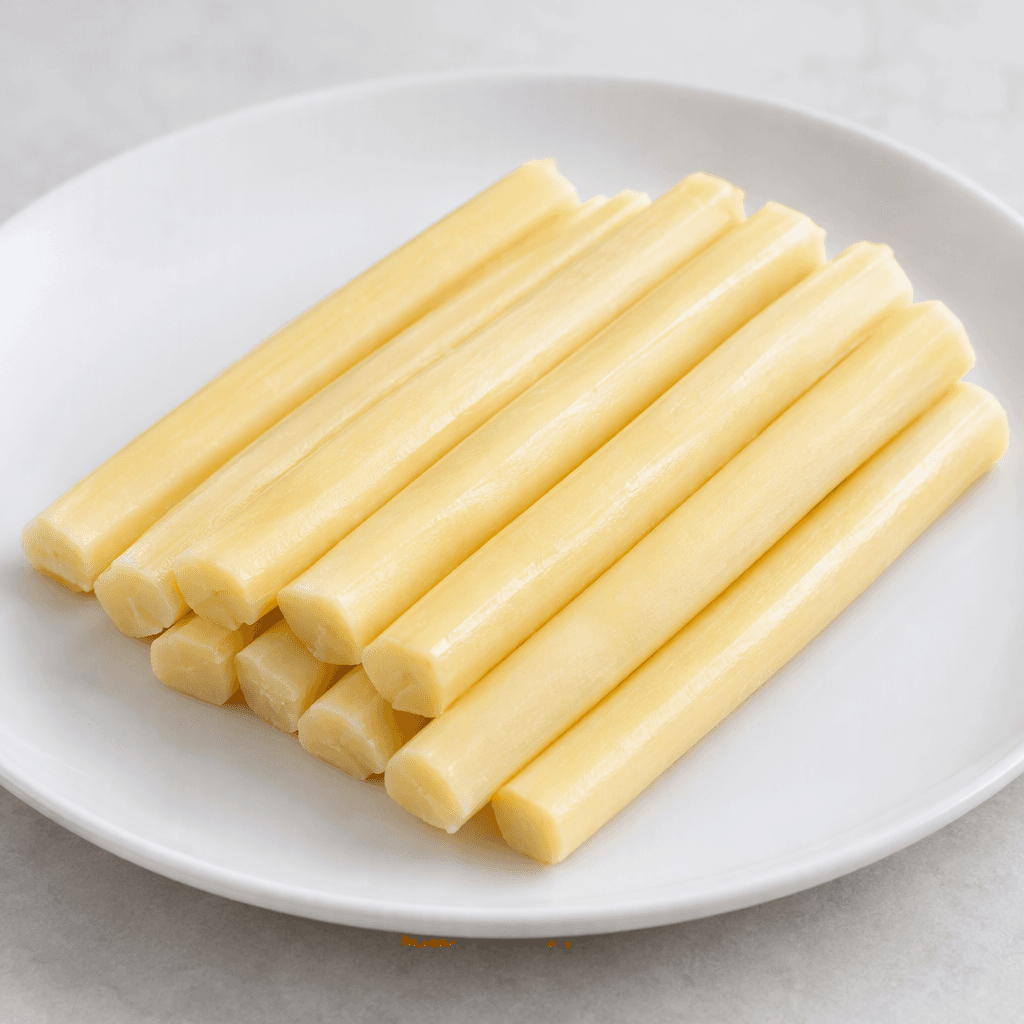
Cheese Sticks Snack Calories
Crunchy baked cheese-flavored snack sticks, salty and savory.
In season: Spring · Summer · Autumn · Winter
CALORIES
GI
POTASSIUM
FIBER
Quick answer
1 pack (medium) of Cheese Sticks Snack (35 g) has 168 calories. That works out to 480 calories per 100 g. It contains 21.7 g of carbs, 4.2 g of protein, 7 g of fat and 0.9 g of fiber. Its 332.5 mg of Sodium covers 14% of the Daily Value. Its glycemic index is 65 (high), so it raises blood sugar quickly.
What is Cheese Sticks Snack?
Cheese sticks snack is a crunchy, baked savoury snack made from dough seasoned with cheese flavouring, rather than sticks of cheese. Its salty, cheesy taste and crisp texture make it an easy grab-and-go option, whether you are packing a lunchbox or looking for something to nibble between meals.
It is commonly eaten straight from the packet, often alongside a sandwich or a piece of fruit. The snack is mainly a source of carbohydrates and fat, with less protein; at 480 calories per 100 g, it is fairly energy-dense. For a more filling snack, pair a modest portion with yoghurt or fresh vegetables, or add it to a lunch instead of eating it on its own.
Cheese Sticks Snack Nutrition Facts
Selected: 100 g
480
KCAL / 100G
Carbs
62g
· 23% DV
Protein
12g
· 24% DV
Fat
20g
· 26% DV
Fiber
2.5g
· 9% DV
DV is the share of the daily value covered, on a 2,000 kcal reference diet.
Calories come from: Carbs 52% · Protein 10% · Fat 38%

Log this food in EatBetter
100,000+ people use it
- Get your daily calorie target
- Snap your meal, log it in seconds
- See every vitamin and mineral

📸 Scan the code to get the app free.

Cheese Sticks Snack Vitamins & Minerals
Vitamins
B12
0.5µg · 21% DV
B2
0.22mg · 17% DV
Vitamin A
120µg · 13% DV
B1
0.15mg · 13% DV
Minerals
Sodium
950mg · 41% DV
Phosphorus
180mg · 26% DV
Calcium
220mg · 22% DV
Selenium
8µg · 15% DV
Potassium ⭐
120mg · 4% DV
How Nutritious Is Cheese Sticks Snack?
Nutrient density
Low
How many vitamins, minerals and how much fiber this food carries per calorie. A high score means a lot of nutrition for few calories.
Satiety score
Low
An EatBetter score computed from fiber, protein and calorie density. A high score means staying full longer on the same calories.
Both scores are calculated per 100 g and do not change with the selected portion. The satiety score is EatBetter's own calculation, not a clinical measure.
Cheese Sticks Snack Glycemic Index
GLYCEMIC INDEX
GLYCEMIC LOAD
Accounts for portion size — a more realistic measure than GI alone.
How to Burn Off Cheese Sticks Snack
To burn the 480 calories in 100 g:
🚶
Walking (5 km/h)
🏃
Running (8 km/h)
🚴
Cycling
🏊
Swimming
Times are calculated with the MET equation for a 70 kg adult. Actual burn varies with your weight, age and pace.
Is Cheese Sticks Snack Processed?
NOVA 3
Processed
1. Unprocessed
2. Minimally Processed
3. Processed
4. Ultra-Processed
NOVA classifies foods into 4 groups by industrial processing. NOVA 1 (unprocessed) is the healthiest.
Does Cheese Sticks Snack Contain Allergens?
Contains these allergens:
Which Diets Is Cheese Sticks Snack Good For?
Vegan
— Not suitable
Vegetarian
✓ Suitable
Gluten-Free
— Not suitable
Dairy-Free
— Not suitable
Mediterranean
✓ Suitable
Paleo
— Not suitable
Whole30
— Not suitable
DASH
— Not suitable
Keto
— Not suitable
Low FODMAP
— Not suitable
Cheese Sticks Snack Fat Profile
SATURATED
7.5g
MONOUNSATURATED
7.8g
POLYUNSATURATED
3.2g
Omega 6:3 ratio 70:1
Above the ideal 4:1 (70:1).
Compare Cheese Sticks Snack
Foods Similar to Cheese Sticks Snack
Frequently Asked Questions About Cheese Sticks Snack
What is the cheese sticks snack?
The cheese sticks snack is a crunchy, packaged savory snack with cheese flavor, rather than a stick of plain cheese. It is commonly eaten straight from the pack and differs from hot, breaded mozzarella sticks.
What is the cheese sticks snack made of?
The cheese sticks snack is generally made from a grain-based mixture, oil, and cheese-flavored seasoning; some versions may contain cheese-derived ingredients. The exact recipe varies by product, so the ingredient list is the source for a particular pack.
Does the cheese sticks snack contain real cheese?
Not necessarily as its main ingredient. A cheese sticks snack is usually a crunchy snack flavored to taste like cheese, not a solid piece of cheese; a particular version may still contain cheese or other milk-derived ingredients.
Is the cheese sticks snack baked or fried?
The cheese sticks snack is typically baked or otherwise cooked to become crisp, rather than deep-fried like breaded cheese sticks. The cooking method can vary between products, so avoid assuming every brand uses the same process.
Is the cheese sticks snack the same as mozzarella sticks?
No. A cheese sticks snack is a crunchy, shelf-stable packaged snack with cheese flavor, while mozzarella sticks are pieces of cheese usually coated in breadcrumbs and cooked until hot and melty.
How should you store the cheese sticks snack after opening?
Keep the cheese sticks snack in an airtight container or tightly resealed pack in a cool, dry place. Air and humidity soften the crunchy texture, so close it promptly and eat it soon after opening.
Why does the cheese sticks snack go soft?
The cheese sticks snack absorbs moisture from the air, which takes away its crunch. Leaving the pack open speeds this up; storing it sealed and dry helps preserve the texture.
Can children eat the cheese sticks snack?
Yes, children can have the cheese sticks snack occasionally, but it is a salty packaged snack rather than a balanced everyday choice. For younger children, consider the firm, crunchy texture and supervise them while they eat.
What can you eat with the cheese sticks snack?
The cheese sticks snack works on its own or alongside a sandwich, dip, or fresh vegetables. Its savory crunch also makes it an easy addition to a packed lunch, though it is not a substitute for a more filling meal.
Does the cheese sticks snack cause weight gain?
The cheese sticks snack does not cause weight gain by itself, but frequent large portions can add substantial energy to a day's eating. Its crunchy texture can make it easy to keep snacking, so portion some out instead of eating from the pack.
Have another question about Cheese Sticks Snack?
Ask the AI nutrition coach — calories, portions, alternatives and more, answered in seconds in the app.

Scan calories with your camera
Instant AI nutrition analysis

Nutrition data compiled from USDA FoodData Central and scientific sources.