

Ready & Packaged Foods
All →Vegetables & Legumes
All →Desserts & Confectionery
All →Meat & Protein
All →Grains & Bakery
All →Beverages
All →Milk & Dairy
All →

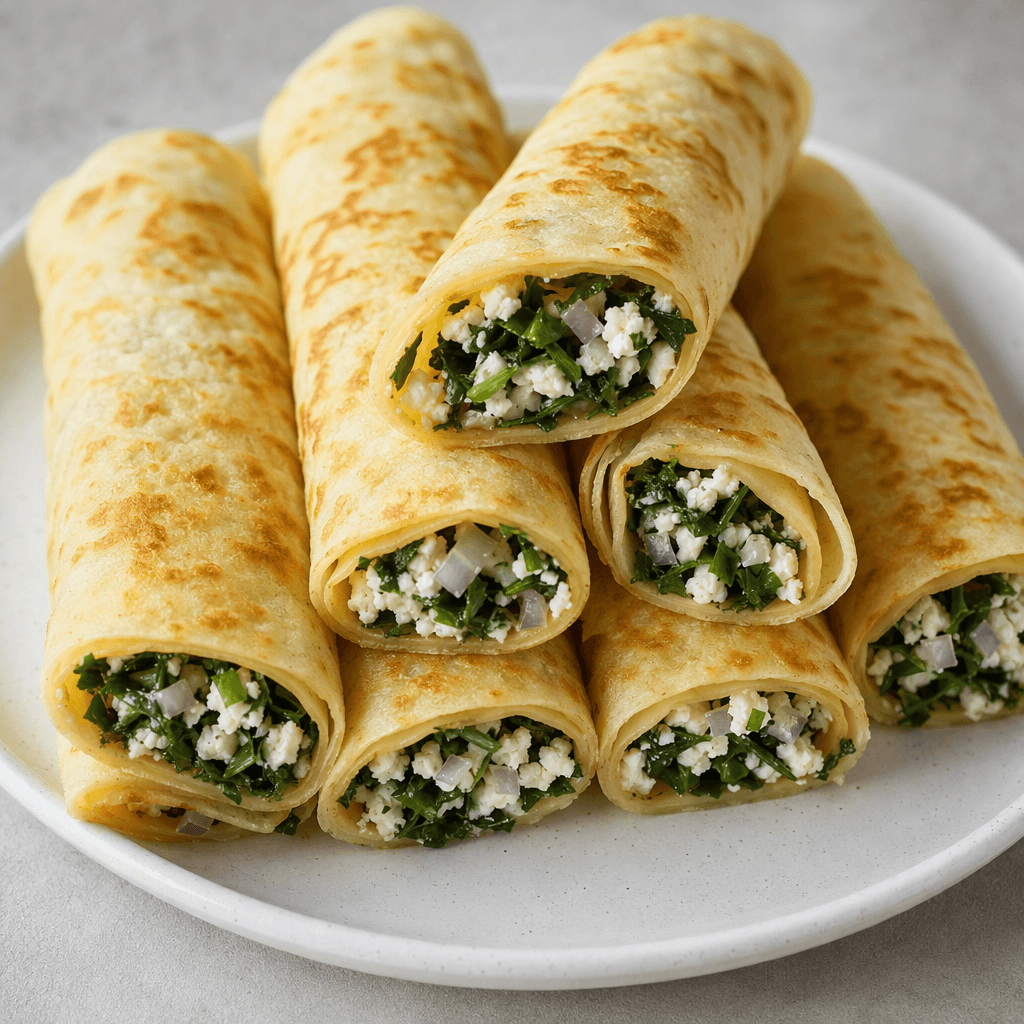
Cheese Sıkma Calories
A Turkish wrap from Adana region, made with lavash bread and white cheese, light and filling.
In season: Spring · Summer · Autumn · Winter
CALORIES
GI
POTASSIUM
FIBER
Quick answer
1 piece (medium) of Cheese Sıkma (120 g) has 264 calories. That works out to 220 calories per 100 g. It contains 33.6 g of carbs, 11.4 g of protein, 9 g of fat and 2.6 g of fiber. Its 252 mg of Calcium covers 25% of the Daily Value. Its glycemic index is 65 (medium), so it raises blood sugar at a moderate pace.
What is Cheese Sıkma?
Cheese sıkma is a Turkish wrap associated with the Adana region, made by filling thin lavash with white cheese and often chopped herbs and onion, then rolling it up. The filling can vary from kitchen to kitchen, and it is also a handy way to use leftover flatbread.
The soft bread contrasts with the cheese’s savoury, slightly tangy taste, while herbs and onion bring freshness. It is commonly eaten warm, sometimes lightly toasted on a pan, for breakfast or as a quick snack; it also makes an easy light meal with a salad. Its nutrition is led by carbohydrates from the bread, with some protein from the cheese, so pairing it with fresh vegetables adds variety and keeps the plate feeling lighter.
Cheese Sıkma Nutrition Facts
Selected: 100 g
220
KCAL / 100G
Carbs
28g
· 10% DV
Protein
9.5g
· 19% DV
Fat
7.5g
· 10% DV
Fiber
2.2g
· 8% DV
DV is the share of the daily value covered, on a 2,000 kcal reference diet.
Calories come from: Carbs 51% · Protein 17% · Fat 32%
Cheese Sıkma Vitamins & Minerals
Vitamins
B12
0.45µg · 19% DV
B2
0.18mg · 14% DV
Vitamin A
120µg · 13% DV
B5
0.45mg · 9% DV
Minerals
Calcium
210mg · 21% DV
Sodium
420mg · 18% DV
Phosphorus
120mg · 17% DV
Selenium
6µg · 11% DV
How Nutritious Is Cheese Sıkma?
Nutrient density
Medium
How many vitamins, minerals and how much fiber this food carries per calorie. A high score means a lot of nutrition for few calories.
Satiety score
Medium
An EatBetter score computed from fiber, protein and calorie density. A high score means staying full longer on the same calories.
Both scores are calculated per 100 g and do not change with the selected portion. The satiety score is EatBetter's own calculation, not a clinical measure.
Cheese Sıkma Glycemic Index
GLYCEMIC INDEX
GLYCEMIC LOAD
Accounts for portion size — a more realistic measure than GI alone.
How to Burn Off Cheese Sıkma
To burn the 220 calories in 100 g:
🚶
Walking (5 km/h)
🏃
Running (8 km/h)
🚴
Cycling
🏊
Swimming
Times are calculated with the MET equation for a 70 kg adult. Actual burn varies with your weight, age and pace.
Is Cheese Sıkma Processed?
NOVA 3
Processed
1. Unprocessed
2. Minimally Processed
3. Processed
4. Ultra-Processed
NOVA classifies foods into 4 groups by industrial processing. NOVA 1 (unprocessed) is the healthiest.
Does Cheese Sıkma Contain Allergens?
Contains these allergens:
Which Diets Is Cheese Sıkma Good For?
Vegan
— Not suitable
Vegetarian
✓ Suitable
Gluten-Free
— Not suitable
Dairy-Free
— Not suitable
Mediterranean
✓ Suitable
Paleo
— Not suitable
Whole30
— Not suitable
DASH
— Not suitable
Keto
— Not suitable
Low FODMAP
— Not suitable
Cheese Sıkma Fat Profile
SATURATED
4.2g
MONOUNSATURATED
2.1g
POLYUNSATURATED
0.25g
Omega 6:3 ratio 3.6:1
Below the ideal 4:1 — a good omega balance.
Compare Cheese Sıkma
Foods Similar to Cheese Sıkma
Frequently Asked Questions About Cheese Sıkma
What is Cheese Sıkma?
Cheese Sıkma is a Turkish flatbread roll associated with the Adana region. Thin bread is filled with crumbled cheese, often herbs and onion, rolled up, and warmed on a griddle or in a pan before serving.
How is Cheese Sıkma different from gözleme?
Cheese Sıkma is rolled around its filling, while gözleme is folded over the filling and cooked as a flat, sealed pastry. Both are commonly cooked on a griddle, but their shapes and ways of enclosing the filling differ.
What cheese is used in Cheese Sıkma?
Cheese Sıkma is commonly made with çökelek, a crumbly Turkish cheese, or crumbled white cheese. Herbs such as parsley and finely chopped onion may be mixed in; taste salty cheese before adding extra salt.
How do you make Cheese Sıkma at home?
Spread crumbled cheese, chopped herbs, and optional onion over thin lavash or flatbread. Roll it snugly, place the seam underneath, and warm it in a dry pan or on a griddle until the bread is hot and lightly toasted.
Why does the filling fall out of Cheese Sıkma?
The filling can escape from Cheese Sıkma if the bread is torn, overfilled, or loosely rolled. Use a thin, even layer of filling, leave the edges clear, and roll the bread firmly without pressing so hard that it splits.
What is Cheese Sıkma usually served with?
Cheese Sıkma is often served warm with tea, ayran, or fresh vegetables. A salad or soup can make it part of a larger meal, while tea and a few simple accompaniments suit a traditional breakfast or snack.
Is Cheese Sıkma eaten for breakfast in Turkey?
Yes, Cheese Sıkma is a practical breakfast or snack in Turkey, particularly in its southern region. It is usually served warm, and tea is a common accompaniment; fresh tomatoes, cucumbers, or olives round out the meal.
Can you make Cheese Sıkma with lavash?
Yes, lavash works well for Cheese Sıkma because it is thin and flexible enough to roll around the filling. Warm it briefly if it feels stiff, then fill and roll it before heating the finished wrap in a pan.
How should leftover Cheese Sıkma be stored?
Cool leftover Cheese Sıkma and refrigerate it in a covered container, then eat it within a few days. Because its filling contains cheese, do not leave it at room temperature for an extended period.
Can Cheese Sıkma be frozen and reheated?
Yes, Cheese Sıkma can be frozen after it has cooled. Wrap the rolls separately and store them in an airtight container; thaw them in the refrigerator and reheat in a pan for a lightly crisp outside.
Have another question about Cheese Sıkma?
Ask the AI nutrition coach — calories, portions, alternatives and more, answered in seconds in the app.

Scan calories with your camera
Instant AI nutrition analysis

Nutrition data compiled from USDA FoodData Central and scientific sources.