

Ready & Packaged Foods
All →Vegetables & Legumes
All →Desserts & Confectionery
All →Meat & Protein
All →Grains & Bakery
All →Beverages
All →Milk & Dairy
All →

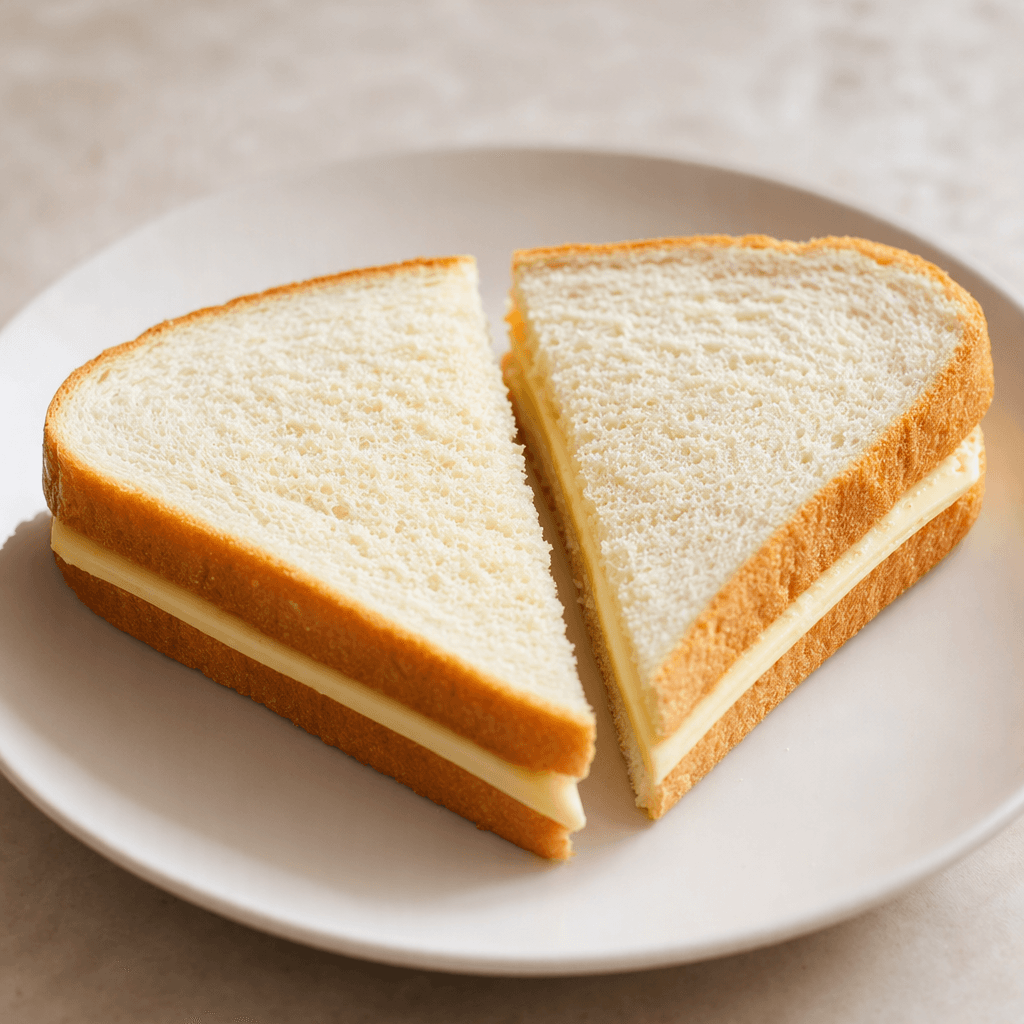
Cheese sandwich Calories
Classic sandwich made with bread and sliced cheese, a quick and filling snack.
CALORIES
GI
POTASSIUM
FIBER
Quick answer
1 piece (medium) of Cheese sandwich (110 g) has 308 calories. That works out to 280 calories per 100 g. It contains 36.3 g of carbs, 11 g of protein, 12.1 g of fat and 2.4 g of fiber. Its 253 mg of Calcium covers 25% of the Daily Value. Its glycemic index is 65 (medium), so it raises blood sugar at a moderate pace.
What is Cheese sandwich?
A cheese sandwich is made by placing sliced cheese between two pieces of bread. It is a simple combination found in many food cultures; the familiar sandwich format is often associated with Britain, though bread and cheese have long been paired in many places.
Depending on where you live, it might be packed for lunch, eaten as a quick snack, or toasted until the bread is crisp and the cheese soft. It provides a filling mix of carbohydrates, fat and protein, with 10 g of protein per 100 g. For a more substantial lunch, add salad vegetables; for a lighter version, use thin slices of cheese and wholegrain bread.
Cheese sandwich Nutrition Facts
Selected: 100 g
280
KCAL / 100G
Carbs
33g
· 12% DV
Protein
10g
· 20% DV
Fat
11g
· 14% DV
Fiber
2.2g
· 8% DV
DV is the share of the daily value covered, on a 2,000 kcal reference diet.
Calories come from: Carbs 49% · Protein 15% · Fat 36%
Cheese sandwich Vitamins & Minerals
Vitamins
B12
0.5µg · 21% DV
B2
0.19mg · 15% DV
Vitamin A
120µg · 13% DV
Biotin
3.5µg · 12% DV
Minerals
Calcium
230mg · 23% DV
Sodium
530mg · 23% DV
Phosphorus
140mg · 20% DV
Selenium
10µg · 18% DV
How Nutritious Is Cheese sandwich?
Nutrient density
Low
How many vitamins, minerals and how much fiber this food carries per calorie. A high score means a lot of nutrition for few calories.
Satiety score
Medium
An EatBetter score computed from fiber, protein and calorie density. A high score means staying full longer on the same calories.
Both scores are calculated per 100 g and do not change with the selected portion. The satiety score is EatBetter's own calculation, not a clinical measure.
Cheese sandwich Glycemic Index
GLYCEMIC INDEX
GLYCEMIC LOAD
Accounts for portion size — a more realistic measure than GI alone.
How to Burn Off Cheese sandwich
To burn the 280 calories in 100 g:
🚶
Walking (5 km/h)
🏃
Running (8 km/h)
🚴
Cycling
🏊
Swimming
Times are calculated with the MET equation for a 70 kg adult. Actual burn varies with your weight, age and pace.
Is Cheese sandwich Processed?
NOVA 3
Processed
1. Unprocessed
2. Minimally Processed
3. Processed
4. Ultra-Processed
NOVA classifies foods into 4 groups by industrial processing. NOVA 1 (unprocessed) is the healthiest.
Does Cheese sandwich Contain Allergens?
Contains these allergens:
Which Diets Is Cheese sandwich Good For?
Vegan
— Not suitable
Vegetarian
✓ Suitable
Gluten-Free
— Not suitable
Dairy-Free
— Not suitable
Mediterranean
— Not suitable
Paleo
— Not suitable
Whole30
— Not suitable
DASH
— Not suitable
Keto
— Not suitable
Low FODMAP
— Not suitable
Cheese sandwich Fat Profile
SATURATED
5.2g
MONOUNSATURATED
3.2g
POLYUNSATURATED
1.3g
Omega 6:3 ratio 15.7:1
Above the ideal 4:1 (15.7:1).
Compare Cheese sandwich
Foods Similar to Cheese sandwich
Frequently Asked Questions About Cheese sandwich
How do you make a cheese sandwich?
A cheese sandwich is made by placing sliced cheese between two slices of bread. Add lettuce, tomato, or another filling if you like, then serve it cold or toast it until the cheese softens.
What is the best cheese for a cheese sandwich?
Cheddar is a popular choice for a cheese sandwich because it slices easily and has a familiar flavor. For a toasted version, choose a cheese that melts well; for a cold sandwich, a firmer cheese keeps its shape.
What can you put in a cheese sandwich?
You can add tomato, cucumber, lettuce, pickles, or mustard to a cheese sandwich. Keep wet ingredients such as tomato away from the bread until serving, or pat them dry, to help prevent a soggy sandwich.
What is the difference between a cheese sandwich and a grilled cheese?
A cheese sandwich can be served cold, while a grilled cheese is cooked until the bread is browned and the cheese melts. Grilled cheese is usually made with bread and cheese, often with butter on the outside.
Can you toast a cheese sandwich in a sandwich press?
Yes, a cheese sandwich can be toasted in a sandwich press. Keep the cheese inside the edges of the bread so it is less likely to leak out, and cook until the bread is browned and the filling is warm.
Which bread works best for a cheese sandwich?
Sliced sandwich bread is easy to fill and toast, while sourdough gives a firmer, tangier sandwich. Choose bread sturdy enough to hold the cheese and any extras without falling apart when you pick it up.
How do you stop a cheese sandwich from getting soggy?
To keep a cheese sandwich from getting soggy, use dry fillings and avoid putting juicy tomato directly against the bread. If you are packing it ahead, wrap it once the ingredients are cool and keep wet additions separate.
Can you make a cheese sandwich the night before?
Yes, you can make a cheese sandwich the night before and keep it covered in the refrigerator. For the best texture, leave out juicy vegetables until serving, or pack them separately and add them later.
What goes well with a cheese sandwich?
A cheese sandwich goes well with tomato soup, a green salad, sliced vegetables, or pickles. Soup is a classic pairing with a toasted cheese sandwich, while fresh vegetables make an easy side for a cold one.
Is a cheese sandwich a good lunch to pack for work or school?
Yes, a cheese sandwich can be a convenient packed lunch. Keep it chilled until it is time to eat, and pack juicy fillings separately so the bread stays firm; add fruit or vegetables for a more complete lunch.
Have another question about Cheese sandwich?
Ask the AI nutrition coach — calories, portions, alternatives and more, answered in seconds in the app.

Scan calories with your camera
Instant AI nutrition analysis

Nutrition data compiled from USDA FoodData Central and scientific sources.