

Ready & Packaged Foods
All →Vegetables & Legumes
All →Desserts & Confectionery
All →Meat & Protein
All →Grains & Bakery
All →Beverages
All →Milk & Dairy
All →

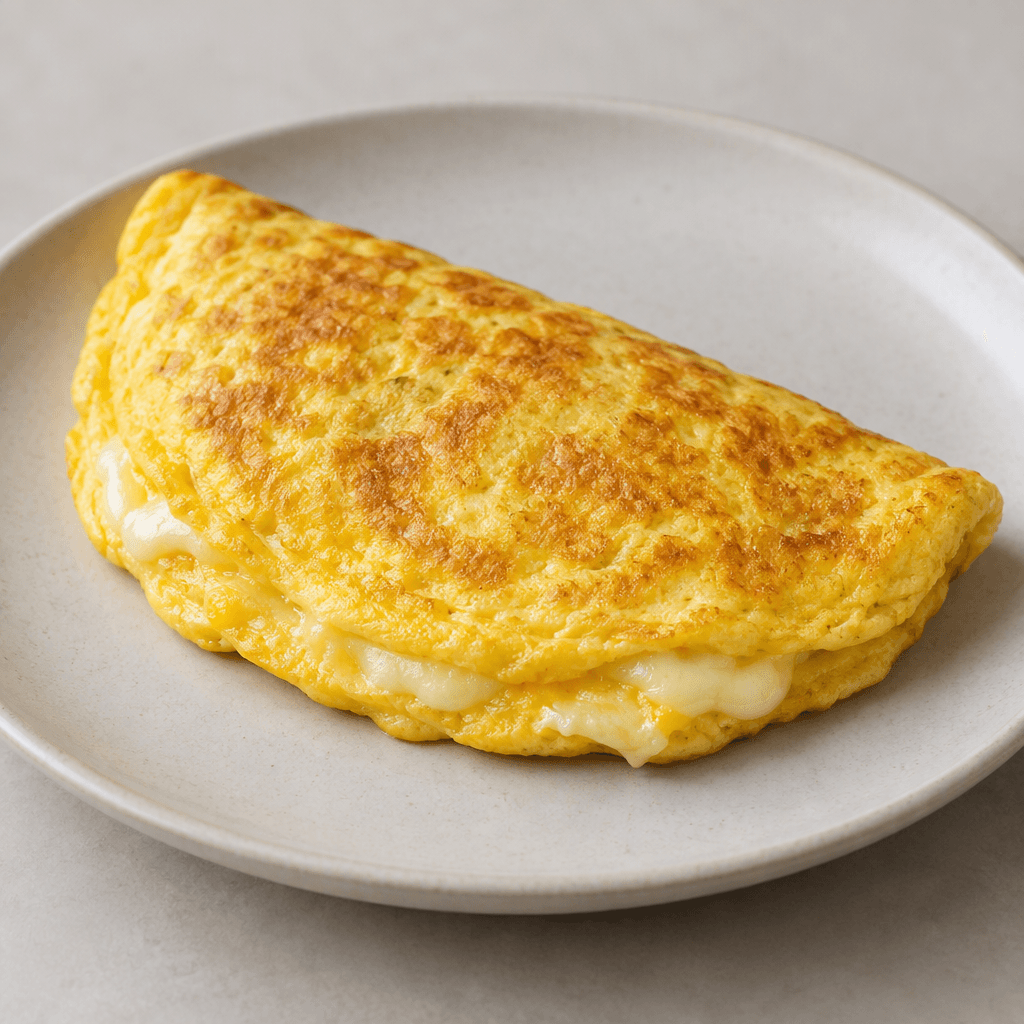
Cheese omelette (2 eggs) Calories
High in protein and calcium, filling breakfast
In season: Spring · Summer · Autumn · Winter
CALORIES
GI
POTASSIUM
FIBER
Quick answer
1 piece (medium) of Cheese omelette (2 eggs) (140 g) has 266 calories. That works out to 190 calories per 100 g. It contains 2.8 g of carbs, 18.9 g of protein, 20.3 g of fat and 0 g of fiber. Its 32.2 µg of Biotin covers 107% of the Daily Value. Its glycemic index is 35 (low), so it raises blood sugar slowly.
What is Cheese omelette (2 eggs)?
A two-egg cheese omelette is made by cooking beaten eggs in a pan, with cheese added as the eggs set or folded inside. It is a familiar variation on the omelette, a dish prepared in many cuisines rather than one tied to a single place; the cheese and style vary from kitchen to kitchen.
Soft and tender with a lightly browned outside and melted cheese, it is usually served hot. It works for breakfast or a quick lunch, often alongside toast, salad or sliced tomatoes. It provides protein and calcium and can make a filling meal. For a lighter version, use a modest amount of cheese and cook it in a good non-stick pan with little added fat.
Cheese omelette (2 eggs) Nutrition Facts
Selected: 100 g
190
KCAL / 100G
Carbs
2g
· 1% DV
Protein
13.5g
· 27% DV
Fat
14.5g
· 19% DV
Fiber
0g
· 0% DV
DV is the share of the daily value covered, on a 2,000 kcal reference diet.
Calories come from: Carbs 4% · Protein 28% · Fat 68%
Cheese omelette (2 eggs) Vitamins & Minerals
Vitamins
Biotin
23µg · 77% DV
B12
1.1µg · 46% DV
B2
0.35mg · 27% DV
B5
1.2mg · 24% DV
Minerals
Selenium
18µg · 33% DV
Phosphorus
210mg · 30% DV
Calcium
220mg · 22% DV
Zinc
2mg · 18% DV
How Nutritious Is Cheese omelette (2 eggs)?
Nutrient density
High
How many vitamins, minerals and how much fiber this food carries per calorie. A high score means a lot of nutrition for few calories.
Satiety score
Medium
An EatBetter score computed from fiber, protein and calorie density. A high score means staying full longer on the same calories.
Both scores are calculated per 100 g and do not change with the selected portion. The satiety score is EatBetter's own calculation, not a clinical measure.
Cheese omelette (2 eggs) Glycemic Index
GLYCEMIC INDEX
GLYCEMIC LOAD
Accounts for portion size — a more realistic measure than GI alone.
How to Burn Off Cheese omelette (2 eggs)
To burn the 190 calories in 100 g:
🚶
Walking (5 km/h)
🏃
Running (8 km/h)
🚴
Cycling
🏊
Swimming
Times are calculated with the MET equation for a 70 kg adult. Actual burn varies with your weight, age and pace.
Is Cheese omelette (2 eggs) Processed?
NOVA 2
Minimally Processed
1. Unprocessed
2. Minimally Processed
3. Processed
4. Ultra-Processed
NOVA classifies foods into 4 groups by industrial processing. NOVA 1 (unprocessed) is the healthiest.
Does Cheese omelette (2 eggs) Contain Allergens?
Contains these allergens:
Which Diets Is Cheese omelette (2 eggs) Good For?
Vegan
— Not suitable
Vegetarian
✓ Suitable
Gluten-Free
✓ Suitable
Dairy-Free
— Not suitable
Mediterranean
✓ Suitable
Paleo
— Not suitable
Whole30
— Not suitable
DASH
— Not suitable
Keto
✓ Suitable
Low FODMAP
— Not suitable
Cheese omelette (2 eggs) Fat Profile
SATURATED
6.2g
MONOUNSATURATED
5.5g
POLYUNSATURATED
1.4g
Omega 6:3 ratio 9.2:1
Above the ideal 4:1 (9.2:1).
Compare Cheese omelette (2 eggs)
Foods Similar to Cheese omelette (2 eggs)
Frequently Asked Questions About Cheese omelette (2 eggs)
How do you make a cheese omelette?
A cheese omelette is made by cooking beaten eggs in a pan, adding cheese, and folding the eggs over it. Cook over medium-low heat and add the cheese when the eggs are mostly set, so it melts without overcooking the omelette.
What cheese is best in a cheese omelette?
Cheddar is a popular choice for a cheese omelette because it melts smoothly and has a clear savory flavor. Gruyère also melts well, while feta gives a saltier, crumbly filling; reduce added salt when using a salty cheese.
How do you stop a cheese omelette from sticking?
Use a good nonstick or well-seasoned pan and heat it before adding a thin layer of butter or oil. A cheese omelette is more likely to stick if the pan is scratched, too cool, or if you try to fold the eggs before they have set.
Should you add milk to a cheese omelette?
No, milk is not necessary for a cheese omelette. Beating the eggs just until combined and cooking them gently helps keep the texture tender; too much liquid can make the omelette watery and harder to fold.
How do you make a cheese omelette fluffy?
For a fluffy cheese omelette, whisk the eggs until the whites and yolks are evenly blended, then cook them over moderate heat. Lift the set edges so uncooked egg can flow underneath, and fold before the eggs become dry.
What goes well with a cheese omelette?
A cheese omelette pairs well with toast, a green salad, sautéed mushrooms, or sliced tomatoes. For a more substantial brunch, serve it with roasted potatoes; fresh vegetables balance the richness of the melted cheese.
Can you put vegetables in a cheese omelette?
Yes, vegetables work well in a cheese omelette. Cook watery choices such as mushrooms, spinach, or tomatoes first to remove excess moisture, then add them with the cheese so the eggs stay tender rather than soggy.
Can you make a cheese omelette ahead of time?
A cheese omelette is best cooked just before serving, but leftovers can be refrigerated in a covered container and eaten within 3–4 days. Refrigerate it promptly rather than leaving cooked eggs at room temperature.
How do you reheat a cheese omelette without making it rubbery?
Reheat a cheese omelette gently in a covered pan over low heat, turning it once if needed. You can also use a microwave in short bursts; stop as soon as it is warm, because prolonged heating makes eggs tough.
Is a cheese omelette a good breakfast for weight loss?
A cheese omelette can be a filling breakfast because eggs and cheese provide protein, but it is not automatically a weight-loss food. Use a modest amount of cheese and cooking fat, and serve it with vegetables rather than a large, rich side.
Have another question about Cheese omelette (2 eggs)?
Ask the AI nutrition coach — calories, portions, alternatives and more, answered in seconds in the app.

Scan calories with your camera
Instant AI nutrition analysis

Nutrition data compiled from USDA FoodData Central and scientific sources.