

Ready & Packaged Foods
All →Vegetables & Legumes
All →Desserts & Confectionery
All →Meat & Protein
All →Grains & Bakery
All →Beverages
All →Milk & Dairy
All →

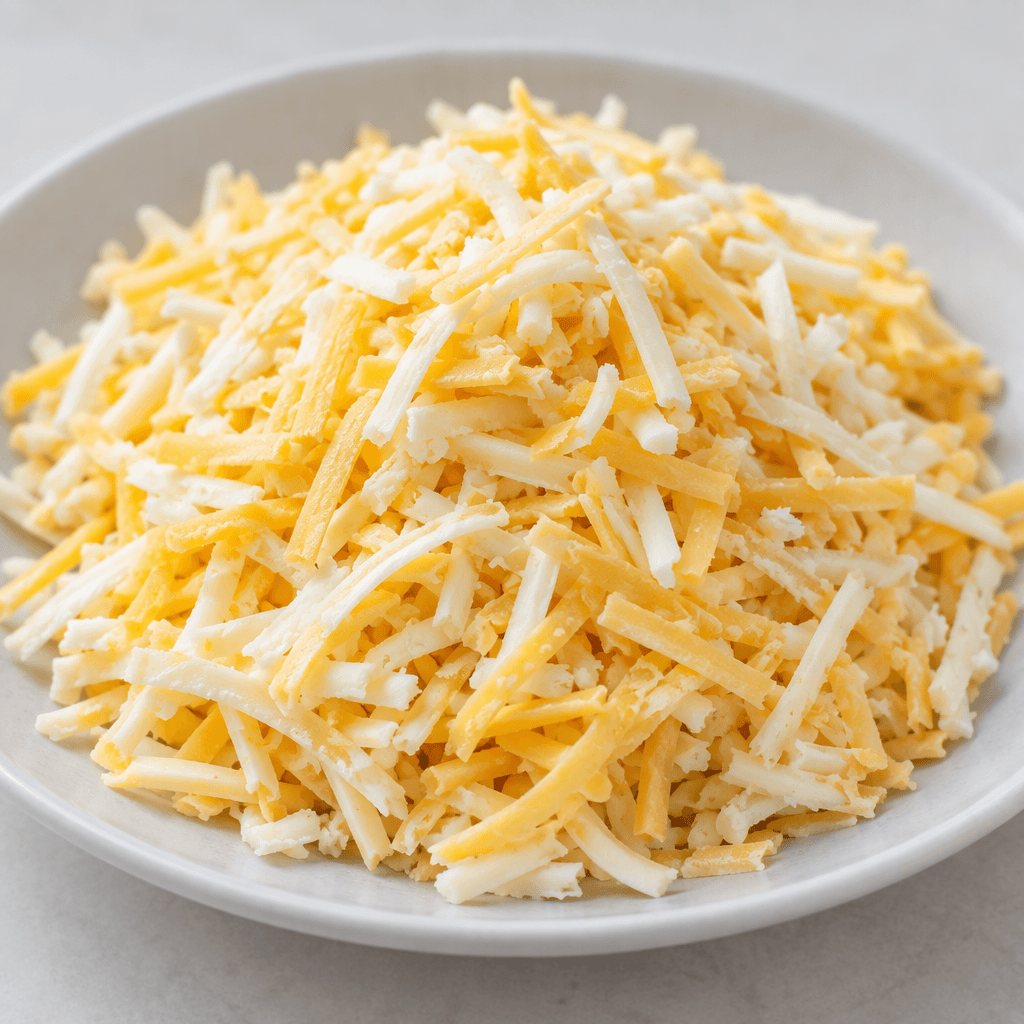
Cheese mix Calories
Blend of cheeses, rich in calcium and protein
In season: Spring · Summer · Autumn · Winter
CALORIES
GI
POTASSIUM
FIBER
Quick answer
1 slice (medium) of Cheese mix (25 g) has 85 calories. That works out to 340 calories per 100 g. It contains 0.6 g of carbs, 5.8 g of protein, 6.5 g of fat and 0 g of fiber. Its 175 mg of Calcium covers 18% of the Daily Value. Its glycemic index is 0 (low), so it raises blood sugar slowly.
What is Cheese mix?
Cheese mix is a blend of cheeses, often sold in fine shreds that are ready to sprinkle or melt. The cheeses used can vary, so the flavour may range from mild and creamy to sharper and saltier. Once heated, the shreds soften and melt together, making the mix convenient for dishes where an even layer of cheese is useful.
It works well in omelettes, toasted sandwiches, pasta, casseroles and on top of baked vegetables; use it wherever you want a quick-melting cheese topping. In Turkey, similar blends are also handy for breakfast dishes and savoury pastries. It provides protein—23 g per 100 g—along with substantial fat, so a modest handful can add plenty of richness.
Cheese mix Nutrition Facts
Selected: 100 g
340
KCAL / 100G
Carbs
2.5g
· 1% DV
Protein
23g
· 46% DV
Fat
26g
· 33% DV
Fiber
0g
· 0% DV
DV is the share of the daily value covered, on a 2,000 kcal reference diet.
Calories come from: Carbs 3% · Protein 27% · Fat 70%
Cheese mix Vitamins & Minerals
Vitamins
B12
1.5µg · 63% DV
Vitamin A
260µg · 29% DV
B2
0.35mg · 27% DV
B5
0.5mg · 10% DV
Minerals
Calcium
700mg · 70% DV
Phosphorus
470mg · 67% DV
Sodium
800mg · 35% DV
Zinc
3mg · 27% DV
How Nutritious Is Cheese mix?
Nutrient density
High
How many vitamins, minerals and how much fiber this food carries per calorie. A high score means a lot of nutrition for few calories.
Satiety score
Medium
An EatBetter score computed from fiber, protein and calorie density. A high score means staying full longer on the same calories.
Both scores are calculated per 100 g and do not change with the selected portion. The satiety score is EatBetter's own calculation, not a clinical measure.
Cheese mix Glycemic Index
GLYCEMIC INDEX
GLYCEMIC LOAD
Accounts for portion size — a more realistic measure than GI alone.
How to Burn Off Cheese mix
To burn the 340 calories in 100 g:
🚶
Walking (5 km/h)
🏃
Running (8 km/h)
🚴
Cycling
🏊
Swimming
Times are calculated with the MET equation for a 70 kg adult. Actual burn varies with your weight, age and pace.
Is Cheese mix Processed?
NOVA 3
Processed
1. Unprocessed
2. Minimally Processed
3. Processed
4. Ultra-Processed
NOVA classifies foods into 4 groups by industrial processing. NOVA 1 (unprocessed) is the healthiest.
Does Cheese mix Contain Allergens?
Contains these allergens:
Which Diets Is Cheese mix Good For?
Vegan
— Not suitable
Vegetarian
✓ Suitable
Gluten-Free
✓ Suitable
Dairy-Free
— Not suitable
Mediterranean
✓ Suitable
Paleo
— Not suitable
Whole30
— Not suitable
DASH
— Not suitable
Keto
— Not suitable
Low FODMAP
— Not suitable
Cheese mix Fat Profile
SATURATED
16.5g
MONOUNSATURATED
7.5g
POLYUNSATURATED
0.4g
Omega 6:3 ratio 2.8:1
Below the ideal 4:1 — a good omega balance.
Compare Cheese mix
Foods Similar to Cheese mix
Frequently Asked Questions About Cheese mix
What cheeses are in a cheese mix?
A cheese mix has no fixed recipe; the cheeses vary by product. Shredded blends often combine cheeses chosen for melting and flavour, such as mozzarella and cheddar, but check the ingredients list to see what your mix contains.
Does cheese mix melt well?
Yes, cheese mix usually melts well, especially when it is made with cheeses intended for cooking. For a smoother topping, add it evenly and let it melt over moderate heat rather than leaving it under a very hot grill for too long.
How do you make cheese mix at home?
To make cheese mix at home, grate two or more cheeses and toss them together. Mozzarella gives a stretchy melt, while cheddar adds a sharper flavour; adjust the proportions to suit the dish.
Can you freeze cheese mix?
Yes, you can freeze cheese mix in an airtight freezer bag or container. It may become crumbly after thawing, so use thawed mix in cooked dishes such as pizza, pasta or casseroles rather than as a fresh topping.
How long does cheese mix last after opening?
After opening, keep cheese mix sealed in the refrigerator and follow the use-by date and storage directions on its package. Discard it if you notice mould, an unpleasant smell or a slimy surface.
Can you use cheese mix on pizza?
Yes, cheese mix works as a pizza topping because it melts over the sauce and other toppings. Spread it in an even layer, and go easy on salty additions such as cured meat if the blend tastes salty.
What can I use instead of cheese mix?
Use grated mozzarella, cheddar or another cheese that melts well instead of cheese mix. A single cheese may give a less complex flavour or a different texture, so combining two cheeses is the closest substitute.
Why does cheese mix clump together?
Cheese mix can clump when moisture gets into the packet or the shreds warm and stick together. Keep it tightly sealed in the refrigerator, and use a clean, dry utensil when taking some out.
Is cheese mix healthy?
Cheese mix can contribute protein and calcium, but its salt and saturated fat content depends on the cheeses used. If you are watching your sodium intake, use a smaller amount and compare the ingredient and nutrition information on the package.
Is cheese mix lactose-free?
No, you should not assume cheese mix is lactose-free. Its lactose content depends on the cheeses in the blend, and fresh cheeses may contain more than aged ones; check the product information if you need to avoid lactose.
Have another question about Cheese mix?
Ask the AI nutrition coach — calories, portions, alternatives and more, answered in seconds in the app.

Scan calories with your camera
Instant AI nutrition analysis

Nutrition data compiled from USDA FoodData Central and scientific sources.