

Ready & Packaged Foods
All →Vegetables & Legumes
All →Desserts & Confectionery
All →Meat & Protein
All →Grains & Bakery
All →Beverages
All →Milk & Dairy
All →

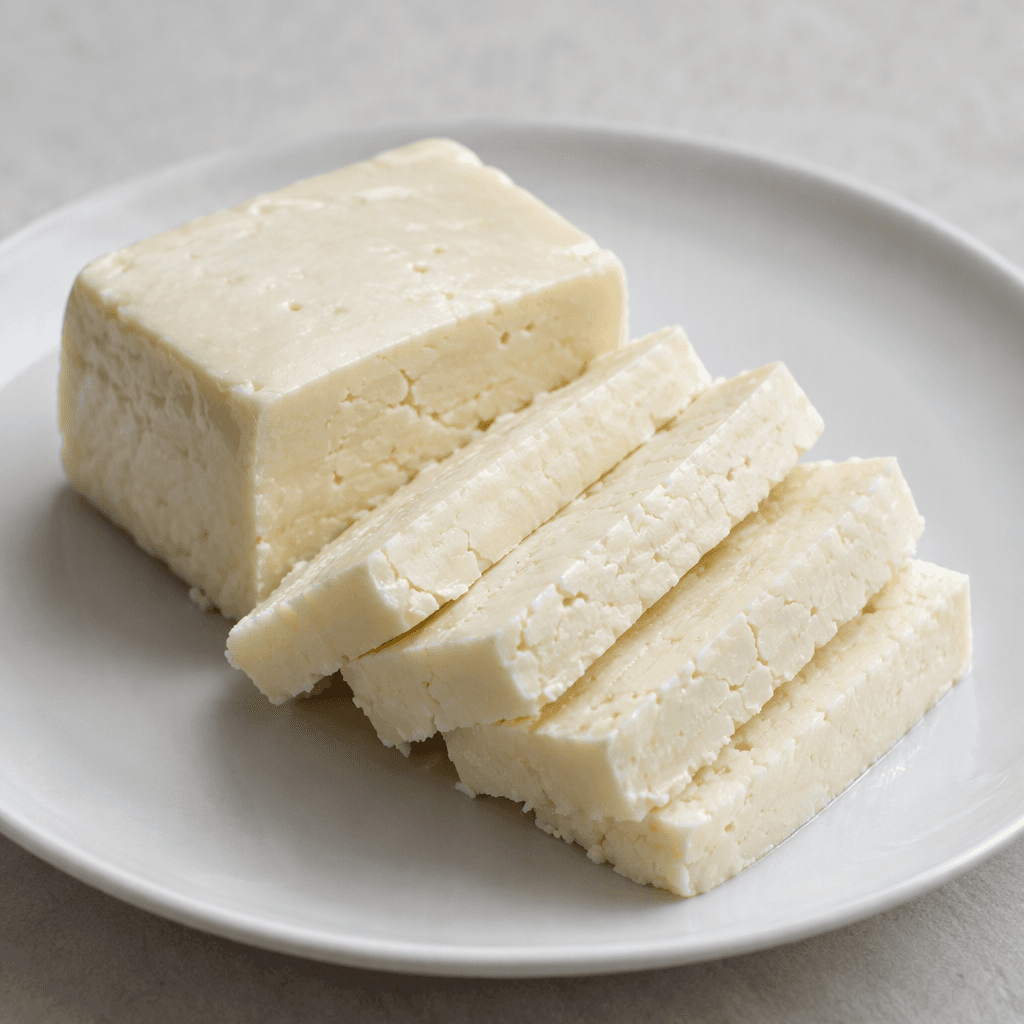
Half-Fat Cheese Calories
Protein and calcium source, reduced fat cheese
In season: Spring · Summer · Autumn · Winter
CALORIES
GI
POTASSIUM
FIBER
Quick answer
1 slice (medium) of Half-Fat Cheese (30 g) has 66 calories. That works out to 220 calories per 100 g. It contains 0.6 g of carbs, 6.6 g of protein, 3.9 g of fat and 0 g of fiber. Its 195 mg of Calcium covers 20% of the Daily Value. Its glycemic index is 30 (low), so it raises blood sugar slowly.
What is Half-Fat Cheese?
Half-fat cheese is made from milk with some of its fat removed; its exact firmness and saltiness vary by style and producer. The pale, moist cheese can be cut into slices and has a mild taste with a slightly crumbly texture. In Turkey it is commonly served at breakfast with bread, olives and fresh vegetables, and is also used in toasties and sandwiches. Elsewhere, it works much like other everyday table cheeses: serve it with crackers or fruit, or melt it into a simple meal. It provides substantial protein, with 22 g per 100 g. For a lighter plate, pair a modest portion with tomatoes, cucumber or other fresh produce.
Half-Fat Cheese Nutrition Facts
Selected: 100 g
220
KCAL / 100G
Carbs
2g
· 1% DV
Protein
22g
· 44% DV
Fat
13g
· 17% DV
Fiber
0g
· 0% DV
DV is the share of the daily value covered, on a 2,000 kcal reference diet.
Calories come from: Carbs 4% · Protein 41% · Fat 55%
Half-Fat Cheese Vitamins & Minerals
Vitamins
B12
1.5µg · 63% DV
B2
0.35mg · 27% DV
Vitamin A
220µg · 24% DV
B5
0.5mg · 10% DV
Minerals
Calcium
650mg · 65% DV
Phosphorus
420mg · 60% DV
Sodium
700mg · 30% DV
Zinc
3mg · 27% DV
How Nutritious Is Half-Fat Cheese?
Nutrient density
High
How many vitamins, minerals and how much fiber this food carries per calorie. A high score means a lot of nutrition for few calories.
Satiety score
Medium
An EatBetter score computed from fiber, protein and calorie density. A high score means staying full longer on the same calories.
Both scores are calculated per 100 g and do not change with the selected portion. The satiety score is EatBetter's own calculation, not a clinical measure.
Half-Fat Cheese Glycemic Index
GLYCEMIC INDEX
GLYCEMIC LOAD
Accounts for portion size — a more realistic measure than GI alone.
How to Burn Off Half-Fat Cheese
To burn the 220 calories in 100 g:
🚶
Walking (5 km/h)
🏃
Running (8 km/h)
🚴
Cycling
🏊
Swimming
Times are calculated with the MET equation for a 70 kg adult. Actual burn varies with your weight, age and pace.
Is Half-Fat Cheese Processed?
NOVA 3
Processed
1. Unprocessed
2. Minimally Processed
3. Processed
4. Ultra-Processed
NOVA classifies foods into 4 groups by industrial processing. NOVA 1 (unprocessed) is the healthiest.
Does Half-Fat Cheese Contain Allergens?
Contains these allergens:
Which Diets Is Half-Fat Cheese Good For?
Vegan
— Not suitable
Vegetarian
✓ Suitable
Gluten-Free
— Not suitable
Dairy-Free
— Not suitable
Mediterranean
✓ Suitable
Paleo
— Not suitable
Whole30
— Not suitable
DASH
— Not suitable
Keto
— Not suitable
Low FODMAP
— Not suitable
Half-Fat Cheese Fat Profile
SATURATED
8.5g
MONOUNSATURATED
3.2g
POLYUNSATURATED
0.4g
Omega 6:3 ratio 3.1:1
Below the ideal 4:1 — a good omega balance.
Compare Half-Fat Cheese
Foods Similar to Half-Fat Cheese
Frequently Asked Questions About Half-Fat Cheese
What does “half-fat cheese” mean?
Half-fat cheese is cheese made with reduced-fat milk or with some of the milk fat removed during production. The exact fat level and texture vary by cheese style and brand, so “half-fat” does not describe one single recipe or type of cheese.
Is half-fat cheese healthier than full-fat cheese?
Half-fat cheese contains less fat than its full-fat counterpart, while still providing protein and calcium. Whether that makes it a better choice depends on what you want from the meal; salt content, which varies between products, is also worth considering.
Does half-fat cheese melt well?
Half-fat cheese can melt, but it may turn less creamy or become slightly rubbery compared with full-fat cheese. For a smoother result, grate it, melt it gently, and avoid overheating; its performance also depends on the cheese style and moisture level.
Can you use half-fat cheese in a grilled cheese sandwich?
Yes, half-fat cheese works in a grilled cheese sandwich. It may not become as rich or stretchy as a full-fat melting cheese, so cook over moderate heat and use thin slices to help the cheese warm through before the bread gets too dark.
How should half-fat cheese be stored after opening?
Keep half-fat cheese covered in the refrigerator after opening, using a clean knife whenever you serve it. If it was packed in brine, store it in its brine as directed; follow the package guidance and avoid leaving it at room temperature for extended periods.
Can you freeze half-fat cheese?
Yes, you can freeze half-fat cheese, although thawing may make it crumbly or dry. Wrap it airtight in portions and thaw it in the refrigerator; the changed texture is usually less noticeable when you grate or cook the cheese rather than serve it plain.
How can you tell if half-fat cheese has gone bad?
Discard half-fat cheese if it develops unexpected mold, an unpleasant smell, a slimy surface, or a noticeable color change. Some cheeses naturally have distinctive aromas or appearances, so compare any change with the cheese’s usual characteristics rather than tasting a suspicious piece.
Does half-fat cheese taste different from regular cheese?
Often, yes: removing some milk fat can make half-fat cheese taste less rich and feel firmer or drier than a full-fat version. The difference is more noticeable in some cheese styles than others, and seasoning and moisture also shape the flavor.
Is half-fat cheese good for weight loss?
Half-fat cheese does not cause weight loss, but choosing it instead of a full-fat version can reduce the fat in a meal. It can still be part of a filling meal when paired with foods such as vegetables or whole-grain bread.
Can you eat half-fat cheese during pregnancy?
Yes, half-fat cheese made from pasteurized milk is generally suitable during pregnancy. Avoid cheese made from unpasteurized milk, and ask your healthcare professional if the product’s pasteurization status is unclear or you have specific dietary advice.
Have another question about Half-Fat Cheese?
Ask the AI nutrition coach — calories, portions, alternatives and more, answered in seconds in the app.

Scan calories with your camera
Instant AI nutrition analysis

Nutrition data compiled from USDA FoodData Central and scientific sources.