

Ready & Packaged Foods
All →Vegetables & Legumes
All →Desserts & Confectionery
All →Meat & Protein
All →Grains & Bakery
All →Beverages
All →Milk & Dairy
All →

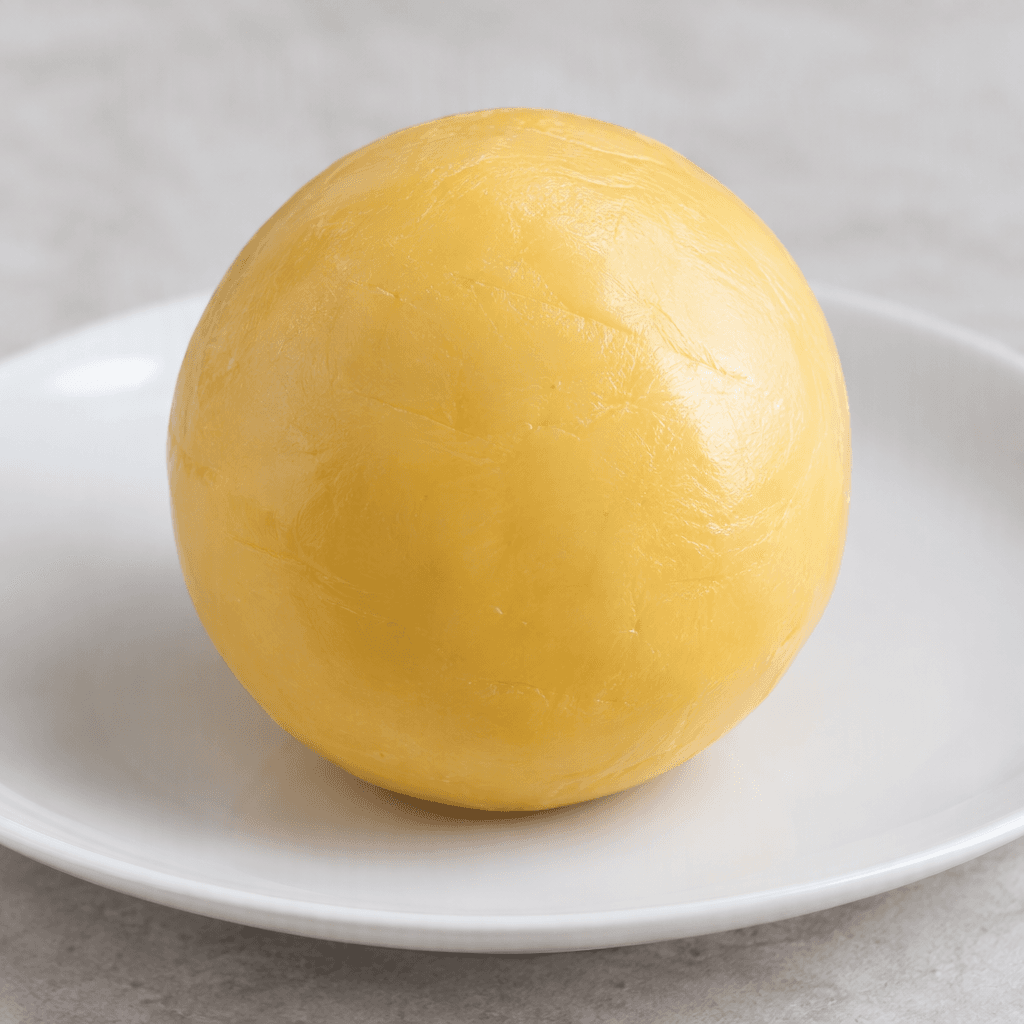
Cheese Ball Calories
Creamy, savory snack, high in calcium
In season: Spring · Summer · Autumn · Winter
CALORIES
GI
POTASSIUM
FIBER
Quick answer
1 piece (medium) of Cheese Ball (30 g) has 96 calories. That works out to 320 calories per 100 g. It contains 1.8 g of carbs, 3.3 g of protein, 8.1 g of fat and 0.2 g of fiber. Its 195 mg of Calcium covers 20% of the Daily Value. Its glycemic index is 30 (low), so it raises blood sugar slowly.
What is Cheese Ball?
Cheese Ball is a round cheese product with a smooth, pale-yellow exterior and a firm, sliceable texture. Its savory, creamy flavor makes it easy to serve as a small snack or part of a cold platter. In Turkey, it can sit alongside bread, olives and fresh vegetables at breakfast, or be brought out with tea; elsewhere, it also works on a cheese board with crackers and fruit. It provides some protein, but is relatively high in fat: 100 g contains 27 g. For a lighter serving, offer a modest piece with cucumber, tomato or other fresh produce rather than pairing it with several rich snacks.
Cheese Ball Nutrition Facts
Selected: 100 g
320
KCAL / 100G
Carbs
6g
· 2% DV
Protein
11g
· 22% DV
Fat
27g
· 35% DV
Fiber
0.5g
· 2% DV
DV is the share of the daily value covered, on a 2,000 kcal reference diet.
Calories come from: Carbs 8% · Protein 14% · Fat 78%

Log this food in EatBetter
100,000+ people use it
- Get your daily calorie target
- Snap your meal, log it in seconds
- See every vitamin and mineral

📸 Scan the code to get the app free.

Cheese Ball Vitamins & Minerals
Vitamins
B12
1.1µg · 46% DV
B2
0.35mg · 27% DV
Vitamin A
220µg · 24% DV
Biotin
2.5µg · 8% DV
Minerals
Calcium
650mg · 65% DV
Phosphorus
420mg · 60% DV
Sodium
670mg · 29% DV
Zinc
2mg · 18% DV
Potassium ⭐
110mg · 3% DV
How Nutritious Is Cheese Ball?
Nutrient density
Medium
How many vitamins, minerals and how much fiber this food carries per calorie. A high score means a lot of nutrition for few calories.
Satiety score
Low
An EatBetter score computed from fiber, protein and calorie density. A high score means staying full longer on the same calories.
Both scores are calculated per 100 g and do not change with the selected portion. The satiety score is EatBetter's own calculation, not a clinical measure.
Cheese Ball Glycemic Index
GLYCEMIC INDEX
GLYCEMIC LOAD
Accounts for portion size — a more realistic measure than GI alone.
How to Burn Off Cheese Ball
To burn the 320 calories in 100 g:
🚶
Walking (5 km/h)
🏃
Running (8 km/h)
🚴
Cycling
🏊
Swimming
Times are calculated with the MET equation for a 70 kg adult. Actual burn varies with your weight, age and pace.
Is Cheese Ball Processed?
NOVA 3
Processed
1. Unprocessed
2. Minimally Processed
3. Processed
4. Ultra-Processed
NOVA classifies foods into 4 groups by industrial processing. NOVA 1 (unprocessed) is the healthiest.
Does Cheese Ball Contain Allergens?
Contains these allergens:
Which Diets Is Cheese Ball Good For?
Vegan
— Not suitable
Vegetarian
✓ Suitable
Gluten-Free
— Not suitable
Dairy-Free
— Not suitable
Mediterranean
✓ Suitable
Paleo
— Not suitable
Whole30
— Not suitable
DASH
— Not suitable
Keto
— Not suitable
Low FODMAP
— Not suitable
Cheese Ball Fat Profile
SATURATED
17g
MONOUNSATURATED
7.5g
POLYUNSATURATED
0.5g
Omega 6:3 ratio 4.3:1
Above the ideal 4:1 (4.3:1).
Compare Cheese Ball
Foods Similar to Cheese Ball
Frequently Asked Questions About Cheese Ball
What is a Cheese Ball made of?
A Cheese Ball is made primarily from cheese that has been blended and shaped into a firm round. Depending on the product, the mixture may also include other milk ingredients and emulsifying salts, so the exact recipe varies.
How is a Cheese Ball made?
A Cheese Ball is typically made by heating and blending cheese with other ingredients, molding the mixture into a sphere, and cooling it until firm. This processing gives it a smooth, even texture that is easy to portion.
Is a Cheese Ball the same as a party cheese ball?
No. This Cheese Ball is a firm, smooth round of processed cheese. A party cheese ball usually means a soft mixture made with cream cheese and seasonings, often coated in nuts or herbs, and served as a spread.
How should you serve a Cheese Ball?
Serve a Cheese Ball chilled or slightly softened, cut into slices or bite-size pieces. It works with crackers, bread, or sliced vegetables; keeping it whole until serving helps it retain its neat shape.
Can you slice a Cheese Ball?
Yes, a Cheese Ball can be sliced. It cuts most cleanly while cold and firm; if it has softened too much, chilling it briefly makes portioning easier.
Does a Cheese Ball melt when heated?
Yes, a Cheese Ball softens and melts when heated. Use gentle heat for toast or a warm sandwich, since intense heat can make the cheese spread unevenly or lose its smooth texture.
Can you freeze a Cheese Ball?
Yes, you can freeze a Cheese Ball, but thawing may make its texture crumbly or less smooth. Use thawed portions in a hot sandwich or cooked dish if the change in texture is noticeable.
How should you store a Cheese Ball after opening?
Keep an opened Cheese Ball refrigerated and tightly wrapped, or place it in a sealed container. Cut it with a clean knife, then cover the remaining portion promptly and follow the package’s storage directions.
How can you tell if a Cheese Ball has gone bad?
Discard a Cheese Ball if it has visible mold, an unusual sour or unpleasant smell, a sticky surface, or an unexpected color change. A swollen or leaking package is another reason not to eat it.
Can you pack a Cheese Ball in a lunchbox?
Yes, a Cheese Ball can go in a lunchbox if it stays cold until lunchtime. Pack it in a chilled lunch bag or with an ice pack, and pair it with crackers or bread for an easy snack.
Have another question about Cheese Ball?
Ask the AI nutrition coach — calories, portions, alternatives and more, answered in seconds in the app.

Scan calories with your camera
Instant AI nutrition analysis

Nutrition data compiled from USDA FoodData Central and scientific sources.