

Ready & Packaged Foods
All →Vegetables & Legumes
All →Desserts & Confectionery
All →Meat & Protein
All →Grains & Bakery
All →Beverages
All →Milk & Dairy
All →

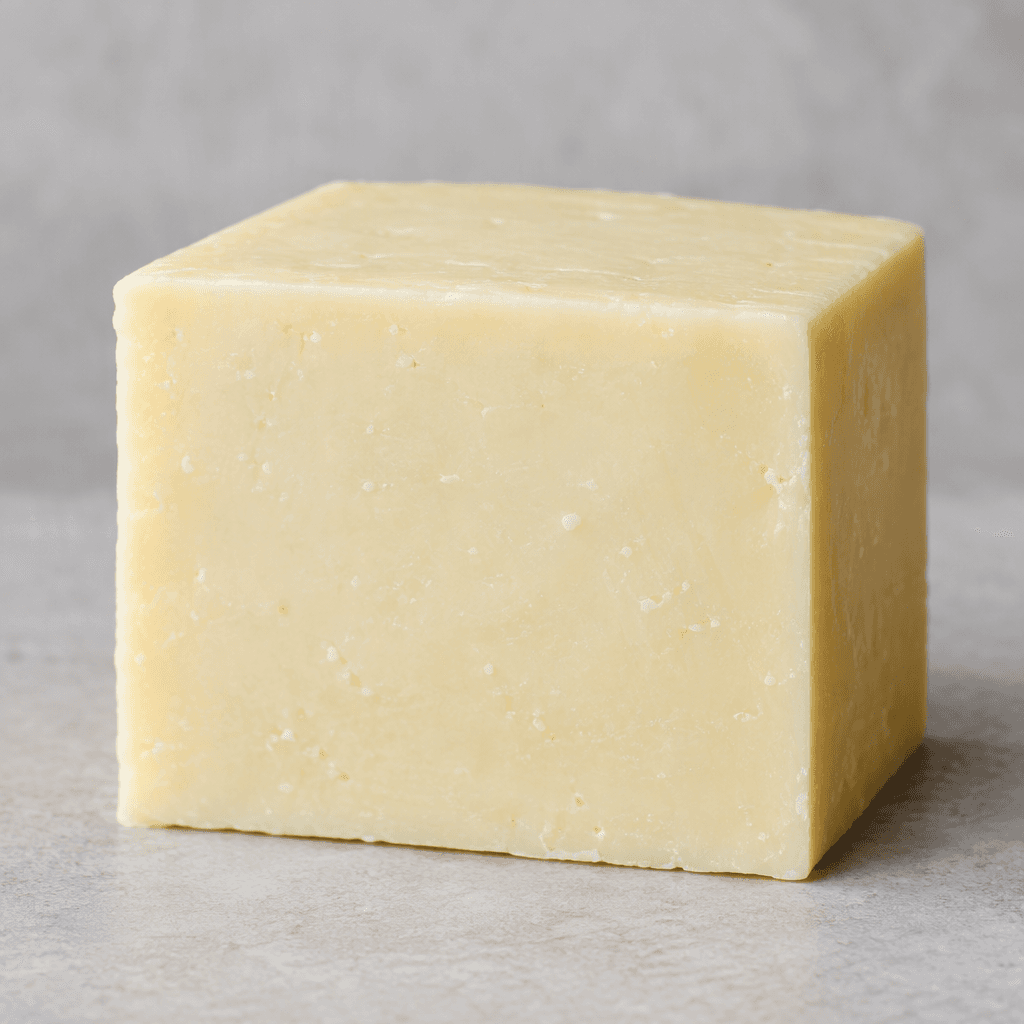
Cheese 30% Fat Calories
Medium-fat cheese, source of protein and calcium
In season: Spring · Summer · Autumn · Winter
CALORIES · 100 G
GI
POTASSIUM · 100 G
FIBER · 100 G
Quick answer
1 slice (medium) of Cheese 30% Fat (25 g) has 80 calories. That works out to 320 calories per 100 g. It contains 0.6 g of carbs, 5.8 g of protein, 6.3 g of fat and 0 g of fiber. Its 125 mg of Phosphorus covers 18% of the Daily Value. Its glycemic index is 0 (low), so it raises blood sugar slowly.
Cheese 30% Fat Nutrition Facts
Selected: 1 slice (medium) · 25 g
80
KCAL / 25G
Carbs
0.6g
· 0% DV
Protein
5.8g
· 12% DV
Fat
6.3g
· 8% DV
Fiber
0g
· 0% DV
DV is the share of the daily value covered, on a 2,000 kcal reference diet.
Calories come from: Carbs 3% · Protein 28% · Fat 69%
Cheese 30% Fat nutrition facts table · 1 slice (medium) (25 g)
| Nutrient | Amount | % DV |
|---|---|---|
| Calories | 80 kcal | |
| Total fat | 6.3 g | 8% |
| Saturated fat | 4 g | 20% |
| Trans fat | 0.13 g | |
| Sodium | 200 mg | 9% |
| Total carbohydrate | 0.6 g | 0% |
| Fiber | 0 g | 0% |
| Protein | 5.8 g | 12% |
Calories: Calories measure energy. Average daily need is 2,000 kcal. Excess calories are stored as fat, too few cause weight loss.
Carbs: Your body's primary energy source. The brain runs exclusively on carbs. Daily need: 275g.
Protein: Essential for muscle repair and cell growth. Daily need: 50g. Keeps you full and boosts metabolism.
Fat: Needed for hormone production and vitamin absorption. Daily need: 78g. Limit saturated fats, choose unsaturated.
Fiber: Critical for digestive health and satiety. Daily need: 28g. Stabilizes blood sugar, lowers cholesterol.

Log this food in EatBetter
100,000+ people use it
- Get your daily calorie target
- Snap your meal, log it in seconds
- See every vitamin and mineral

📸 Scan the code to get the app free.

How Many Calories in 1 Slice of Cheese 30% Fat?
| Serving | Amount | Calories |
|---|---|---|
| 1 slice (medium) | 25 g | 80 kcal |
| 1 tablespoon (grated) | 10 g | 32 kcal |
| 1 slice (thin) | 15 g | 48 kcal |
| 1 piece (small) | 30 g | 96 kcal |
| 1 serving (medium) | 30 g | 96 kcal |
| 1 slice (thick) | 40 g | 128 kcal |
| 1 piece (large) | 50 g | 160 kcal |
| 1 serving (large) | 60 g | 192 kcal |
| 100 g | 100 g | 320 kcal |
| 1 cup (grated) | 100 g | 320 kcal |
Calculated from 320 calories per 100 g.
Frequently Asked Questions About Cheese 30% Fat
What is kaşar cheese?
Kaşar cheese is a Turkish semi-hard cheese made by curdling and working milk, then allowing the cheese to mature. Fresh kaşar is mild and pliable, while aged kaşar develops a firmer texture and a sharper, more concentrated flavor.
Is kaşar cheese the same as cheddar?
No, kaşar cheese and cheddar are different cheeses, although both can be sliced and melted. Kaşar is a Turkish cheese with fresh and aged styles; cheddar has its own production and aging traditions and often tastes sharper or tangier.
Can I use kaşar cheese instead of mozzarella on pizza?
Yes, kaşar cheese can replace mozzarella on pizza and melts into a savory topping. It usually has a more pronounced flavor and may not produce the same stretchy, mild result as low-moisture mozzarella, so combining the two is another option.
Why does kaşar cheese melt unevenly?
Kaşar cheese can melt unevenly when it is cut into thick pieces, added straight from the refrigerator, or heated too quickly. Grate it or slice it thinly and spread it evenly over the dish; fresh kaşar generally melts more readily than aged kaşar.
How should I store kaşar cheese after opening?
Keep kaşar cheese refrigerated and tightly wrapped, or place it in a sealed container to limit drying and odor transfer. Rewrap the cut surface after each use, and follow the package’s storage instructions and use-by date.
Can you freeze kaşar cheese?
Yes, kaşar cheese can be frozen, though thawing may make it crumbly and less convenient to slice. Divide it into portions, wrap them airtight, and thaw in the refrigerator; use thawed kaşar in cooked dishes for the best texture.
How can you tell if kaşar cheese has gone bad?
Discard kaşar cheese if it develops mold, an unusual smell, or a slimy surface. Mold can spread beyond the visible spot, especially in sliced or grated cheese, so removing only the affected patch is not a safe fix.
Is kaşar cheese lactose-free?
No, kaşar cheese should not automatically be considered lactose-free. Aging reduces lactose, so aged kaşar may contain less than fresh kaşar, but the amount varies; people with lactose intolerance should use their own tolerance and product information as a guide.
What dishes can you make with kaşar cheese?
Kaşar cheese works well in Turkish toasties, börek, gözleme, baked pasta, and vegetable casseroles. Grating or thinly slicing it helps it melt evenly; aged kaşar adds a stronger flavor, while fresh kaşar gives a milder, softer finish.
Can kaşar cheese be served on a cheese board?
Yes, kaşar cheese is suitable for a cheese board, especially alongside olives, bread, fresh fruit, or nuts. Fresh kaşar is easy to slice and mild; aged kaşar is firmer and pairs well with more robust accompaniments.
Cheese 30% Fat Vitamins & Minerals
Vitamins
B12
0.38µg · 16% DV
B2
0.09mg · 7% DV
Vitamin A
55µg · 6% DV
B5
0.13mg · 3% DV
Minerals
Phosphorus
125mg · 18% DV
Calcium
175mg · 18% DV
Sodium
200mg · 9% DV
Zinc
0.88mg · 8% DV
Potassium ⭐
23mg · 1% DV
Cheese 30% Fat Glycemic Index
GLYCEMIC INDEX
GLYCEMIC LOAD
Accounts for portion size — a more realistic measure than GI alone.
How to Burn Off Cheese 30% Fat
To burn the 80 calories in 1 slice (medium) (25 g):
🚶
Walking (5 km/h)
🏃
Running (8 km/h)
🚴
Cycling
🏊
Swimming
Times are calculated with the MET equation for a 70 kg adult. Actual burn varies with your weight, age and pace.
What is Cheese 30% Fat?
Cheese 30% Fat refers here to kaşar, a Turkish semi-hard cheese traditionally made from cow’s milk. It has a compact, sliceable texture and a mild, savoury flavour that becomes more pronounced as the cheese matures. The 30% in the product name describes its stated fat category, rather than meaning that 30% of the cheese’s weight is fat.
In Turkey, kaşar is a familiar breakfast cheese and a favourite for toasties and sandwiches; it also melts well over pide and other hot dishes. Elsewhere, it works much like other firm melting cheeses. It provides protein and calcium, while still being relatively rich, so pair a modest slice with tomatoes or wholegrain bread, or use a thinner layer in a lighter sandwich.
How Nutritious Is Cheese 30% Fat?
Nutrient density
High
How many vitamins, minerals and how much fiber this food carries per calorie. A high score means a lot of nutrition for few calories.
Satiety score
Medium
An EatBetter score computed from fiber, protein and calorie density. A high score means staying full longer on the same calories.
Both scores are calculated per 100 g and do not change with the selected portion. The satiety score is EatBetter's own calculation, not a clinical measure.
Is Cheese 30% Fat Processed?
NOVA 3
Processed
1. Unprocessed
2. Minimally Processed
3. Processed
4. Ultra-Processed
NOVA classifies foods into 4 groups by industrial processing. NOVA 1 (unprocessed) is the healthiest.
Does Cheese 30% Fat Contain Allergens?
Contains these allergens:
Which Diets Is Cheese 30% Fat Good For?
Vegan
— Not suitable
Vegetarian
✓ Suitable
Gluten-Free
— Not suitable
Dairy-Free
— Not suitable
Mediterranean
✓ Suitable
Paleo
— Not suitable
Whole30
— Not suitable
DASH
— Not suitable
Keto
✓ Suitable
Low FODMAP
— Not suitable
Cheese 30% Fat Fat Profile
SATURATED
4g
MONOUNSATURATED
1.75g
POLYUNSATURATED
0.25g
Omega 6:3 ratio 6.5:1
Above the ideal 4:1 (6.5:1).
Compare Cheese 30% Fat
Foods Similar to Cheese 30% Fat
Have another question about Cheese 30% Fat?
Ask the AI nutrition coach — calories, portions, alternatives and more, answered in seconds in the app.

Scan calories with your camera
Instant AI nutrition analysis

Nutrition data compiled from USDA FoodData Central and scientific sources.