

Ready & Packaged Foods
All →Vegetables & Legumes
All →Desserts & Confectionery
All →Meat & Protein
All →Grains & Bakery
All →Beverages
All →Milk & Dairy
All →

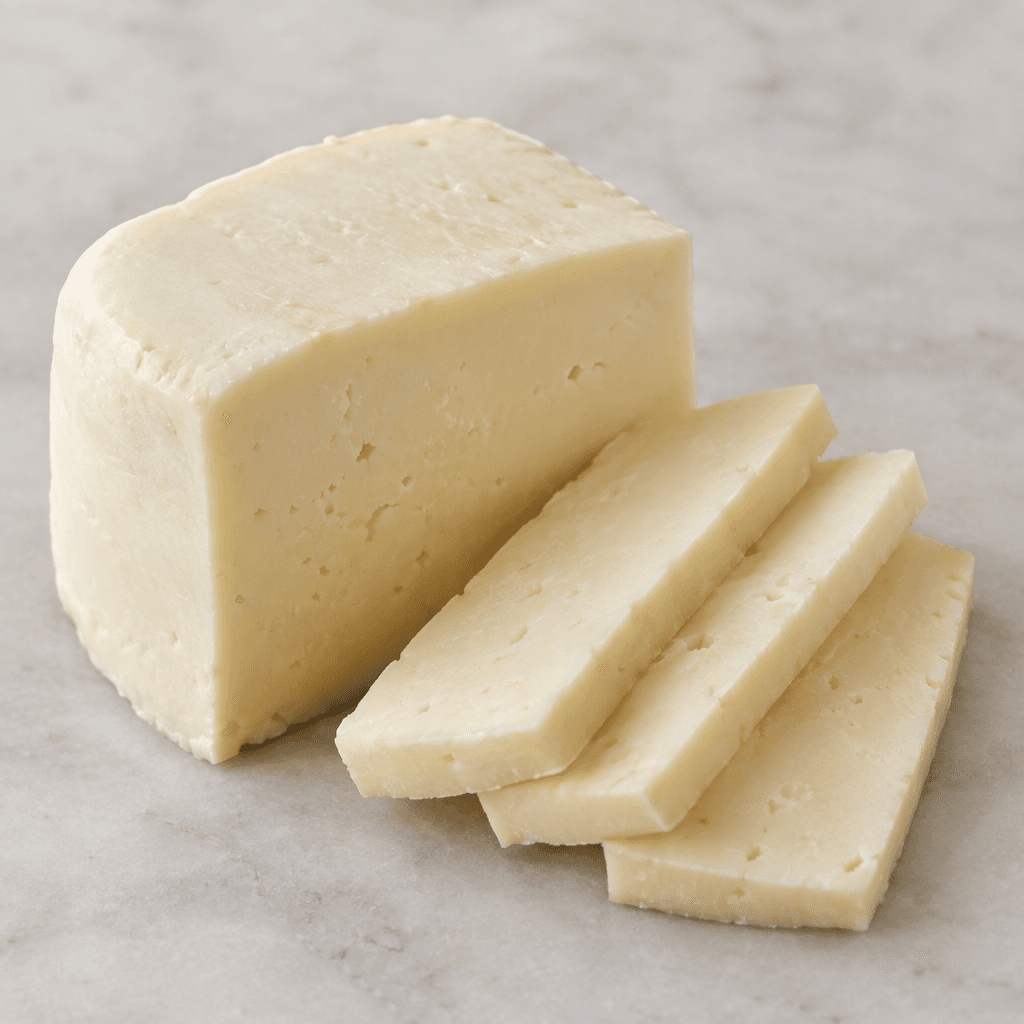
Cheese Calories
Rich in calcium and protein, highly versatile and nutritious
In season: Spring · Summer · Autumn · Winter
CALORIES
GI
POTASSIUM
FIBER
Quick answer
1 slice (medium) of Cheese (30 g) has 105 calories. That works out to 350 calories per 100 g. It contains 0.6 g of carbs, 7.5 g of protein, 8.4 g of fat and 0 g of fiber. Its 216 mg of Calcium covers 22% of the Daily Value. Its glycemic index is 0 (low), so it raises blood sugar slowly.
What is Cheese?
Cheese is made by curdling milk, then eaten fresh or aged; its flavour and texture vary widely with the milk, method and region. Across the world, it might be a soft spread, a crumbly table cheese or a firm block ready to slice.
It is served with bread, fruit or crackers, melted into cooked dishes, or added to salads and sandwiches. In Turkey, it is also a familiar part of breakfast, often alongside olives and vegetables. Cheese provides protein and calcium, though its fat and salt content varies by type. The listed profile provides 25 g of protein per 100 g. For a lighter meal, pair a modest portion with fresh vegetables or fruit.
Cheese Nutrition Facts
Selected: 100 g
350
KCAL / 100G
Carbs
2g
· 1% DV
Protein
25g
· 50% DV
Fat
28g
· 36% DV
Fiber
0g
· 0% DV
DV is the share of the daily value covered, on a 2,000 kcal reference diet.
Calories come from: Carbs 2% · Protein 28% · Fat 70%
Cheese Vitamins & Minerals
Vitamins
B12
1.5µg · 63% DV
Vitamin A
260µg · 29% DV
B2
0.35mg · 27% DV
B5
0.5mg · 10% DV
Minerals
Calcium
720mg · 72% DV
Phosphorus
490mg · 70% DV
Zinc
3mg · 27% DV
Sodium
620mg · 27% DV
How Nutritious Is Cheese?
Nutrient density
High
How many vitamins, minerals and how much fiber this food carries per calorie. A high score means a lot of nutrition for few calories.
Satiety score
Medium
An EatBetter score computed from fiber, protein and calorie density. A high score means staying full longer on the same calories.
Both scores are calculated per 100 g and do not change with the selected portion. The satiety score is EatBetter's own calculation, not a clinical measure.
Cheese Glycemic Index
GLYCEMIC INDEX
GLYCEMIC LOAD
Accounts for portion size — a more realistic measure than GI alone.
How to Burn Off Cheese
To burn the 350 calories in 100 g:
🚶
Walking (5 km/h)
🏃
Running (8 km/h)
🚴
Cycling
🏊
Swimming
Times are calculated with the MET equation for a 70 kg adult. Actual burn varies with your weight, age and pace.
Is Cheese Processed?
NOVA 2
Minimally Processed
1. Unprocessed
2. Minimally Processed
3. Processed
4. Ultra-Processed
NOVA classifies foods into 4 groups by industrial processing. NOVA 1 (unprocessed) is the healthiest.
Does Cheese Contain Allergens?
Contains these allergens:
Which Diets Is Cheese Good For?
Vegan
— Not suitable
Vegetarian
✓ Suitable
Gluten-Free
— Not suitable
Dairy-Free
— Not suitable
Mediterranean
✓ Suitable
Paleo
— Not suitable
Whole30
— Not suitable
DASH
— Not suitable
Keto
✓ Suitable
Low FODMAP
— Not suitable
Cheese Fat Profile
SATURATED
18g
MONOUNSATURATED
7g
POLYUNSATURATED
1.2g
Omega 6:3 ratio 2.5:1
Below the ideal 4:1 — a good omega balance.
Compare Cheese
Foods Similar to Cheese
Frequently Asked Questions About Cheese
Is cheese healthy?
Yes, cheese can be part of a healthy diet: it provides protein and calcium, but some varieties are high in saturated fat and salt. Keep portions moderate, especially if you are limiting sodium or saturated fat.
Can people with lactose intolerance eat cheese?
Often, yes. Aged hard cheeses generally contain much less lactose than fresh cheeses because lactose decreases during aging. Lactose levels vary by type, so try a small amount first or choose a cheese specifically labeled lactose-free.
Is cheese safe to eat during pregnancy?
Yes, cheese made with pasteurized milk is generally safe during pregnancy. Avoid cheese made from unpasteurized milk, which can carry harmful bacteria, and follow local food-safety guidance for soft or mold-ripened varieties.
How long does cheese last in the fridge?
It varies by type and how it is stored. Keep cheese wrapped or in a sealed container in the refrigerator, and follow the package’s use-by guidance. Discard it if it develops unusual slime, an off smell, or unexpected mold.
Can you freeze cheese?
Yes, most cheese can be frozen, but freezing often makes the texture crumbly or grainy after thawing. It works best for cheese you plan to grate or cook with, rather than serve as slices on a cheese board.
Can you eat the rind on cheese?
Usually, yes, if the rind is a natural part of an edible cheese, such as Brie or a washed-rind cheese. Do not eat wax, plastic, or cloth coverings; check the product information if you cannot tell what the rind is made of.
Why does cheese have holes?
Some cheeses develop holes when bacteria release carbon dioxide during aging. The gas forms bubbles in the cheese as it ripens; the size and number of holes depend on the cheese-making process and the conditions during aging.
Why doesn't cheese melt smoothly?
Cheese may separate, turn oily, or stay firm when its moisture, acidity, or aging make it unsuitable for smooth melting. Use a cheese known to melt well, grate it, and heat it gently to reduce separation.
How is cheese made?
Cheese is made by adding cultures and usually a coagulant to milk so it forms curds. The curds are cut and drained from the whey, then salted and shaped; some cheeses are eaten fresh, while others are aged.
Does cheese cause constipation?
Cheese can contribute to constipation for some people, particularly when it replaces fiber-rich foods in the diet. It contains little or no fiber, so pair it with vegetables, fruit, or whole grains and drink enough fluids.
Have another question about Cheese?
Ask the AI nutrition coach — calories, portions, alternatives and more, answered in seconds in the app.

Scan calories with your camera
Instant AI nutrition analysis

Nutrition data compiled from USDA FoodData Central and scientific sources.