

Ready & Packaged Foods
All →Vegetables & Legumes
All →Desserts & Confectionery
All →Meat & Protein
All →Grains & Bakery
All →Beverages
All →Milk & Dairy
All →

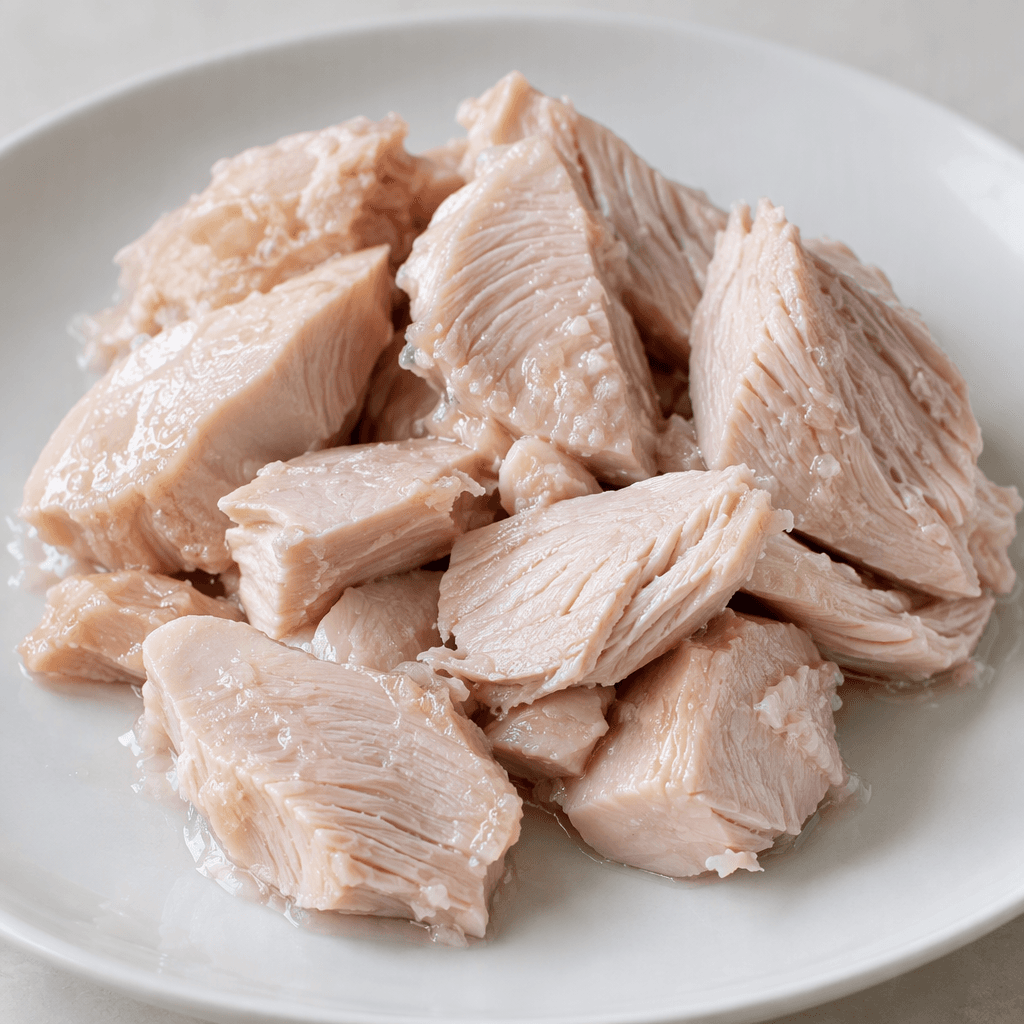
Canned Turkey Fillet Calories
Lean protein, convenient, long shelf life
In season: Spring · Summer · Autumn · Winter
CALORIES
GI
POTASSIUM
FIBER
Quick answer
1 piece (medium) of Canned Turkey Fillet (90 g) has 99 calories. That works out to 110 calories per 100 g. It contains 0.5 g of carbs, 20.3 g of protein, 2 g of fat and 0 g of fiber. Its 6.1 mg of B3 covers 38% of the Daily Value. Its glycemic index is 0 (low), so it raises blood sugar slowly.
What is Canned Turkey Fillet?
Canned Turkey Fillet is cooked turkey breast or fillet pieces preserved in a can, often with a little meat juice or jelly. It is ready to eat once opened and can also be warmed or added to other dishes.
The flavour is mild and savoury, with compact, moist slices that hold their shape. Serve it cold in a sandwich or salad, or warm it gently and pair it with vegetables, potatoes or grains for an easy meal. With 22.5 g of protein and 2.2 g of fat per 100 g, it is a lean, convenient source of protein. Check the saltiness before seasoning, and refrigerate any portion left after opening.
Canned Turkey Fillet Nutrition Facts
Selected: 100 g
110
KCAL / 100G
Carbs
0.5g
· 0% DV
Protein
22.5g
· 45% DV
Fat
2.2g
· 3% DV
Fiber
0g
· 0% DV
DV is the share of the daily value covered, on a 2,000 kcal reference diet.
Calories come from: Carbs 2% · Protein 81% · Fat 17%
Canned Turkey Fillet Vitamins & Minerals
Vitamins
B3
6.8mg · 43% DV
B12
0.7µg · 29% DV
B6
0.43mg · 25% DV
B5
0.7mg · 14% DV
Minerals
Selenium
17µg · 31% DV
Phosphorus
210mg · 30% DV
Zinc
2mg · 18% DV
Sodium
420mg · 18% DV
How Nutritious Is Canned Turkey Fillet?
Nutrient density
High
How many vitamins, minerals and how much fiber this food carries per calorie. A high score means a lot of nutrition for few calories.
Satiety score
Medium
An EatBetter score computed from fiber, protein and calorie density. A high score means staying full longer on the same calories.
Both scores are calculated per 100 g and do not change with the selected portion. The satiety score is EatBetter's own calculation, not a clinical measure.
Canned Turkey Fillet Glycemic Index
GLYCEMIC INDEX
GLYCEMIC LOAD
Accounts for portion size — a more realistic measure than GI alone.
How to Burn Off Canned Turkey Fillet
To burn the 110 calories in 100 g:
🚶
Walking (5 km/h)
🏃
Running (8 km/h)
🚴
Cycling
🏊
Swimming
Times are calculated with the MET equation for a 70 kg adult. Actual burn varies with your weight, age and pace.
Is Canned Turkey Fillet Processed?
NOVA 3
Processed
1. Unprocessed
2. Minimally Processed
3. Processed
4. Ultra-Processed
NOVA classifies foods into 4 groups by industrial processing. NOVA 1 (unprocessed) is the healthiest.
Does Canned Turkey Fillet Contain Allergens?
No known major allergens
Which Diets Is Canned Turkey Fillet Good For?
Vegan
— Not suitable
Vegetarian
— Not suitable
Gluten-Free
✓ Suitable
Dairy-Free
— Not suitable
Mediterranean
✓ Suitable
Paleo
✓ Suitable
Whole30
— Not suitable
DASH
— Not suitable
Keto
✓ Suitable
Low FODMAP
— Not suitable
Canned Turkey Fillet Fat Profile
SATURATED
0.6g
MONOUNSATURATED
0.7g
POLYUNSATURATED
0.4g
Omega 6:3 ratio 3.6:1
Below the ideal 4:1 — a good omega balance.
Compare Canned Turkey Fillet
Foods Similar to Canned Turkey Fillet
Frequently Asked Questions About Canned Turkey Fillet
Is Canned Turkey Fillet ready to eat?
Yes, Canned Turkey Fillet is cooked during processing and is generally ready to eat straight from the can. Drain it if you prefer a firmer texture, or warm it briefly; prolonged heating can make the meat dry.
How long does Canned Turkey Fillet last after opening?
Once opened, transfer Canned Turkey Fillet to a covered container and refrigerate it promptly. Use it within about 3–4 days, and discard it if it develops an unusual smell, discoloration, or a slimy surface.
Why is there jelly around Canned Turkey Fillet?
The clear jelly around Canned Turkey Fillet is usually juices released from the meat during cooking that set as they cool. It is edible when the product is fresh and the can is intact; drain it if you dislike the texture.
Can you use Canned Turkey Fillet instead of canned chicken?
Yes, Canned Turkey Fillet can replace canned chicken in sandwiches, salads, casseroles, and pasta dishes. Its flavor is mild and its pieces may be denser, so break them up or season the dish to suit your recipe.
Does Canned Turkey Fillet need to be heated?
No, Canned Turkey Fillet is already cooked, so heating is optional. For a hot meal, stir it in near the end of cooking or warm it gently in a pan; simmering it for a long time can dry out the meat.
What can you make with Canned Turkey Fillet?
Canned Turkey Fillet works well in turkey salad, wraps, sandwiches, pasta, and quick soups. Since it is already cooked, add it toward the end of cooking in hot dishes so the pieces warm through without breaking down.
How should unopened Canned Turkey Fillet be stored?
Keep unopened Canned Turkey Fillet in a cool, dry cupboard away from direct sunlight, and follow the date printed on the can. Do not use a can that is swollen, leaking, badly dented, or heavily rusted.
Can Canned Turkey Fillet be frozen after opening?
Yes, you can freeze Canned Turkey Fillet after opening. Move it out of the can into a tightly sealed freezer-safe container; thaw it in the refrigerator and use it in cooked dishes if the texture has softened.
What is Canned Turkey Fillet made of?
Canned Turkey Fillet is primarily turkey meat, but the exact ingredients can differ between products; some include broth, salt, or other additions. The meat may be packed with cooking juices, which can form the jelly in the can.
Is Canned Turkey Fillet a good choice for a quick lunch?
Yes, Canned Turkey Fillet is a convenient lunch option because it is cooked and can be added directly to a sandwich, salad, or grain bowl. Pair it with vegetables or another side for a more complete meal.
Have another question about Canned Turkey Fillet?
Ask the AI nutrition coach — calories, portions, alternatives and more, answered in seconds in the app.

Scan calories with your camera
Instant AI nutrition analysis

Nutrition data compiled from USDA FoodData Central and scientific sources.