

Ready & Packaged Foods
All →Vegetables & Legumes
All →Desserts & Confectionery
All →Meat & Protein
All →Grains & Bakery
All →Beverages
All →Milk & Dairy
All →

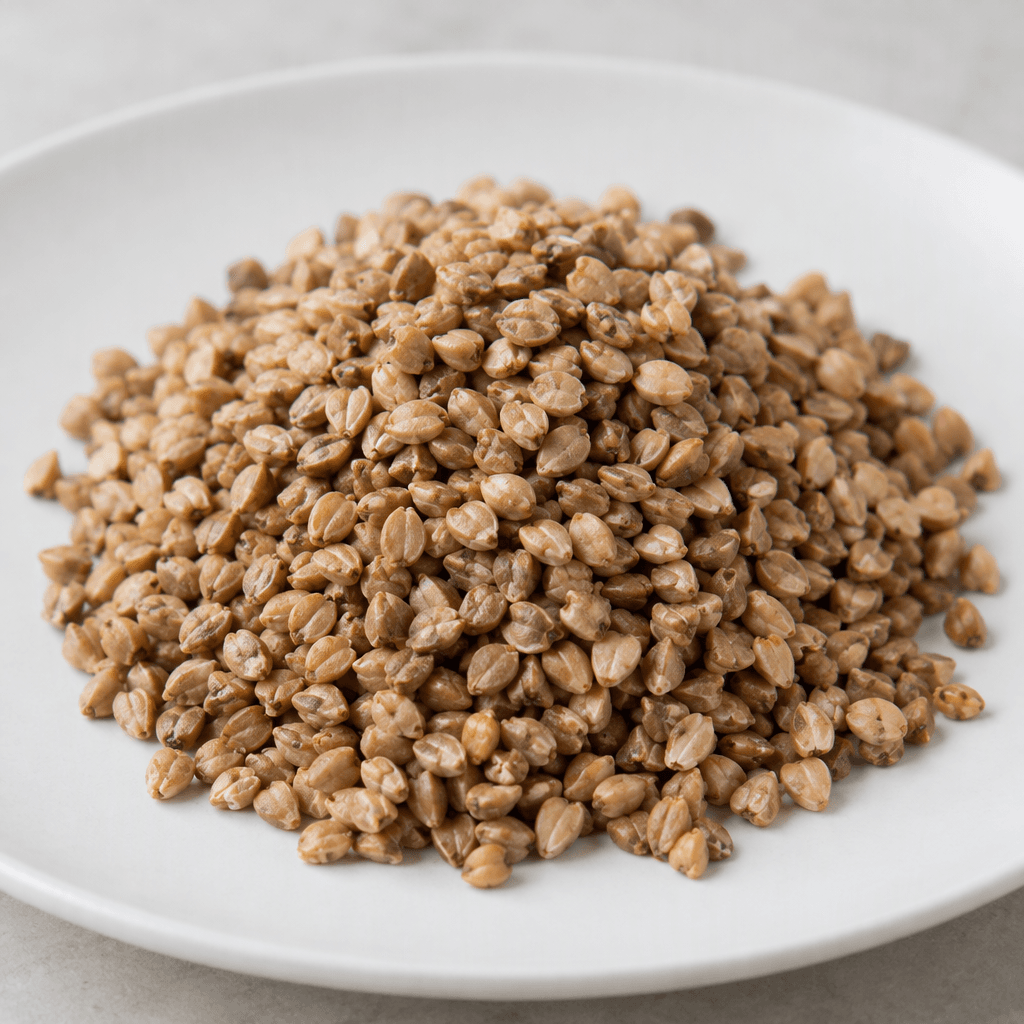
Canga Calories
Traditional bread, source of carbohydrates
In season: Spring · Summer · Autumn · Winter
CALORIES
GI
POTASSIUM
FIBER
Quick answer
1 slice (medium) of Canga (40 g) has 100 calories. That works out to 250 calories per 100 g. It contains 20 g of carbs, 3.4 g of protein, 0.6 g of fat and 1.1 g of fiber. Its 0.1 mg of B1 covers 7% of the Daily Value. Its glycemic index is 70 (high), so it raises blood sugar quickly.
What is Canga?
Canga is a traditional bread made from grain flour and baked as a loaf or in smaller portions. The name alone does not point to a particular region or a fixed recipe, so its shape and preparation can vary; it is best understood as a simple, grain-based bread rather than a specific filled or sweet bake.
Its texture may be close and hearty or more open, depending on how it is made, with a mild grain-forward flavour. Serve it alongside soup or a savoury meal, or use it for breakfast with cheese, eggs or vegetables. Canga is mainly a source of carbohydrates, with 50 g per 100 g. For a more balanced, lighter plate, pair a modest portion with vegetables and a protein-rich topping.
Canga Nutrition Facts
Selected: 100 g
250
KCAL / 100G
Carbs
50g
· 18% DV
Protein
8.5g
· 17% DV
Fat
1.5g
· 2% DV
Fiber
2.7g
· 10% DV
DV is the share of the daily value covered, on a 2,000 kcal reference diet.
Calories come from: Carbs 81% · Protein 14% · Fat 5%

Log this food in EatBetter
100,000+ people use it
- Get your daily calorie target
- Snap your meal, log it in seconds
- See every vitamin and mineral

📸 Scan the code to get the app free.

Canga Vitamins & Minerals
Vitamins
B1
0.22mg · 18% DV
B3
2.1mg · 13% DV
Folate
30µg · 8% DV
B2
0.08mg · 6% DV
Minerals
Sodium
400mg · 17% DV
Selenium
8µg · 15% DV
Iron
2mg · 11% DV
Potassium ⭐
90mg · 3% DV
Manganese
0mg · 0% DV
How Nutritious Is Canga?
Nutrient density
Low
How many vitamins, minerals and how much fiber this food carries per calorie. A high score means a lot of nutrition for few calories.
Satiety score
Medium
An EatBetter score computed from fiber, protein and calorie density. A high score means staying full longer on the same calories.
Both scores are calculated per 100 g and do not change with the selected portion. The satiety score is EatBetter's own calculation, not a clinical measure.
Canga Glycemic Index
GLYCEMIC INDEX
GLYCEMIC LOAD
Accounts for portion size — a more realistic measure than GI alone.
How to Burn Off Canga
To burn the 250 calories in 100 g:
🚶
Walking (5 km/h)
🏃
Running (8 km/h)
🚴
Cycling
🏊
Swimming
Times are calculated with the MET equation for a 70 kg adult. Actual burn varies with your weight, age and pace.
Is Canga Processed?
NOVA 3
Processed
1. Unprocessed
2. Minimally Processed
3. Processed
4. Ultra-Processed
NOVA classifies foods into 4 groups by industrial processing. NOVA 1 (unprocessed) is the healthiest.
Does Canga Contain Allergens?
Contains these allergens:
Which Diets Is Canga Good For?
Vegan
— Not suitable
Vegetarian
✓ Suitable
Gluten-Free
— Not suitable
Dairy-Free
— Not suitable
Mediterranean
— Not suitable
Paleo
— Not suitable
Whole30
— Not suitable
DASH
— Not suitable
Keto
— Not suitable
Low FODMAP
— Not suitable
Canga Fat Profile
SATURATED
0.3g
MONOUNSATURATED
0.2g
POLYUNSATURATED
0.15g
Omega 6:3 ratio 6:1
Above the ideal 4:1 (6:1).
Compare Canga
Foods Similar to Canga
Frequently Asked Questions About Canga
What is Canga bread?
Canga is described as a traditional bread made from grain. The name does not identify one universally standardized recipe, so ingredients, shape, and texture can vary by local tradition or producer.
What is Canga bread made from?
Canga bread is made from grain flour, but there is no single recipe implied by the name. Depending on the version, the dough may also use water, salt, and yeast or sourdough; check the specific recipe for its exact ingredients.
Where does Canga bread come from?
There is no widely established single place of origin for Canga bread that can be reliably identified from the name alone. It may refer to a local traditional bread, so its history is best tied to the particular community or recipe using the name.
How is Canga bread traditionally served?
Canga bread can be served sliced alongside soups, stews, or other savory meals. If the loaf is dense or crumbly, warming the slices briefly before serving makes them easier to eat and better for dipping.
How long does Canga bread stay fresh?
Canga bread stays fresh longest when kept dry at room temperature in a bread box or breathable bag. Its exact shelf life depends on the recipe and humidity; discard the whole loaf if you see mold or notice an unusual smell.
Can you freeze Canga bread?
Yes, Canga bread can be frozen. Slice it first and seal the portions in a freezer-safe bag, so you can thaw only what you need. Warm thawed slices briefly to improve their texture.
Can Canga bread be used for sandwiches?
Yes, Canga bread can be used for sandwiches if its slices hold together well. Pair it with fillings that are not too wet, and test one slice first if the loaf is especially crumbly.
Can you toast Canga bread?
Yes, Canga bread can be toasted in a toaster, pan, or oven. Keep an eye on it because thinner or drier slices brown quickly; toasting is also a simple way to make day-old slices more appealing.
How do you make Canga bread at home?
You can make Canga bread at home using a recipe from the community or tradition associated with that name. Since Canga does not have one standard formula, follow that recipe for the flour blend, leavening, shaping, and baking method.
What should you eat with Canga bread?
Canga bread goes well with soups, bean dishes, and savory spreads. For a simple meal, serve it with a protein-rich topping or dip; choose a sturdier slice for dishes with plenty of sauce.
Have another question about Canga?
Ask the AI nutrition coach — calories, portions, alternatives and more, answered in seconds in the app.

Scan calories with your camera
Instant AI nutrition analysis

Nutrition data compiled from USDA FoodData Central and scientific sources.