

Ready & Packaged Foods
All →Vegetables & Legumes
All →Desserts & Confectionery
All →Meat & Protein
All →Grains & Bakery
All →Beverages
All →Milk & Dairy
All →

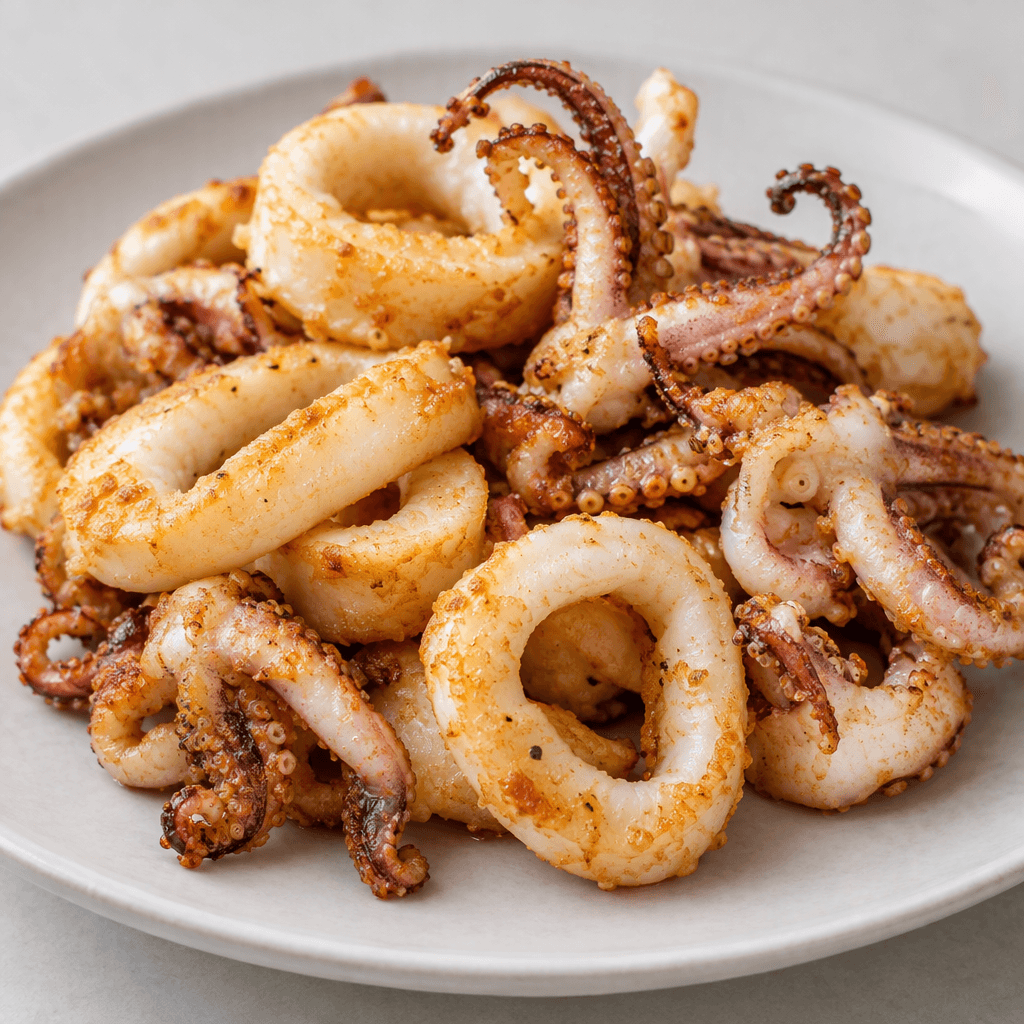
Calamari Calories
High protein, low fat, seafood
In season: Summer · Autumn
CALORIES
GI
POTASSIUM
FIBER
Quick answer
1 piece (medium) of Calamari (60 g) has 55 calories. That works out to 92 calories per 100 g. It contains 1.9 g of carbs, 9.4 g of protein, 0.8 g of fat and 0 g of fiber. Its 26.4 µg of Selenium covers 48% of the Daily Value. Its glycemic index is 0 (low), so it raises blood sugar slowly.
What is Calamari?
Calamari is squid prepared as food, especially familiar in Mediterranean coastal cooking. The body is usually sliced into rings, while the tentacles may be cooked too. A common restaurant version is coated and fried until crisp, though squid can also be grilled or sautéed.
It has a mild, briny taste and a tender, pleasantly chewy texture. Around the Mediterranean it is often served as a shared starter, with lemon or a dipping sauce; elsewhere it is popular as a restaurant appetizer or bar snack. Calamari is protein-rich and naturally low in fat, though breading and frying can change the overall nutrition. For a lighter meal, choose grilled calamari and pair it with salad or vegetables.
Calamari Nutrition Facts
Selected: 100 g
92
KCAL / 100G
Carbs
3.1g
· 1% DV
Protein
15.6g
· 31% DV
Fat
1.4g
· 2% DV
Fiber
0g
· 0% DV
DV is the share of the daily value covered, on a 2,000 kcal reference diet.
Calories come from: Carbs 14% · Protein 71% · Fat 15%
Calamari Vitamins & Minerals
Vitamins
B12
1.3µg · 54% DV
B3
2.2mg · 14% DV
Vitamin E
2mg · 13% DV
B5
0.5mg · 10% DV
Minerals
Selenium
44µg · 80% DV
Iodine
64µg · 43% DV
Phosphorus
221mg · 32% DV
Zinc
2mg · 18% DV
How Nutritious Is Calamari?
Nutrient density
High
How many vitamins, minerals and how much fiber this food carries per calorie. A high score means a lot of nutrition for few calories.
Satiety score
Medium
An EatBetter score computed from fiber, protein and calorie density. A high score means staying full longer on the same calories.
Both scores are calculated per 100 g and do not change with the selected portion. The satiety score is EatBetter's own calculation, not a clinical measure.
Calamari Glycemic Index
GLYCEMIC INDEX
GLYCEMIC LOAD
Accounts for portion size — a more realistic measure than GI alone.
How to Burn Off Calamari
To burn the 92 calories in 100 g:
🚶
Walking (5 km/h)
🏃
Running (8 km/h)
🚴
Cycling
🏊
Swimming
Times are calculated with the MET equation for a 70 kg adult. Actual burn varies with your weight, age and pace.
Is Calamari Processed?
NOVA 1
Unprocessed
1. Unprocessed
2. Minimally Processed
3. Processed
4. Ultra-Processed
NOVA classifies foods into 4 groups by industrial processing. NOVA 1 (unprocessed) is the healthiest.
Does Calamari Contain Allergens?
Contains these allergens:
Which Diets Is Calamari Good For?
Vegan
— Not suitable
Vegetarian
— Not suitable
Gluten-Free
✓ Suitable
Dairy-Free
— Not suitable
Mediterranean
✓ Suitable
Paleo
— Not suitable
Whole30
— Not suitable
DASH
— Not suitable
Keto
✓ Suitable
Low FODMAP
— Not suitable
Calamari Fat Profile
SATURATED
0.4g
MONOUNSATURATED
0.2g
POLYUNSATURATED
0.5g
Omega 6:3 ratio 0.3:1
Below the ideal 4:1 — a good omega balance.
Compare Calamari
Foods Similar to Calamari
Frequently Asked Questions About Calamari
Is calamari squid?
Yes, calamari is squid served as food, most often cut into rings or served with tentacles. The word commonly refers to a prepared squid dish, especially breaded and fried rings, rather than a separate kind of seafood.
What part of the squid is calamari?
Calamari can include both the squid’s body and tentacles. The body is commonly sliced into rings, while the tentacles are cooked too; edible parts are cleaned before cooking to remove the innards, beak, and firm internal quill.
How do you cook calamari without making it tough?
Cook calamari very quickly over high heat, or braise it slowly until tender; the in-between cooking time often leaves it chewy. For fried rings, use small batches and take them out as soon as the coating is golden.
Why is calamari sometimes chewy?
Calamari turns chewy when it is cooked for too long at a moderate temperature. Quick frying or grilling helps keep it tender, while a longer braise can also work; reheating fried calamari for too long can make it tough.
How do you make restaurant-style fried calamari crispy?
For crisp fried calamari, dry the rings thoroughly, coat them lightly, and fry in hot oil in small batches. Overcrowding cools the oil and makes the coating soggy. Serve soon after frying, with lemon or a dipping sauce.
What sauce is served with calamari?
Calamari is often served with marinara sauce, lemon, or a creamy garlic dip. In Mediterranean-style restaurants, aioli is also common. A squeeze of lemon adds brightness, while a rich dip complements the crunchy coating on fried calamari.
Can you grill calamari instead of frying it?
Yes, calamari grills well and is a lighter alternative to breaded, fried rings. Pat it dry, season simply, and grill it over high heat for a short time so it does not become rubbery; larger pieces may need slightly longer.
How do you clean squid for calamari?
Pull the head and tentacles away from the body, remove the innards and clear, firm quill, then peel off the outer skin if desired. Cut away the beak and eyes from the tentacles, and rinse the edible pieces under cold water.
Can you cook calamari from frozen?
Thaw frozen calamari in the refrigerator before cooking for more even results, then pat it dry to reduce splattering and help the coating adhere. Avoid thawing it at room temperature, and do not refreeze it after it has thawed.
How long does cooked calamari last in the fridge?
Store cooked calamari in a covered container in the refrigerator and eat it within a few days. Reheat fried calamari briefly in an oven or air fryer to bring back some crispness; microwaving usually makes the coating soft.
Have another question about Calamari?
Ask the AI nutrition coach — calories, portions, alternatives and more, answered in seconds in the app.

Scan calories with your camera
Instant AI nutrition analysis

Nutrition data compiled from USDA FoodData Central and scientific sources.