

Ready & Packaged Foods
All →Vegetables & Legumes
All →Desserts & Confectionery
All →Meat & Protein
All →Grains & Bakery
All →Beverages
All →Milk & Dairy
All →

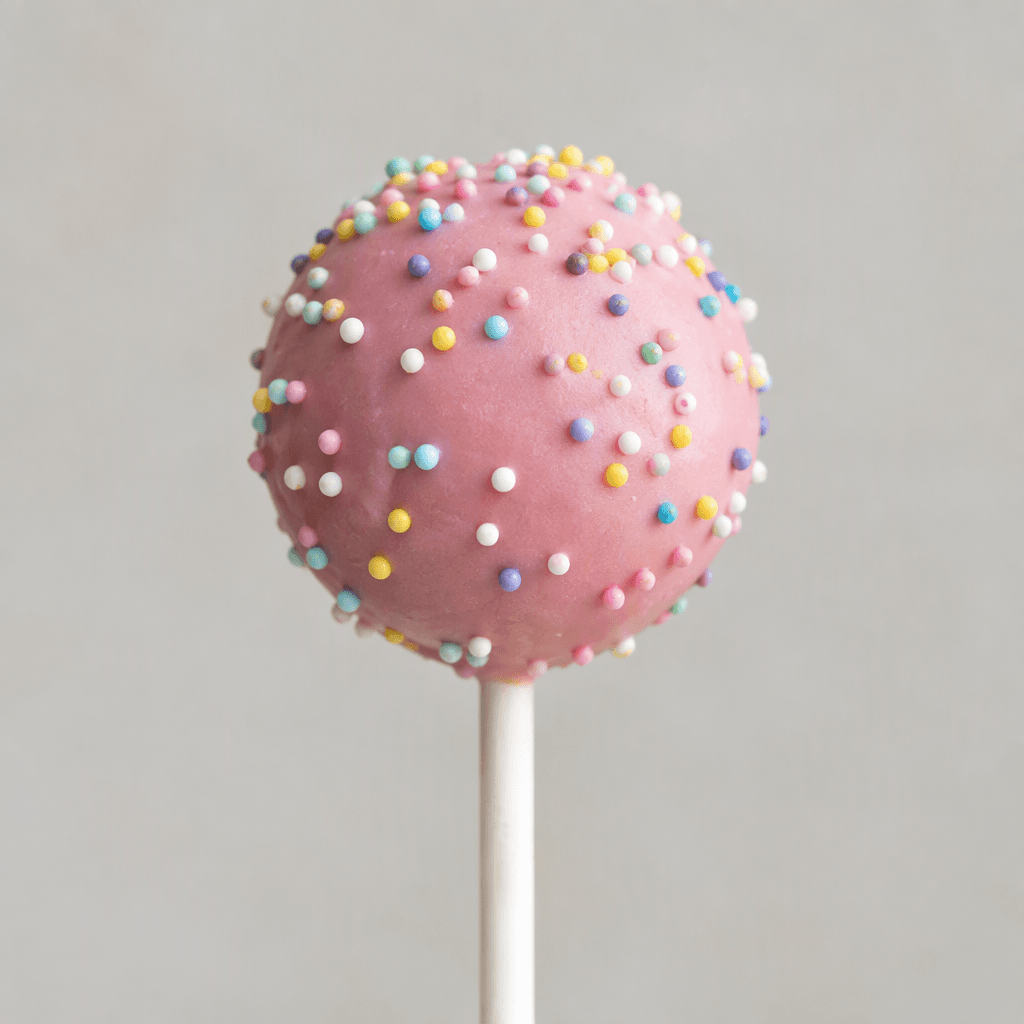
Cake Pop Calories
Colorful, sweet, bite-sized cake balls
In season: Spring · Summer · Autumn · Winter
CALORIES
GI
POTASSIUM
FIBER
Quick answer
1 piece (medium) of Cake Pop (35 g) has 137 calories. That works out to 390 calories per 100 g. It contains 19.6 g of carbs, 1.5 g of protein, 5.8 g of fat and 0.4 g of fiber. Its glycemic index is 70 (high), so it raises blood sugar quickly.
What is Cake Pop?
A cake pop is a small ball of cake crumbs mixed with frosting or another binder, shaped around a stick and dipped in a sweet coating. The treat became popular in the United States and is often decorated with sprinkles or coloured icing; it is also a handy way to use leftover cake.
The coating sets into a smooth shell around a soft, dense centre, making each one easy to serve at parties or enjoy as a small café treat. Cake pops are mainly a sweet source of carbohydrate and fat, with relatively little protein, so they’re best thought of as a dessert rather than a filling snack. For a less rich version, use a thinner coating and serve one alongside unsweetened tea or coffee.
Cake Pop Nutrition Facts
Selected: 100 g
390
KCAL / 100G
Carbs
56g
· 20% DV
Protein
4.2g
· 8% DV
Fat
16.5g
· 21% DV
Fiber
1.2g
· 4% DV
DV is the share of the daily value covered, on a 2,000 kcal reference diet.
Calories come from: Carbs 58% · Protein 4% · Fat 38%
Cake Pop Vitamins & Minerals
Vitamins
B2
0.13mg · 10% DV
B1
0.08mg · 7% DV
Biotin
2.2µg · 7% DV
B5
0.28mg · 6% DV
Minerals
Sodium
210mg · 9% DV
Phosphorus
62mg · 9% DV
Selenium
4.2µg · 8% DV
Iron
1mg · 6% DV
How Nutritious Is Cake Pop?
Nutrient density
Low
How many vitamins, minerals and how much fiber this food carries per calorie. A high score means a lot of nutrition for few calories.
Satiety score
Low
An EatBetter score computed from fiber, protein and calorie density. A high score means staying full longer on the same calories.
Both scores are calculated per 100 g and do not change with the selected portion. The satiety score is EatBetter's own calculation, not a clinical measure.
Cake Pop Glycemic Index
GLYCEMIC INDEX
GLYCEMIC LOAD
Accounts for portion size — a more realistic measure than GI alone.
How to Burn Off Cake Pop
To burn the 390 calories in 100 g:
🚶
Walking (5 km/h)
🏃
Running (8 km/h)
🚴
Cycling
🏊
Swimming
Times are calculated with the MET equation for a 70 kg adult. Actual burn varies with your weight, age and pace.
Is Cake Pop Processed?
NOVA 3
Processed
1. Unprocessed
2. Minimally Processed
3. Processed
4. Ultra-Processed
NOVA classifies foods into 4 groups by industrial processing. NOVA 1 (unprocessed) is the healthiest.
Does Cake Pop Contain Allergens?
Contains these allergens:
Which Diets Is Cake Pop Good For?
Vegan
— Not suitable
Vegetarian
— Not suitable
Gluten-Free
— Not suitable
Dairy-Free
— Not suitable
Mediterranean
— Not suitable
Paleo
— Not suitable
Whole30
— Not suitable
DASH
— Not suitable
Keto
— Not suitable
Low FODMAP
— Not suitable
Cake Pop Fat Profile
SATURATED
6.2g
MONOUNSATURATED
5.3g
POLYUNSATURATED
2.1g
Omega 6:3 ratio 53.3:1
Above the ideal 4:1 (53.3:1).
Compare Cake Pop
Foods Similar to Cake Pop
Frequently Asked Questions About Cake Pop
What is a cake pop made of?
A cake pop is made from cake crumbs mixed with frosting or another binder, shaped into a ball, and coated in chocolate or candy coating. It is commonly served on a stick.
How do you make cake pops without a mold?
To make cake pops without a mold, crumble cooled cake and mix in frosting a little at a time until it holds together. Shape the mixture into balls, chill them, add sticks, then dip them in melted coating.
Why do cake pops fall off the stick?
Cake pops usually fall off the stick when the balls are too large, too soft, or not anchored properly. Dip each stick tip in melted coating before inserting it, then chill the balls until firm.
Why do cake pops crack after dipping?
Cake pops often crack when a very cold cake ball meets warm coating. Let chilled balls sit briefly before dipping, and keep the coating fluid but not hot to reduce the temperature shock.
What is the best coating for cake pops?
Candy melts or confectionery coating are easy choices because they melt smoothly and set without tempering. Real chocolate also works, but couverture chocolate needs proper tempering for a firm, glossy finish.
How long do cake pops keep?
Keep cake pops in an airtight container in the refrigerator and eat them within a few days. Those made with cream cheese or perishable frosting should not sit at room temperature for extended periods.
Can you freeze cake pops?
Yes, cake pops can be frozen, either before or after coating. Seal them in an airtight container and thaw them in the refrigerator before serving to reduce condensation on the coating.
Can you make cake pops with cake mix?
Yes, boxed cake mix works well for cake pops. Bake the cake according to the package directions, let it cool completely, then crumble it and add frosting gradually until the mixture can be shaped.
How do you get sprinkles to stick to cake pops?
Add sprinkles to cake pops immediately after dipping, while the coating is still wet. If it has already set, dab on a little melted coating to act as glue before adding the sprinkles.
Why are cake pops oily or mushy?
Cake pops turn oily or mushy when the cake mixture contains too much frosting or is made with very moist cake. Add the binder gradually, and chill the shaped balls before dipping so they hold their form.
Have another question about Cake Pop?
Ask the AI nutrition coach — calories, portions, alternatives and more, answered in seconds in the app.

Scan calories with your camera
Instant AI nutrition analysis

Nutrition data compiled from USDA FoodData Central and scientific sources.