

Ready & Packaged Foods
All →Vegetables & Legumes
All →Desserts & Confectionery
All →Meat & Protein
All →Grains & Bakery
All →Beverages
All →Milk & Dairy
All →

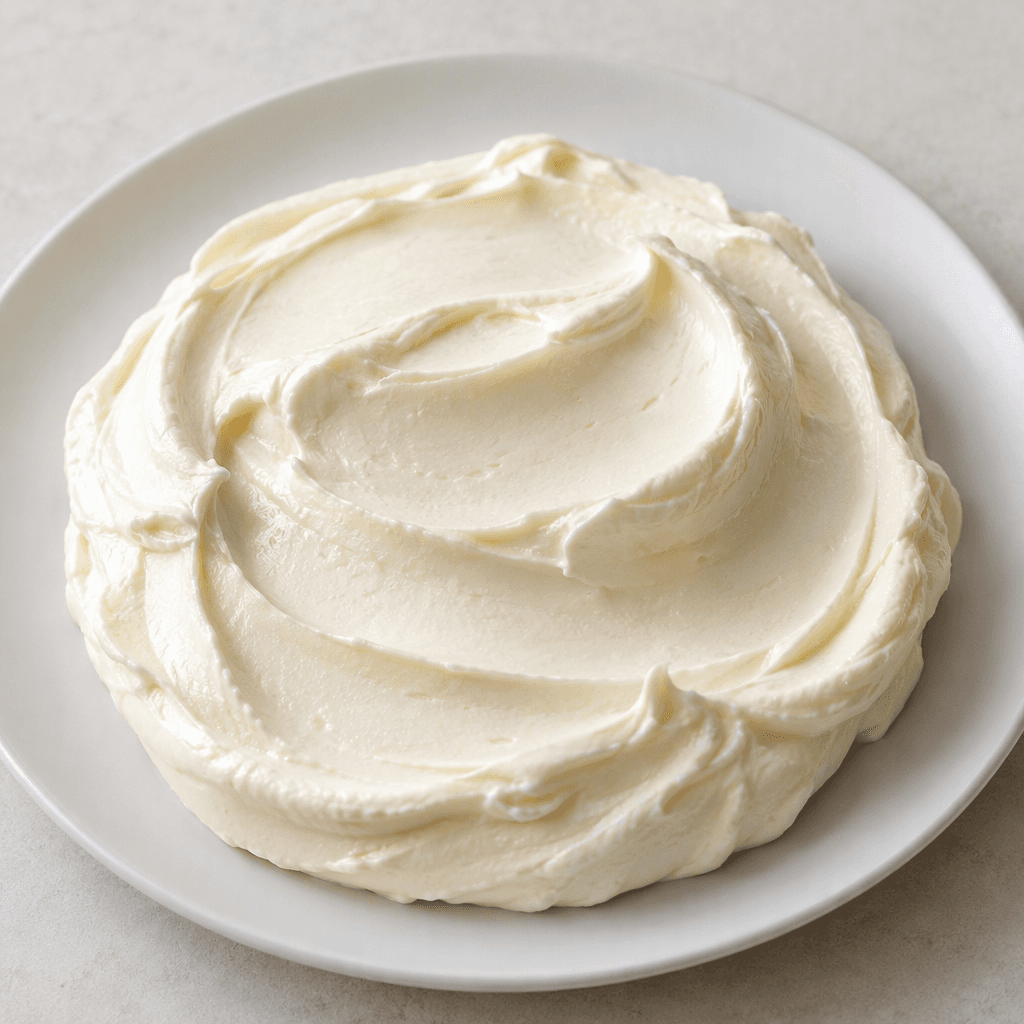
Cake cream Calories
Creamy, sweet, milk-based cake filling
In season: Spring · Summer · Autumn · Winter
CALORIES
GI
POTASSIUM
FIBER
Quick answer
2 tablespoon (medium) of Cake cream (40 g) has 84 calories. That works out to 210 calories per 100 g. It contains 12.4 g of carbs, 1.6 g of protein, 3 g of fat and 0 g of fiber. Its 0.1 µg of B12 covers 5% of the Daily Value. Its glycemic index is 50 (medium), so it raises blood sugar at a moderate pace.
What is Cake cream?
Cake cream is a sweet, thick filling commonly made by cooking milk with sugar, eggs and flour or starch until smooth. It is used between cake layers, as a topping, or in tarts; homemade versions and ready-made mixes are both common.
Its texture is rich and creamy, with a mild, sweet flavour. In many places, it is spread between sponge layers or served with fruit in celebration cakes and home baking. It is mainly a carbohydrate-rich dessert, with some fat and a little protein. For a less heavy cake, use a thin layer and pair it with fresh berries or other fruit.
Cake cream Nutrition Facts
Selected: 100 g
210
KCAL / 100G
Carbs
31g
· 11% DV
Protein
4.1g
· 8% DV
Fat
7.5g
· 10% DV
Fiber
0.1g
· 0% DV
DV is the share of the daily value covered, on a 2,000 kcal reference diet.
Calories come from: Carbs 60% · Protein 8% · Fat 32%
Cake cream Vitamins & Minerals
Vitamins
B12
0.3µg · 13% DV
B2
0.12mg · 9% DV
Biotin
2µg · 7% DV
Vitamin A
55µg · 6% DV
Minerals
Phosphorus
70mg · 10% DV
Calcium
90mg · 9% DV
Iodine
8µg · 5% DV
Selenium
2µg · 4% DV
How Nutritious Is Cake cream?
Nutrient density
Low
How many vitamins, minerals and how much fiber this food carries per calorie. A high score means a lot of nutrition for few calories.
Satiety score
Low
An EatBetter score computed from fiber, protein and calorie density. A high score means staying full longer on the same calories.
Both scores are calculated per 100 g and do not change with the selected portion. The satiety score is EatBetter's own calculation, not a clinical measure.
Cake cream Glycemic Index
GLYCEMIC INDEX
GLYCEMIC LOAD
Accounts for portion size — a more realistic measure than GI alone.
How to Burn Off Cake cream
To burn the 210 calories in 100 g:
🚶
Walking (5 km/h)
🏃
Running (8 km/h)
🚴
Cycling
🏊
Swimming
Times are calculated with the MET equation for a 70 kg adult. Actual burn varies with your weight, age and pace.
Is Cake cream Processed?
NOVA 3
Processed
1. Unprocessed
2. Minimally Processed
3. Processed
4. Ultra-Processed
NOVA classifies foods into 4 groups by industrial processing. NOVA 1 (unprocessed) is the healthiest.
Does Cake cream Contain Allergens?
Contains these allergens:
Which Diets Is Cake cream Good For?
Vegan
— Not suitable
Vegetarian
✓ Suitable
Gluten-Free
— Not suitable
Dairy-Free
— Not suitable
Mediterranean
— Not suitable
Paleo
— Not suitable
Whole30
— Not suitable
DASH
— Not suitable
Keto
— Not suitable
Low FODMAP
— Not suitable
Cake cream Fat Profile
SATURATED
4.2g
MONOUNSATURATED
2.1g
POLYUNSATURATED
0.2g
Omega 6:3 ratio 5:1
Above the ideal 4:1 (5:1).
Compare Cake cream
Foods Similar to Cake cream
Frequently Asked Questions About Cake cream
What is cake cream?
Cake cream is a sweet, soft filling or topping used between cake layers and on desserts. The name can describe several recipes, but a milk-based version is usually cooked until thick and chilled before spreading.
How do you make cake cream from scratch?
To make cake cream from scratch, whisk milk, egg yolks, sugar, and cornstarch or flour, then cook while stirring until thick. Add vanilla, cover the surface directly, and chill it before using.
Can cake cream be used to frost a cake?
Yes, cake cream can frost a cake, especially when it is thick and fully chilled. It is softer and less stable than buttercream, so keep the finished cake refrigerated and avoid using it for elaborate decorations.
What is the difference between cake cream and buttercream?
Cake cream is typically a milk-based custard or filling, while buttercream is made mainly by beating butter with sugar. Cake cream tastes lighter but needs refrigeration; buttercream holds its shape better at room temperature.
Why does cake cream turn lumpy?
Cake cream usually turns lumpy when it heats too quickly or is not stirred continuously. Cook it over moderate heat while whisking, and if lumps remain, pass the warm cream through a fine sieve before chilling.
How do you thicken cake cream that is too runny?
Cook cake cream a little longer over moderate heat, stirring constantly, until it thickens; it will firm further as it cools. If it is already cold, gently reheat it rather than adding dry starch, which can leave lumps.
How long does cake cream last in the fridge?
Homemade cake cream generally keeps for about 2–3 days in a covered container in the refrigerator. Chill it promptly after cooking, and keep any cake filled with it refrigerated as well.
Can you freeze cake cream?
Yes, but freezing often damages cake cream’s texture. After thawing, a milk-and-egg custard may separate or become grainy, so it is usually better to make a fresh batch for filling or frosting.
Why does cake cream make cake layers slide?
Cake layers slide when cake cream is warm, too loose, or spread too close to the edges. Chill the cream until firm, use a moderate layer, and refrigerate the assembled cake before serving.
How do you stop a skin forming on cake cream?
Press plastic wrap directly onto the surface of the cake cream while it cools. This blocks contact with air, preventing a skin; whisk the chilled cream briefly before spreading it for a smooth finish.
Have another question about Cake cream?
Ask the AI nutrition coach — calories, portions, alternatives and more, answered in seconds in the app.

Scan calories with your camera
Instant AI nutrition analysis

Nutrition data compiled from USDA FoodData Central and scientific sources.