

Ready & Packaged Foods
All →Vegetables & Legumes
All →Desserts & Confectionery
All →Meat & Protein
All →Grains & Bakery
All →Beverages
All →Milk & Dairy
All →

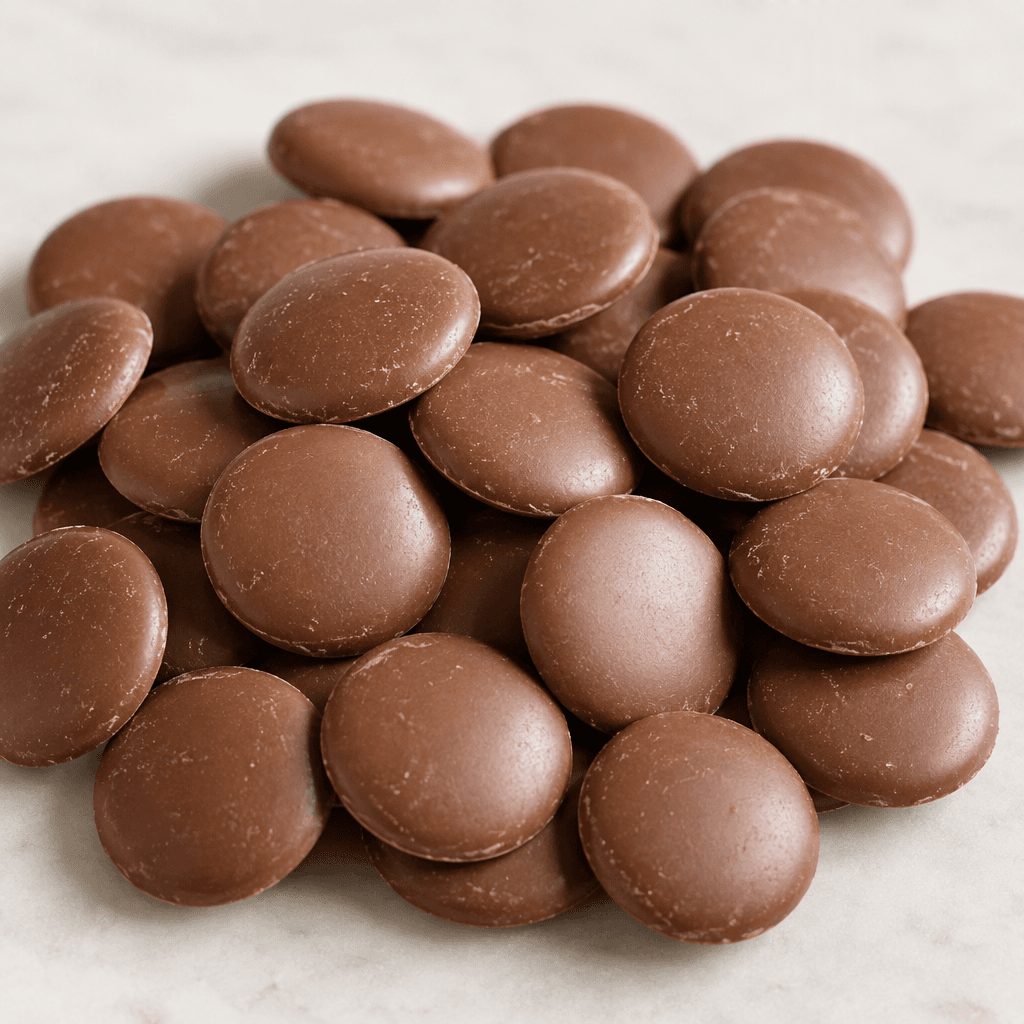
Cadbury Dairy Milk Buttons Calories
Milk chocolate buttons
CALORIES · 100 G
GI
POTASSIUM · 100 G
FIBER · 100 G
Quick answer
1 serving (medium) of Cadbury Dairy Milk Buttons (32 g) has 172 calories. That works out to 536 calories per 100 g. It contains 18.2 g of carbs, 2.3 g of protein, 9.9 g of fat and 0.6 g of fiber. Its 0.1 mg of Copper covers 11% of the Daily Value. Its glycemic index is 58 (high), so it raises blood sugar quickly.
Cadbury Dairy Milk Buttons Nutrition Facts
Selected: 1 serving (medium) · 32 g
172
KCAL / 32G
Carbs
18.2g
· 7% DV
Protein
2.3g
· 5% DV
Fat
9.9g
· 13% DV
Fiber
0.6g
· 2% DV
DV is the share of the daily value covered, on a 2,000 kcal reference diet.
Calories come from: Carbs 43% · Protein 5% · Fat 52%
Cadbury Dairy Milk Buttons nutrition facts table · 1 serving (medium) (32 g)
| Nutrient | Amount | % DV |
|---|---|---|
| Calories | 172 kcal | |
| Total fat | 9.9 g | 13% |
| Saturated fat | 6.02 g | 30% |
| Trans fat | 0.16 g | |
| Sodium | 77 mg | 3% |
| Total carbohydrate | 18.2 g | 7% |
| Fiber | 0.6 g | 2% |
| Protein | 2.3 g | 5% |
Calories: Calories measure energy. Average daily need is 2,000 kcal. Excess calories are stored as fat, too few cause weight loss.
Carbs: Your body's primary energy source. The brain runs exclusively on carbs. Daily need: 275g.
Protein: Essential for muscle repair and cell growth. Daily need: 50g. Keeps you full and boosts metabolism.
Fat: Needed for hormone production and vitamin absorption. Daily need: 78g. Limit saturated fats, choose unsaturated.
Fiber: Critical for digestive health and satiety. Daily need: 28g. Stabilizes blood sugar, lowers cholesterol.

Log this food in EatBetter
100,000+ people use it
- Get your daily calorie target
- Snap your meal, log it in seconds
- See every vitamin and mineral

📸 Scan the code to get the app free.

How Many Calories in 1 Serving of Cadbury Dairy Milk Buttons?
| Serving | Amount | Calories |
|---|---|---|
| 1 serving (medium) | 32 g | 172 kcal |
| 1 piece (mini) | 4.5 g | 24 kcal |
| 5 piece (small) | 22.5 g | 121 kcal |
| 7 piece (medium) | 32 g | 172 kcal |
| 1 pack (small) | 42 g | 225 kcal |
| 10 piece (large) | 45 g | 241 kcal |
| 1 cup (medium) | 70 g | 375 kcal |
| 1 pack (large) | 95 g | 509 kcal |
| 100 g | 100 g | 536 kcal |
Calculated from 536 calories per 100 g.
Frequently Asked Questions About Cadbury Dairy Milk Buttons
What are Cadbury Dairy Milk Buttons made of?
Cadbury Dairy Milk Buttons are small, button-shaped pieces of milk chocolate. They are an ultra-processed confectionery product made by combining chocolate ingredients and forming them into buttons; the precise recipe can vary between markets.
Are Cadbury Dairy Milk Buttons the same as a Cadbury Dairy Milk chocolate bar?
They are both milk chocolate from the Cadbury Dairy Milk range, but they come in different shapes and formats. Buttons are bite-sized pieces, while a bar is divided into larger sections and may be easier to break up for recipes.
How should you store Cadbury Dairy Milk Buttons after opening?
Keep Cadbury Dairy Milk Buttons in a cool, dry place away from sunlight, and seal the pack after opening. Warmth and temperature changes can affect the chocolate’s texture or cause a pale surface bloom; follow the date on the pack.
Can you melt Cadbury Dairy Milk Buttons for dipping?
Yes, Cadbury Dairy Milk Buttons can be melted for dipping, but milk chocolate can scorch or seize if overheated or exposed to water. Heat them gently in short microwave bursts, stirring between each, or melt them over a water bath.
Can you bake with Cadbury Dairy Milk Buttons?
Yes, you can add Cadbury Dairy Milk Buttons to cookies, cakes, and other bakes. They may soften or melt in the oven; for a decorative finish that keeps its shape, press a few onto the bake after it comes out.
Do Cadbury Dairy Milk Buttons contain caffeine?
Yes, Cadbury Dairy Milk Buttons contain a small amount of naturally occurring caffeine from cocoa. If you are sensitive to caffeine, having them late in the day may affect your sleep.
Can dogs eat Cadbury Dairy Milk Buttons?
No, do not give Cadbury Dairy Milk Buttons to dogs. Chocolate contains theobromine and caffeine, which can be toxic to them; contact a veterinarian promptly if your dog has eaten any.
Can you freeze Cadbury Dairy Milk Buttons?
Yes, you can freeze Cadbury Dairy Milk Buttons in an airtight container. Let the sealed container come back to room temperature before opening it, which helps prevent condensation from forming on the chocolate.
Are Cadbury Dairy Milk Buttons safe for young children?
Older children can eat Cadbury Dairy Milk Buttons, but they are a sweet treat and whole buttons can pose a choking risk for very young children. Avoid giving them whole to little ones and supervise them while they eat.
Can you add Cadbury Dairy Milk Buttons to hot chocolate?
Yes, Cadbury Dairy Milk Buttons melt into hot milk and can make hot chocolate sweeter and creamier. Stir thoroughly as they melt so the chocolate mixes through instead of settling at the bottom.
Cadbury Dairy Milk Buttons Vitamins & Minerals
Vitamins
B12
0.22µg · 9% DV
B2
0.09mg · 7% DV
B5
0.13mg · 3% DV
Biotin
0.67µg · 2% DV
Minerals
Copper
0.1mg · 11% DV
Phosphorus
66mg · 9% DV
Calcium
61mg · 6% DV
Magnesium
19mg · 5% DV
Potassium ⭐
122mg · 4% DV
Sodium
77mg · 3% DV
Cadbury Dairy Milk Buttons Glycemic Index
GLYCEMIC INDEX
GLYCEMIC LOAD
Accounts for portion size — a more realistic measure than GI alone.
How to Burn Off Cadbury Dairy Milk Buttons
To burn the 172 calories in 1 serving (medium) (32 g):
🚶
Walking (5 km/h)
🏃
Running (8 km/h)
🚴
Cycling
🏊
Swimming
Times are calculated with the MET equation for a 70 kg adult. Actual burn varies with your weight, age and pace.
What is Cadbury Dairy Milk Buttons?
Cadbury Dairy Milk Buttons are small, flat discs of Cadbury’s milk chocolate. They come from the British Cadbury Dairy Milk range, with a shape made for easy, bite-sized snacking rather than breaking off a bar.
They have a creamy, sweet chocolate flavour and melt smoothly, so they’re often eaten by the handful, shared from a bowl or used to decorate cakes and biscuits. In the UK, they’re a familiar treat for lunchboxes and film nights; elsewhere, they work just as well alongside coffee or as a baking extra. They’re energy-dense confectionery, with 536 kcal per 100 g. For a lighter snack, enjoy a small portion with fresh fruit, or use a few as a topping instead of adding a larger amount to a recipe.
How Nutritious Is Cadbury Dairy Milk Buttons?
Nutrient density
Low
How many vitamins, minerals and how much fiber this food carries per calorie. A high score means a lot of nutrition for few calories.
Satiety score
Low
An EatBetter score computed from fiber, protein and calorie density. A high score means staying full longer on the same calories.
Both scores are calculated per 100 g and do not change with the selected portion. The satiety score is EatBetter's own calculation, not a clinical measure.
Is Cadbury Dairy Milk Buttons Processed?
NOVA 4
Ultra-Processed
1. Unprocessed
2. Minimally Processed
3. Processed
4. Ultra-Processed
NOVA classifies foods into 4 groups by industrial processing. NOVA 1 (unprocessed) is the healthiest.
Does Cadbury Dairy Milk Buttons Contain Allergens?
Contains these allergens:
Which Diets Is Cadbury Dairy Milk Buttons Good For?
Vegan
— Not suitable
Vegetarian
✓ Suitable
Gluten-Free
— Not suitable
Dairy-Free
— Not suitable
Mediterranean
— Not suitable
Paleo
— Not suitable
Whole30
— Not suitable
DASH
— Not suitable
Keto
— Not suitable
Low FODMAP
— Not suitable
Cadbury Dairy Milk Buttons Fat Profile
SATURATED
6.02g
MONOUNSATURATED
3.01g
POLYUNSATURATED
0.29g
Omega 6:3 ratio 7:1
Above the ideal 4:1 (7:1).
Compare Cadbury Dairy Milk Buttons
Foods Similar to Cadbury Dairy Milk Buttons
Have another question about Cadbury Dairy Milk Buttons?
Ask the AI nutrition coach — calories, portions, alternatives and more, answered in seconds in the app.

Scan calories with your camera
Instant AI nutrition analysis

Nutrition data compiled from USDA FoodData Central and scientific sources.