

Ready & Packaged Foods
All →Vegetables & Legumes
All →Desserts & Confectionery
All →Meat & Protein
All →Grains & Bakery
All →Beverages
All →Milk & Dairy
All →

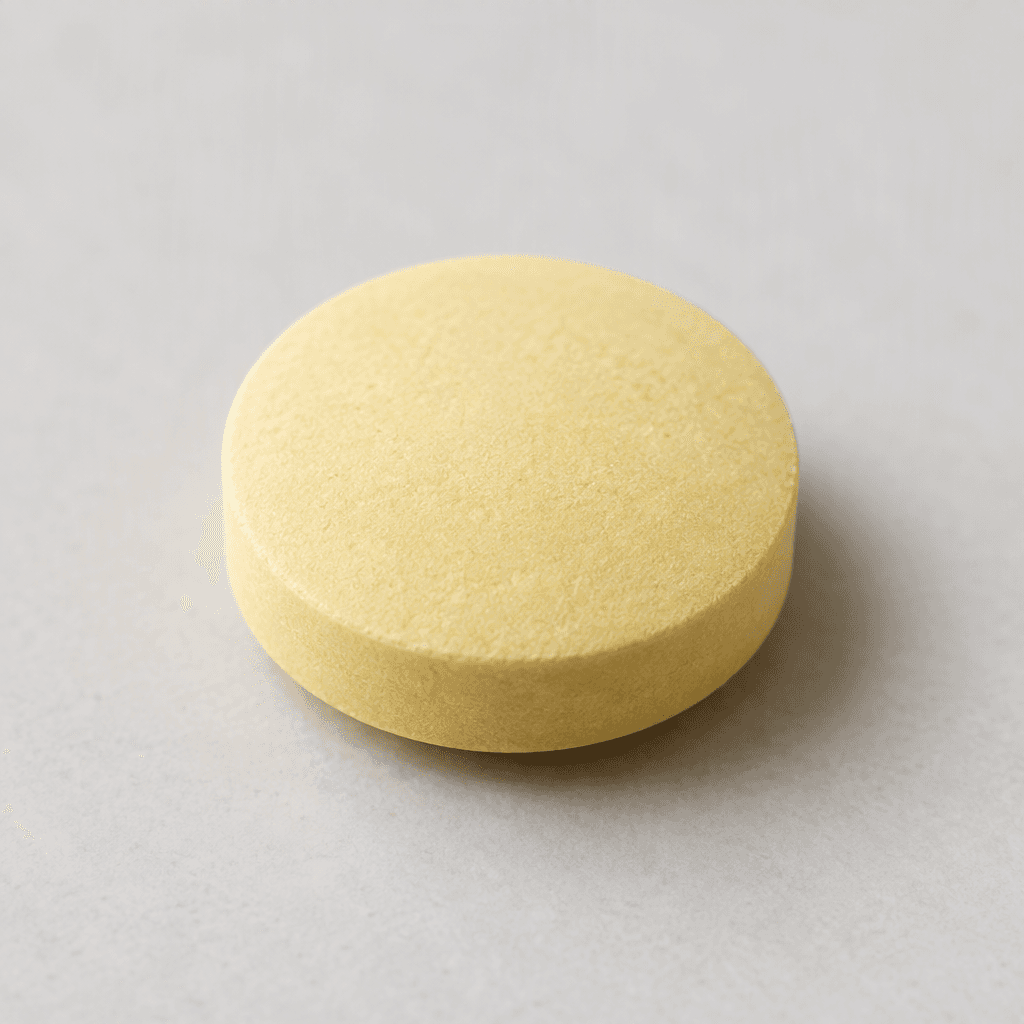
Vitamin C (tablet) Calories
Powerful antioxidant, immune support, synthetic supplement
CALORIES
GI
POTASSIUM
FIBER
Quick answer
1 piece (small) of Vitamin C (tablet) (1 g) has 4 calories. That works out to 400 calories per 100 g. It contains 1 g of carbs, 0 g of protein, 0 g of fat and 0 g of fiber. Its 10 mg of Vitamin C covers 11% of the Daily Value. Its glycemic index is 0 (low), so it raises blood sugar slowly.
What is Vitamin C (tablet)?
Vitamin C (tablet) is a compact supplement providing vitamin C, rather than a food eaten as part of a meal. Tablets are generally swallowed with water; whether a particular one should be chewed depends on its label and formulation.
The flavour can be tart or mildly flavoured, depending on the product. People take it at different times of day, often alongside a meal or with a glass of water. The nutrition table is mostly carbohydrate by weight, but a typical serving is only about 1 g. It is best treated as a supplement, not a replacement for fruit and vegetables; follow the serving directions on the pack.
Vitamin C (tablet) Nutrition Facts
Selected: 100 g
400
KCAL / 100G
Carbs
99g
· 36% DV
Protein
0g
· 0% DV
Fat
0g
· 0% DV
Fiber
0g
· 0% DV
DV is the share of the daily value covered, on a 2,000 kcal reference diet.
Calories come from: Carbs 100% · Protein 0% · Fat 0%
Vitamin C (tablet) Vitamins & Minerals
Vitamins
Vitamin C
1000mg · 1111% DV
Vitamin A
0µg · 0% DV
B1
0mg · 0% DV
B2
0mg · 0% DV
Minerals
Calcium
0mg · 0% DV
Iron
0mg · 0% DV
Magnesium
0mg · 0% DV
Zinc
0mg · 0% DV
How Nutritious Is Vitamin C (tablet)?
Nutrient density
Very high
How many vitamins, minerals and how much fiber this food carries per calorie. A high score means a lot of nutrition for few calories.
Satiety score
Low
An EatBetter score computed from fiber, protein and calorie density. A high score means staying full longer on the same calories.
Both scores are calculated per 100 g and do not change with the selected portion. The satiety score is EatBetter's own calculation, not a clinical measure.
Vitamin C (tablet) Glycemic Index
GLYCEMIC INDEX
GLYCEMIC LOAD
Accounts for portion size — a more realistic measure than GI alone.
How to Burn Off Vitamin C (tablet)
To burn the 400 calories in 100 g:
🚶
Walking (5 km/h)
🏃
Running (8 km/h)
🚴
Cycling
🏊
Swimming
Times are calculated with the MET equation for a 70 kg adult. Actual burn varies with your weight, age and pace.
Is Vitamin C (tablet) Processed?
NOVA 3
Processed
1. Unprocessed
2. Minimally Processed
3. Processed
4. Ultra-Processed
NOVA classifies foods into 4 groups by industrial processing. NOVA 1 (unprocessed) is the healthiest.
Does Vitamin C (tablet) Contain Allergens?
No known major allergens
Which Diets Is Vitamin C (tablet) Good For?
Vegan
✓ Suitable
Vegetarian
✓ Suitable
Gluten-Free
✓ Suitable
Dairy-Free
— Not suitable
Mediterranean
✓ Suitable
Paleo
✓ Suitable
Whole30
— Not suitable
DASH
— Not suitable
Keto
✓ Suitable
Low FODMAP
— Not suitable
Vitamin C (tablet) Fat Profile
SATURATED
0g
MONOUNSATURATED
0g
POLYUNSATURATED
0g
Compare Vitamin C (tablet)
Foods Similar to Vitamin C (tablet)
Frequently Asked Questions About Vitamin C (tablet)
Do vitamin C tablets prevent or cure colds?
No, vitamin C tablets do not reliably prevent or cure a cold. Regular use may slightly shorten how long a cold lasts for some people, but starting a tablet after symptoms appear is unlikely to make much difference.
What are vitamin C tablets good for?
Vitamin C tablets can help prevent or correct low vitamin C intake and support normal collagen formation and immune function. They are a supplement, not a treatment for infections or a replacement for a varied diet.
When is the best time to take a vitamin C tablet?
You can take a vitamin C tablet at any time of day; morning is not necessary. If it causes stomach discomfort, take it with a meal rather than on an empty stomach.
Can you take a vitamin C tablet on an empty stomach?
Yes, you can take a vitamin C tablet on an empty stomach. Some people experience nausea, heartburn, or stomach discomfort, so taking it with food may feel better if that happens.
How much vitamin C should you take in a tablet each day?
The right amount depends on the tablet’s vitamin C content and your needs; tablets do not all contain the same dose. Food also contributes to daily intake, so check how much vitamin C the specific tablet provides before taking it.
What happens if you take too many vitamin C tablets?
Taking too many vitamin C tablets can cause diarrhea, nausea, and abdominal cramps. Very high doses over time may raise kidney-stone risk, especially for people with kidney problems or a history of stones.
Do vitamin C tablets help your body absorb iron?
Yes, vitamin C can improve absorption of iron from plant foods such as beans, lentils, and leafy greens. Taking a tablet with a meal containing these foods may help, but it does not replace prescribed iron treatment.
Can vitamin C tablets cause kidney stones?
High-dose vitamin C supplements may increase kidney-stone risk in some people, but this does not mean everyone taking a usual amount will develop stones. If you have kidney disease or a history of stones, ask a clinician before using them.
Can you chew or crush a vitamin C tablet?
Only chew or crush a vitamin C tablet if it is made for that use. A standard tablet should generally be swallowed with water, since altering it may affect how it is taken or tolerated.
Can you take vitamin C tablets with other medicines?
Vitamin C tablets can affect how some medicines or supplements are absorbed, and high doses may be unsuitable with certain treatments. If you take regular medication, ask a pharmacist or doctor whether your specific tablet is appropriate.
Have another question about Vitamin C (tablet)?
Ask the AI nutrition coach — calories, portions, alternatives and more, answered in seconds in the app.

Scan calories with your camera
Instant AI nutrition analysis

Nutrition data compiled from USDA FoodData Central and scientific sources.