

Ready & Packaged Foods
All →Vegetables & Legumes
All →Desserts & Confectionery
All →Meat & Protein
All →Grains & Bakery
All →Beverages
All →Milk & Dairy
All →

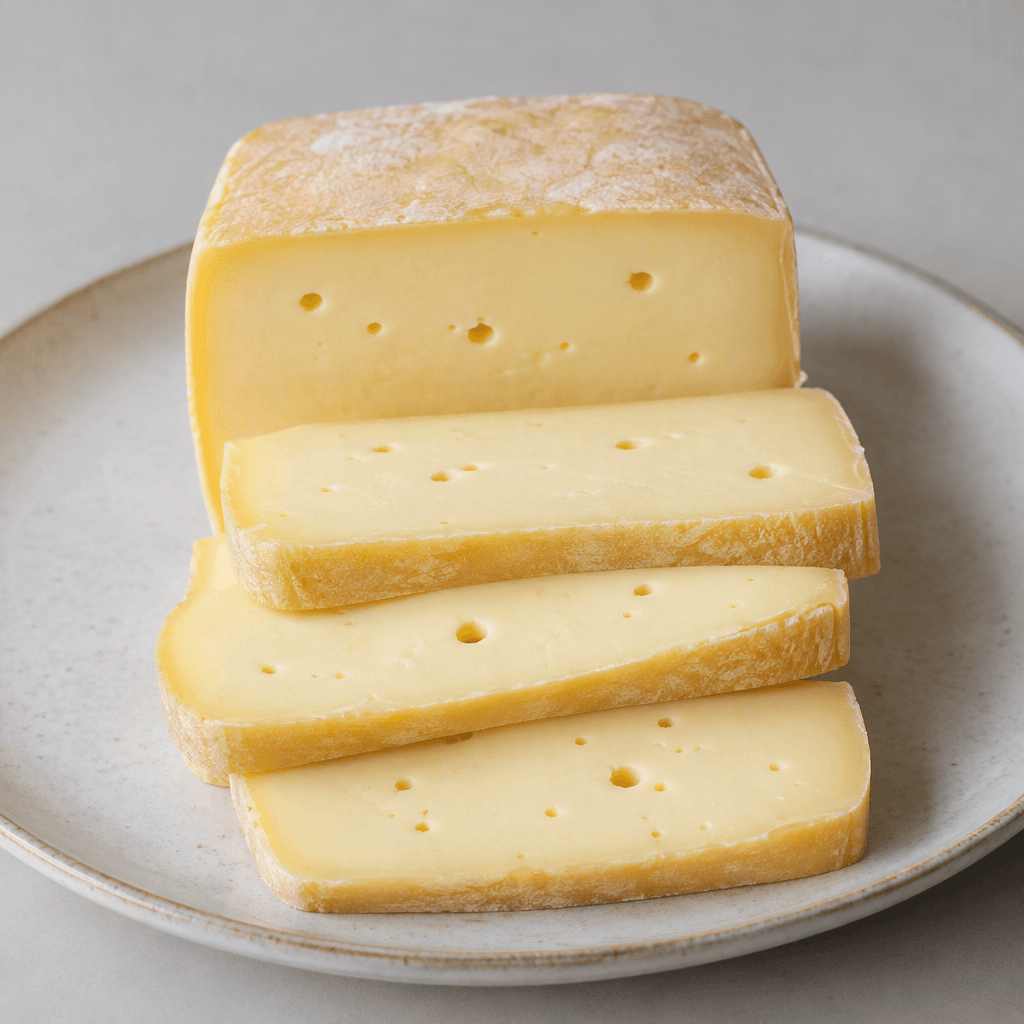
Butter Cheese Calories
Mild, soft, creamy German cheese
In season: Spring · Summer · Autumn · Winter
CALORIES · 100 G
GI
POTASSIUM · 100 G
FIBER · 100 G
Quick answer
1 slice (medium) of Butter Cheese (25 g) has 88 calories. That works out to 350 calories per 100 g. It contains 0.1 g of carbs, 5 g of protein, 7.5 g of fat and 0 g of fiber. Its 0.4 µg of B12 covers 16% of the Daily Value. Its glycemic index is 0 (low), so it raises blood sugar slowly.
Butter Cheese Nutrition Facts
Selected: 1 slice (medium) · 25 g
88
KCAL / 25G
Carbs
0.1g
· 0% DV
Protein
5g
· 10% DV
Fat
7.5g
· 10% DV
Fiber
0g
· 0% DV
DV is the share of the daily value covered, on a 2,000 kcal reference diet.
Calories come from: Carbs 0% · Protein 23% · Fat 77%
Butter Cheese nutrition facts table · 1 slice (medium) (25 g)
| Nutrient | Amount | % DV |
|---|---|---|
| Calories | 88 kcal | |
| Total fat | 7.5 g | 10% |
| Saturated fat | 5 g | 25% |
| Trans fat | 0.25 g | |
| Sodium | 200 mg | 9% |
| Total carbohydrate | 0.1 g | 0% |
| Fiber | 0 g | 0% |
| Protein | 5 g | 10% |
Calories: Calories measure energy. Average daily need is 2,000 kcal. Excess calories are stored as fat, too few cause weight loss.
Carbs: Your body's primary energy source. The brain runs exclusively on carbs. Daily need: 275g.
Protein: Essential for muscle repair and cell growth. Daily need: 50g. Keeps you full and boosts metabolism.
Fat: Needed for hormone production and vitamin absorption. Daily need: 78g. Limit saturated fats, choose unsaturated.
Fiber: Critical for digestive health and satiety. Daily need: 28g. Stabilizes blood sugar, lowers cholesterol.

Log this food in EatBetter
100,000+ people use it
- Get your daily calorie target
- Snap your meal, log it in seconds
- See every vitamin and mineral

📸 Scan the code to get the app free.

How Many Calories in 1 Slice of Butter Cheese?
| Serving | Amount | Calories |
|---|---|---|
| 1 slice (medium) | 25 g | 88 kcal |
| 1 slice (thin) | 15 g | 53 kcal |
| 1 piece (small) | 30 g | 105 kcal |
| 1 slice (thick) | 40 g | 140 kcal |
| 1 serving (medium) | 50 g | 175 kcal |
| 1 piece (large) | 60 g | 210 kcal |
| 100 g | 100 g | 350 kcal |
| 1 serving (large) | 100 g | 350 kcal |
| 1 cup (shredded) | 120 g | 420 kcal |
Calculated from 350 calories per 100 g.
Frequently Asked Questions About Butter Cheese
What is Butter Cheese?
Butter Cheese, also known as Butterkäse, is a mild, soft German cow’s-milk cheese. Its name refers to its smooth, buttery texture and taste—not to butter being an ingredient.
What does Butter Cheese taste like?
Butter Cheese tastes mild, creamy and slightly buttery, without the sharpness of aged cheeses. Its gentle flavor works well on its own, in sandwiches or alongside stronger ingredients.
Does Butter Cheese melt well?
Yes, Butter Cheese softens and melts readily when heated. It works well in grilled cheese sandwiches, casseroles and other baked dishes, where its mild flavor won’t overpower the other ingredients.
What cheese can I use instead of Butter Cheese?
Young Gouda or mild Havarti can stand in for Butter Cheese in many sandwiches and cooked dishes. Both offer a gentle flavor and a soft texture, though the exact melt and taste will differ.
Is Butter Cheese actually made with butter?
No, Butter Cheese is cheese, not a mixture of cheese and butter. The name describes its smooth, buttery character; it is typically made from cow’s milk.
How is Butter Cheese traditionally made?
Butter Cheese is a German-style cow’s-milk cheese made using cheese cultures and rennet, then pressed and allowed to mature. Its mild flavor and supple texture come from its short, gentle aging rather than a strong ripening process.
Can you eat the rind on Butter Cheese?
Butter Cheese is often sold without a natural rind. If your piece has a waxy or plastic-like outer coating, remove it before eating; that covering is packaging or protection, not part of the cheese.
How should you store Butter Cheese after opening?
Keep Butter Cheese refrigerated and tightly wrapped or in a sealed container after opening. This helps prevent it from drying out and absorbing odors; discard it if you notice mold or other signs of spoilage.
Can you freeze Butter Cheese?
Yes, Butter Cheese can be frozen, but thawing may make its texture crumbly or slightly grainy. Use thawed cheese in a toastie or cooked dish rather than expecting it to have the same texture in a cold sandwich.
Is Butter Cheese suitable for people with lactose intolerance?
Butter Cheese may contain lactose, and the amount can vary by product. Cheese-making reduces lactose but does not guarantee that every Butter Cheese is lactose-free, so choose one specifically labeled lactose-free if needed.
Butter Cheese Vitamins & Minerals
Vitamins
B12
0.38µg · 16% DV
Vitamin A
65µg · 7% DV
B2
0.09mg · 7% DV
B5
0.13mg · 3% DV
Minerals
Calcium
163mg · 16% DV
Phosphorus
113mg · 16% DV
Sodium
200mg · 9% DV
Zinc
0.8mg · 7% DV
Potassium ⭐
23mg · 1% DV
Butter Cheese Glycemic Index
GLYCEMIC INDEX
GLYCEMIC LOAD
Accounts for portion size — a more realistic measure than GI alone.
How to Burn Off Butter Cheese
To burn the 88 calories in 1 slice (medium) (25 g):
🚶
Walking (5 km/h)
🏃
Running (8 km/h)
🚴
Cycling
🏊
Swimming
Times are calculated with the MET equation for a 70 kg adult. Actual burn varies with your weight, age and pace.
What is Butter Cheese?
Butter Cheese, known in Germany as Butterkäse, is a mild, soft cheese made from cow’s milk. Despite its name, it is not simply butter blended into cheese. Its smooth, creamy texture and gentle, slightly buttery flavour make it easy to slice and pair with other foods.
In Germany, it is commonly served on bread or rolls, often as part of a simple breakfast or cold supper. It also works well in sandwiches and melts readily in toasties. For English-speaking readers elsewhere, try it with crackers, fresh fruit or crisp vegetables. It provides protein, but is also relatively high in fat, so a modest slice alongside fresh produce makes a balanced snack.
How Nutritious Is Butter Cheese?
Nutrient density
Medium
How many vitamins, minerals and how much fiber this food carries per calorie. A high score means a lot of nutrition for few calories.
Satiety score
Medium
An EatBetter score computed from fiber, protein and calorie density. A high score means staying full longer on the same calories.
Both scores are calculated per 100 g and do not change with the selected portion. The satiety score is EatBetter's own calculation, not a clinical measure.
Is Butter Cheese Processed?
NOVA 3
Processed
1. Unprocessed
2. Minimally Processed
3. Processed
4. Ultra-Processed
NOVA classifies foods into 4 groups by industrial processing. NOVA 1 (unprocessed) is the healthiest.
Does Butter Cheese Contain Allergens?
Contains these allergens:
Which Diets Is Butter Cheese Good For?
Vegan
— Not suitable
Vegetarian
✓ Suitable
Gluten-Free
— Not suitable
Dairy-Free
— Not suitable
Mediterranean
✓ Suitable
Paleo
— Not suitable
Whole30
— Not suitable
DASH
— Not suitable
Keto
— Not suitable
Low FODMAP
— Not suitable
Butter Cheese Fat Profile
SATURATED
5g
MONOUNSATURATED
2.13g
POLYUNSATURATED
0.25g
Omega 6:3 ratio 6:1
Above the ideal 4:1 (6:1).
Compare Butter Cheese
Foods Similar to Butter Cheese
Have another question about Butter Cheese?
Ask the AI nutrition coach — calories, portions, alternatives and more, answered in seconds in the app.

Scan calories with your camera
Instant AI nutrition analysis

Nutrition data compiled from USDA FoodData Central and scientific sources.