

Ready & Packaged Foods
All →Vegetables & Legumes
All →Desserts & Confectionery
All →Meat & Protein
All →Grains & Bakery
All →Beverages
All →Milk & Dairy
All →

Bun Calories
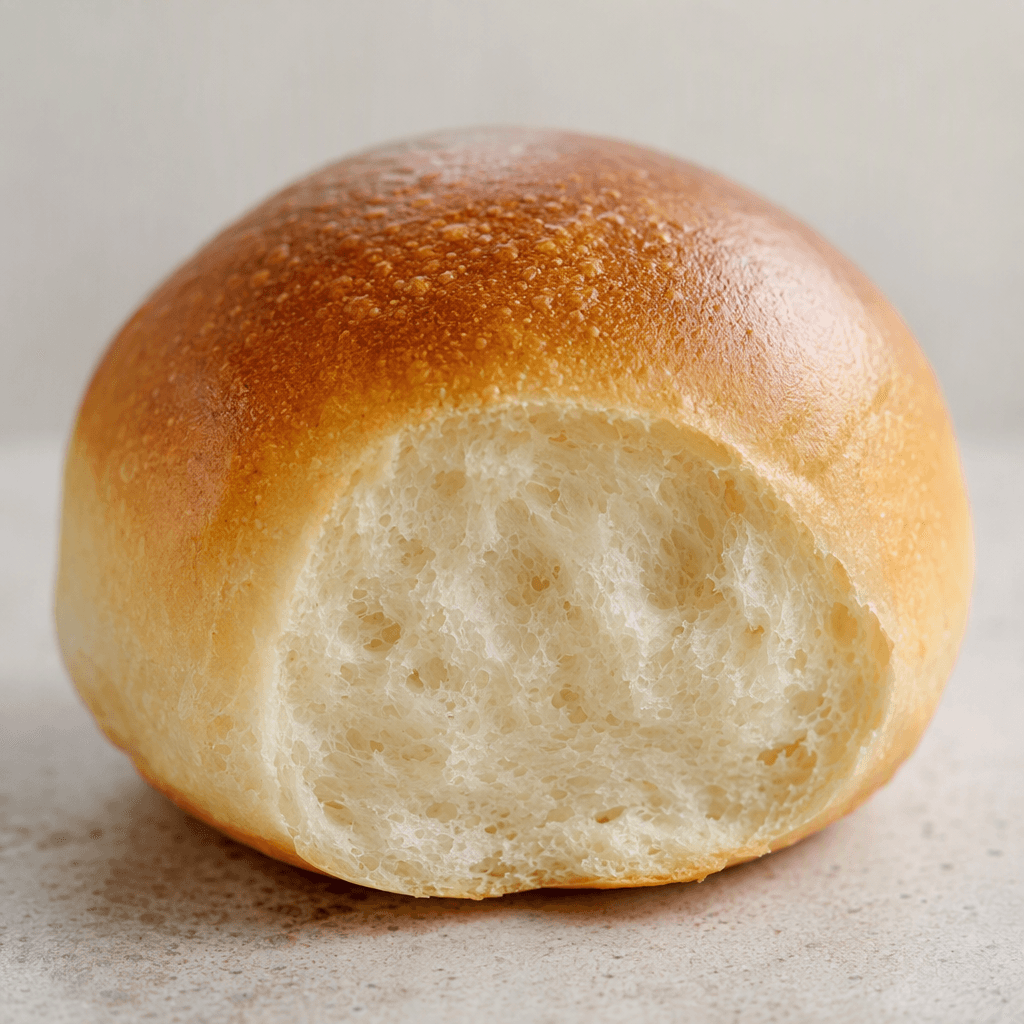
Soft, slightly sweet bread, common for sandwiches and breakfast
In season: Spring · Summer · Autumn · Winter
CALORIES
GI
POTASSIUM
FIBER
Quick answer
1 piece (medium) of Bun (60 g) has 162 calories. That works out to 270 calories per 100 g. It contains 30 g of carbs, 5.1 g of protein, 2.1 g of fat and 1.3 g of fiber. Its 7.8 µg of Selenium covers 14% of the Daily Value. Its glycemic index is 70 (high), so it raises blood sugar quickly.
What is Bun?
A bun is a small, rounded bread roll with a lightly browned crust and a soft, airy centre. Its mild sweetness makes it suitable for both breakfast and sandwiches. Depending on where you live, you might serve it with butter or jam alongside tea or coffee, or split it and fill it with cheese, egg, vegetables or deli fillings for a quick meal.
It is mainly a source of carbohydrates, with 8.5 g of protein per 100 g. For a more filling choice, pair a bun with a protein-rich filling and some vegetables. If you want a lighter sandwich, add plenty of salad leaves and vegetables and go easy on rich spreads.
Bun Nutrition Facts
Selected: 100 g
270
KCAL / 100G
Carbs
50g
· 18% DV
Protein
8.5g
· 17% DV
Fat
3.5g
· 4% DV
Fiber
2.2g
· 8% DV
DV is the share of the daily value covered, on a 2,000 kcal reference diet.
Calories come from: Carbs 75% · Protein 13% · Fat 12%
Bun Vitamins & Minerals
Vitamins
B1
0.23mg · 19% DV
B3
2.2mg · 14% DV
B2
0.13mg · 10% DV
Folate
35µg · 9% DV
Minerals
Selenium
13µg · 24% DV
Sodium
420mg · 18% DV
Iron
2mg · 11% DV
Phosphorus
80mg · 11% DV
How Nutritious Is Bun?
Nutrient density
Low
How many vitamins, minerals and how much fiber this food carries per calorie. A high score means a lot of nutrition for few calories.
Satiety score
Medium
An EatBetter score computed from fiber, protein and calorie density. A high score means staying full longer on the same calories.
Both scores are calculated per 100 g and do not change with the selected portion. The satiety score is EatBetter's own calculation, not a clinical measure.
Bun Glycemic Index
GLYCEMIC INDEX
GLYCEMIC LOAD
Accounts for portion size — a more realistic measure than GI alone.
How to Burn Off Bun
To burn the 270 calories in 100 g:
🚶
Walking (5 km/h)
🏃
Running (8 km/h)
🚴
Cycling
🏊
Swimming
Times are calculated with the MET equation for a 70 kg adult. Actual burn varies with your weight, age and pace.
Is Bun Processed?
NOVA 3
Processed
1. Unprocessed
2. Minimally Processed
3. Processed
4. Ultra-Processed
NOVA classifies foods into 4 groups by industrial processing. NOVA 1 (unprocessed) is the healthiest.
Does Bun Contain Allergens?
Contains these allergens:
Which Diets Is Bun Good For?
Vegan
— Not suitable
Vegetarian
✓ Suitable
Gluten-Free
— Not suitable
Dairy-Free
— Not suitable
Mediterranean
— Not suitable
Paleo
— Not suitable
Whole30
— Not suitable
DASH
— Not suitable
Keto
— Not suitable
Low FODMAP
— Not suitable
Bun Fat Profile
SATURATED
0.8g
MONOUNSATURATED
1.1g
POLYUNSATURATED
0.6g
Omega 6:3 ratio 16.7:1
Above the ideal 4:1 (16.7:1).
Compare Bun
Foods Similar to Bun
Frequently Asked Questions About Bun
How do you make a bun at home?
Make a bun by mixing a soft yeast dough, shaping it into rounds, letting the pieces rise, and baking them until golden. Avoid adding too much flour while kneading, since a stiff dough makes the crumb less tender.
Why is my bun dough not rising?
Bun dough often fails to rise if the yeast is inactive or the dough is left somewhere too cold. Use yeast that is still active, keep the dough covered in a comfortably warm spot, and give it time to expand before shaping.
How do you keep a bun fresh?
Keep a bun in an airtight bag or bread box at room temperature once it has cooled. Refrigeration can make bread go stale faster; freeze buns you will not use soon and thaw only what you need.
Can you freeze a bun?
Yes, a bun freezes well. Let it cool completely, seal it in a freezer-safe bag, and thaw it at room temperature when needed. A brief warming after thawing helps restore its soft texture.
How do you soften a stale bun?
You can soften a stale bun by lightly sprinkling its crust with water and warming it briefly. Cover it loosely in the oven so it does not dry further, or microwave it in short bursts and eat it right away.
Why is my homemade bun dense?
A homemade bun is often dense because the dough did not rise enough, too much flour was added, or the yeast was weak. Keep the dough soft and wait until it has visibly expanded before baking.
How do you toast a bun without drying it out?
Toast a bun cut-side down in a lightly heated pan for a short time. This browns the cut surface while leaving the outside soft; watch it closely, since the sugars in a slightly sweet bun can brown quickly.
What is the difference between a bun and a roll?
A bun is generally a small, soft individual bread, while “roll” can describe a wider range of shapes and textures. The names overlap, and a bun may also be called a roll depending on the region and how it is served.
Can a bun be used for a sandwich?
Yes, a bun works well for a sandwich. Slice it horizontally and fill it with cheese, vegetables, or cooked meat; lightly toasting the cut sides helps keep the soft crumb from becoming soggy.
Why does a bun split on top while baking?
A bun may split on top when its surface dries before baking or the dough has not finished rising. Keep shaped buns covered while they proof and avoid placing them in an overly hot oven before the dough is ready.
Have another question about Bun?
Ask the AI nutrition coach — calories, portions, alternatives and more, answered in seconds in the app.

Scan calories with your camera
Instant AI nutrition analysis

Nutrition data compiled from USDA FoodData Central and scientific sources.