

Ready & Packaged Foods
All →Vegetables & Legumes
All →Desserts & Confectionery
All →Meat & Protein
All →Grains & Bakery
All →Beverages
All →Milk & Dairy
All →

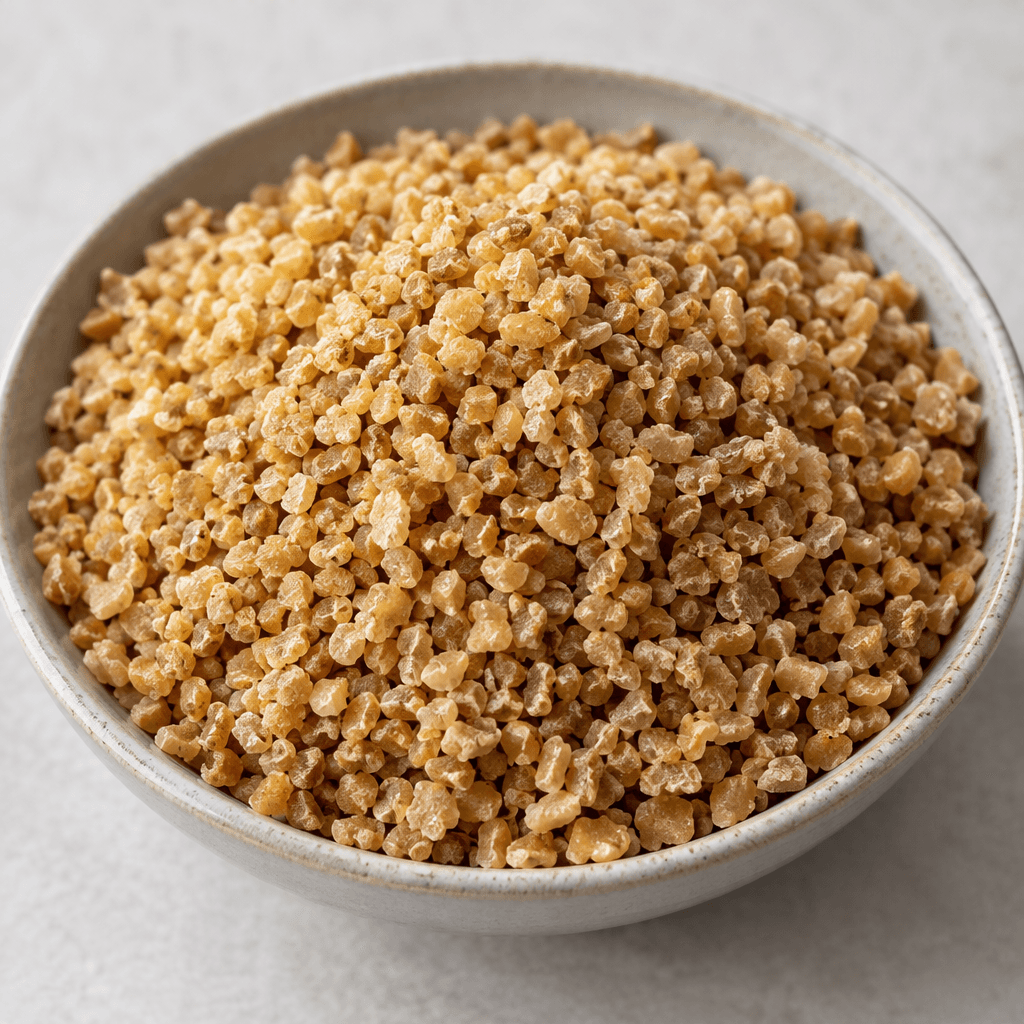
Bulgur Calories
Whole grain, fiber source, low fat
In season: Spring · Summer · Autumn · Winter
CALORIES
GI
POTASSIUM
FIBER
Quick answer
1 cup (medium) of Bulgur (150 g) has 513 calories. That works out to 342 calories per 100 g. It contains 113.9 g of carbs, 18.5 g of protein, 2 g of fat and 18.8 g of fiber. Its 2 mg of Manganese covers 85% of the Daily Value. Its glycemic index is 48 (medium), so it raises blood sugar at a moderate pace.
What is Bulgur?
Bulgur is made from wheat kernels that are cooked, dried and cracked. It has a long history across Anatolia and the wider Middle East, where it is used in everyday meals as well as celebratory dishes. The grains are sold in different sizes, from fine to coarse.
Fine bulgur softens with hot water and is often mixed with herbs, tomato and lemon for dishes such as Turkish kısır or Levantine tabbouleh. Coarser grains are usually simmered like rice, with vegetables, stock or spices. Bulgur has a pleasantly nutty flavour and chewy texture; it is a whole grain that contributes fibre and plant protein while remaining low in fat. Pair it with beans, lentils or roasted vegetables for a filling meal.
Bulgur Nutrition Facts
Selected: 100 g
342
KCAL / 100G
Carbs
75.9g
· 28% DV
Protein
12.3g
· 25% DV
Fat
1.3g
· 2% DV
Fiber
12.5g
· 45% DV
DV is the share of the daily value covered, on a 2,000 kcal reference diet.
Calories come from: Carbs 83% · Protein 13% · Fat 4%
Bulgur Vitamins & Minerals
Vitamins
B3
4.7mg · 29% DV
B6
0.34mg · 20% DV
B1
0.23mg · 19% DV
B5
0.95mg · 19% DV
Minerals
Manganese
1mg · 43% DV
Phosphorus
300mg · 43% DV
Iron
3mg · 17% DV
Magnesium
68mg · 16% DV
How Nutritious Is Bulgur?
Nutrient density
High
How many vitamins, minerals and how much fiber this food carries per calorie. A high score means a lot of nutrition for few calories.
Satiety score
Medium
An EatBetter score computed from fiber, protein and calorie density. A high score means staying full longer on the same calories.
Both scores are calculated per 100 g and do not change with the selected portion. The satiety score is EatBetter's own calculation, not a clinical measure.
Bulgur Glycemic Index
GLYCEMIC INDEX
GLYCEMIC LOAD
Accounts for portion size — a more realistic measure than GI alone.
How to Burn Off Bulgur
To burn the 342 calories in 100 g:
🚶
Walking (5 km/h)
🏃
Running (8 km/h)
🚴
Cycling
🏊
Swimming
Times are calculated with the MET equation for a 70 kg adult. Actual burn varies with your weight, age and pace.
Is Bulgur Processed?
NOVA 2
Minimally Processed
1. Unprocessed
2. Minimally Processed
3. Processed
4. Ultra-Processed
NOVA classifies foods into 4 groups by industrial processing. NOVA 1 (unprocessed) is the healthiest.
Does Bulgur Contain Allergens?
Contains these allergens:
Which Diets Is Bulgur Good For?
Vegan
✓ Suitable
Vegetarian
✓ Suitable
Gluten-Free
— Not suitable
Dairy-Free
— Not suitable
Mediterranean
✓ Suitable
Paleo
— Not suitable
Whole30
— Not suitable
DASH
— Not suitable
Keto
— Not suitable
Low FODMAP
— Not suitable
Bulgur Fat Profile
SATURATED
0.23g
MONOUNSATURATED
0.15g
POLYUNSATURATED
0.62g
Omega 6:3 ratio 28.5:1
Above the ideal 4:1 (28.5:1).
Compare Bulgur
Foods Similar to Bulgur
Frequently Asked Questions About Bulgur
What is bulgur made from?
Bulgur is made from wheat kernels that are parboiled, dried, and cracked into different sizes. Because it is already partly cooked during processing, it usually cooks faster than many other whole wheat grains.
How do you cook bulgur?
To cook bulgur, simmer it in water or broth until tender and the liquid is absorbed, then let it stand covered before fluffing with a fork. Cooking time and liquid needs vary with the grain size, so follow the package directions.
Is bulgur the same as cracked wheat?
No. Bulgur is cracked wheat that has been parboiled and dried, while cracked wheat is generally raw wheat berries broken into pieces. That difference means cracked wheat usually needs longer cooking than bulgur.
Can you eat bulgur without cooking it?
Fine bulgur can be softened without stovetop cooking by soaking it in hot water or using the dressing and juices in a dish such as tabbouleh. Do not assume dry bulgur is ready to eat straight from the package.
Which bulgur should you use for tabbouleh?
Fine bulgur is the usual choice for tabbouleh because it softens quickly and blends well with parsley, mint, tomato, and lemon. Coarse bulgur stays chewier and is better suited to pilafs or grain bowls.
Can bulgur replace rice in a recipe?
Yes, bulgur can replace rice in many pilafs, soups, and grain bowls, but it has a nuttier flavor and a chewier texture. Since bulgur is partly cooked before sale, adjust the cooking liquid and timing rather than using a rice recipe unchanged.
What is the difference between fine and coarse bulgur?
Fine bulgur has small pieces that hydrate quickly, making it useful for tabbouleh and other soaked dishes. Coarse bulgur takes longer to cook and holds its shape better in pilafs, soups, and hearty salads.
Can you freeze cooked bulgur?
Yes, cooked bulgur freezes well. Let it cool, pack it in airtight portions, and thaw it in the refrigerator or reheat it from frozen with a splash of water to restore moisture.
How long does cooked bulgur last in the refrigerator?
Cooked bulgur keeps for about three to four days in the refrigerator when stored promptly in a covered container. Discard it if it has been left at room temperature for an extended time or develops an unusual smell or appearance.
Does bulgur work in overnight meal prep?
Yes, cooked bulgur works well for make-ahead grain bowls and salads because it stays pleasantly chewy after chilling. Store it separately from juicy vegetables or dressing if you want to keep the grains from becoming soggy.
Have another question about Bulgur?
Ask the AI nutrition coach — calories, portions, alternatives and more, answered in seconds in the app.

Scan calories with your camera
Instant AI nutrition analysis

Nutrition data compiled from USDA FoodData Central and scientific sources.