

Ready & Packaged Foods
All →Vegetables & Legumes
All →Desserts & Confectionery
All →Meat & Protein
All →Grains & Bakery
All →Beverages
All →Milk & Dairy
All →

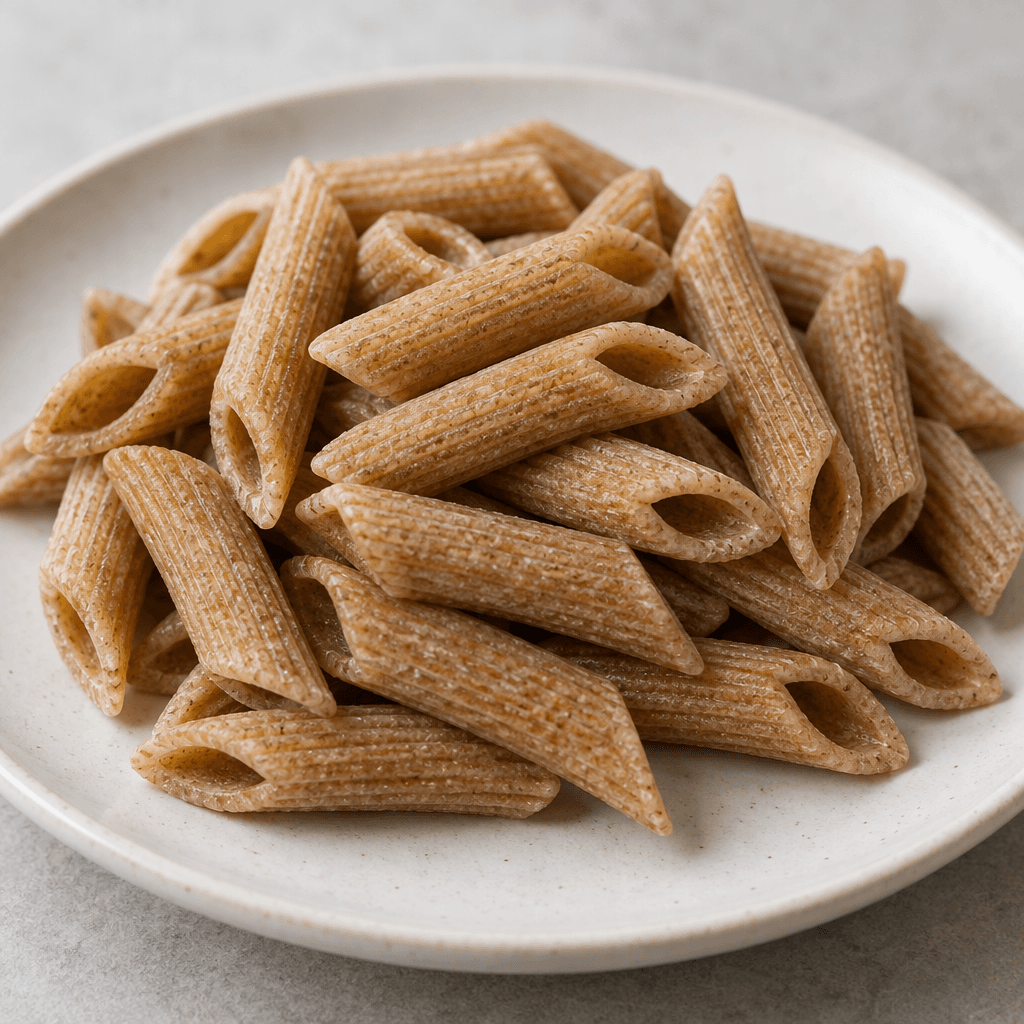
Whole wheat pasta Calories
High in fiber, provides complex carbohydrates
CALORIES · 100 G
GI
POTASSIUM · 100 G
FIBER · 100 G
Quick answer
1 cup (medium) of Whole wheat pasta (140 g) has 487 calories. That works out to 348 calories per 100 g. It contains 101.4 g of carbs, 19.7 g of protein, 3.5 g of fat and 11.2 g of fiber. Its 4.2 mg of Manganese covers 183% of the Daily Value. Its glycemic index is 42 (low), so it raises blood sugar slowly.
Whole wheat pasta Nutrition Facts
Selected: 1 cup (medium) · 140 g
487
KCAL / 140G
Carbs
101.4g
· 37% DV
Protein
19.7g
· 39% DV
Fat
3.5g
· 4% DV
Fiber
11.2g
· 40% DV
DV is the share of the daily value covered, on a 2,000 kcal reference diet.
Calories come from: Carbs 79% · Protein 15% · Fat 6%
Whole wheat pasta nutrition facts table · 1 cup (medium) (140 g)
| Nutrient | Amount | % DV |
|---|---|---|
| Calories | 487 kcal | |
| Total fat | 3.5 g | 4% |
| Saturated fat | 0.7 g | 3% |
| Trans fat | 0 g | |
| Sodium | 8.4 mg | 0% |
| Total carbohydrate | 101.4 g | 37% |
| Fiber | 11.2 g | 40% |
| Protein | 19.7 g | 39% |
Calories: Calories measure energy. Average daily need is 2,000 kcal. Excess calories are stored as fat, too few cause weight loss.
Carbs: Your body's primary energy source. The brain runs exclusively on carbs. Daily need: 275g.
Protein: Essential for muscle repair and cell growth. Daily need: 50g. Keeps you full and boosts metabolism.
Fat: Needed for hormone production and vitamin absorption. Daily need: 78g. Limit saturated fats, choose unsaturated.
Fiber: Critical for digestive health and satiety. Daily need: 28g. Stabilizes blood sugar, lowers cholesterol.

Log this food in EatBetter
100,000+ people use it
- Get your daily calorie target
- Snap your meal, log it in seconds
- See every vitamin and mineral

📸 Scan the code to get the app free.

How Many Calories in 1 Cup of Whole wheat pasta?
| Serving | Amount | Calories |
|---|---|---|
| 1 cup (medium) | 140 g | 487 kcal |
| 1 ounce (small) | 28 g | 97 kcal |
| 1 piece (mini) | 56 g | 195 kcal |
| 1 cup (half) | 70 g | 244 kcal |
| 1 serving (small) | 85 g | 296 kcal |
| 100 g | 100 g | 348 kcal |
| 1 serving (medium) | 140 g | 487 kcal |
| 1 serving (large) | 220 g | 766 kcal |
| 2 cup (large) | 280 g | 974 kcal |
Calculated from 348 calories per 100 g.
Frequently Asked Questions About Whole wheat pasta
Does whole wheat pasta taste different from regular pasta?
Yes, whole wheat pasta has a nuttier, more pronounced grain flavor and a firmer, slightly coarser texture than regular pasta. Its taste pairs especially well with earthy ingredients such as mushrooms, lentils, roasted vegetables, and herbs.
Does whole wheat pasta take longer to cook than regular pasta?
Not always; cooking time varies by shape and brand, so there is no reliable rule that whole wheat pasta must cook longer. Follow the package directions and taste a piece near the end to get the texture you want.
Why does whole wheat pasta turn mushy?
Whole wheat pasta turns mushy when it is overcooked or left sitting in hot water after cooking. Start checking it before the package’s suggested time is up, then drain it as soon as it reaches your preferred firmness.
Can you use whole wheat pasta in place of regular pasta in recipes?
Yes, whole wheat pasta works in most recipes that call for regular pasta. Its stronger flavor and firmer bite can change the dish slightly, so it is particularly suited to robust sauces, baked pasta, and recipes with vegetables.
What sauces go well with whole wheat pasta?
Tomato, pesto, mushroom, and olive-oil-based sauces go well with whole wheat pasta. Their bold flavors complement its nutty taste, while a little pasta cooking water helps coat the noodles and bring the sauce together.
Should you rinse whole wheat pasta after cooking?
No, do not rinse whole wheat pasta if you are serving it hot; the starch on its surface helps sauce cling. Rinsing is useful for a cold pasta salad when you want to cool the pasta quickly and limit sticking.
Can whole wheat pasta be cooked al dente?
Yes, whole wheat pasta can be cooked al dente. Taste it shortly before the package’s suggested cooking time ends and drain it when the center is still pleasantly firm; it will soften a little more if you finish it in hot sauce.
How should you store cooked whole wheat pasta?
Store cooked whole wheat pasta in a covered, airtight container in the refrigerator once it has cooled. If it seems dry when you reheat it, add a splash of water or sauce and warm it gently in a pan.
Can you freeze cooked whole wheat pasta?
Yes, cooked whole wheat pasta can be frozen, although it may be softer after thawing. Cool it first, portion it into freezer-safe containers, and reheat it from thawed with sauce or a little water to keep it from drying out.
Is whole wheat pasta a good choice for weight loss?
Whole wheat pasta can fit a weight-loss eating plan, and its fiber may help make a meal more filling. Keep the serving moderate and pair it with vegetables and a protein source rather than relying on pasta alone for fullness.
Whole wheat pasta Vitamins & Minerals
Vitamins
B3
9.38mg · 59% DV
B1
0.56mg · 47% DV
B5
1.4mg · 28% DV
Biotin
8.4µg · 28% DV
Minerals
Manganese
4.2mg · 183% DV
Selenium
88µg · 160% DV
Phosphorus
602mg · 86% DV
Magnesium
200mg · 48% DV
Potassium ⭐
350mg · 10% DV
Sodium
8.4mg · 0% DV
Whole wheat pasta Glycemic Index
GLYCEMIC INDEX
GLYCEMIC LOAD
Accounts for portion size — a more realistic measure than GI alone.
How to Burn Off Whole wheat pasta
To burn the 487 calories in 1 cup (medium) (140 g):
🚶
Walking (5 km/h)
🏃
Running (8 km/h)
🚴
Cycling
🏊
Swimming
Times are calculated with the MET equation for a 70 kg adult. Actual burn varies with your weight, age and pace.
What is Whole wheat pasta?
Whole wheat pasta is made from flour milled from the whole wheat grain, then shaped and dried like other pasta. Keeping the bran and germ gives it a darker, speckled look and a heartier character than pasta made with refined flour.
Cook it until just tender so it retains a pleasant bite. It works well with tomato, vegetable or olive-oil-based sauces, and can also be served cold in a pasta salad. In Italy, it is used much like other pasta; elsewhere, it makes an easy base for everyday meals. Its complex carbohydrates and fibre make it a filling option, with 8 g of fibre per 100 g. Pair it with vegetables and a lighter sauce for a balanced plate.
How Nutritious Is Whole wheat pasta?
Nutrient density
Medium
How many vitamins, minerals and how much fiber this food carries per calorie. A high score means a lot of nutrition for few calories.
Satiety score
Medium
An EatBetter score computed from fiber, protein and calorie density. A high score means staying full longer on the same calories.
Both scores are calculated per 100 g and do not change with the selected portion. The satiety score is EatBetter's own calculation, not a clinical measure.
Is Whole wheat pasta Processed?
NOVA 3
Processed
1. Unprocessed
2. Minimally Processed
3. Processed
4. Ultra-Processed
NOVA classifies foods into 4 groups by industrial processing. NOVA 1 (unprocessed) is the healthiest.
Does Whole wheat pasta Contain Allergens?
Contains these allergens:
Which Diets Is Whole wheat pasta Good For?
Vegan
✓ Suitable
Vegetarian
✓ Suitable
Gluten-Free
— Not suitable
Dairy-Free
— Not suitable
Mediterranean
✓ Suitable
Paleo
— Not suitable
Whole30
— Not suitable
DASH
— Not suitable
Keto
— Not suitable
Low FODMAP
— Not suitable
Whole wheat pasta Fat Profile
SATURATED
0.7g
MONOUNSATURATED
0.56g
POLYUNSATURATED
1.54g
Omega 6:3 ratio 12.7:1
Above the ideal 4:1 (12.7:1).
Compare Whole wheat pasta
Foods Similar to Whole wheat pasta
Have another question about Whole wheat pasta?
Ask the AI nutrition coach — calories, portions, alternatives and more, answered in seconds in the app.

Scan calories with your camera
Instant AI nutrition analysis

Nutrition data compiled from USDA FoodData Central and scientific sources.