

Ready & Packaged Foods
All →Vegetables & Legumes
All →Desserts & Confectionery
All →Meat & Protein
All →Grains & Bakery
All →Beverages
All →Milk & Dairy
All →

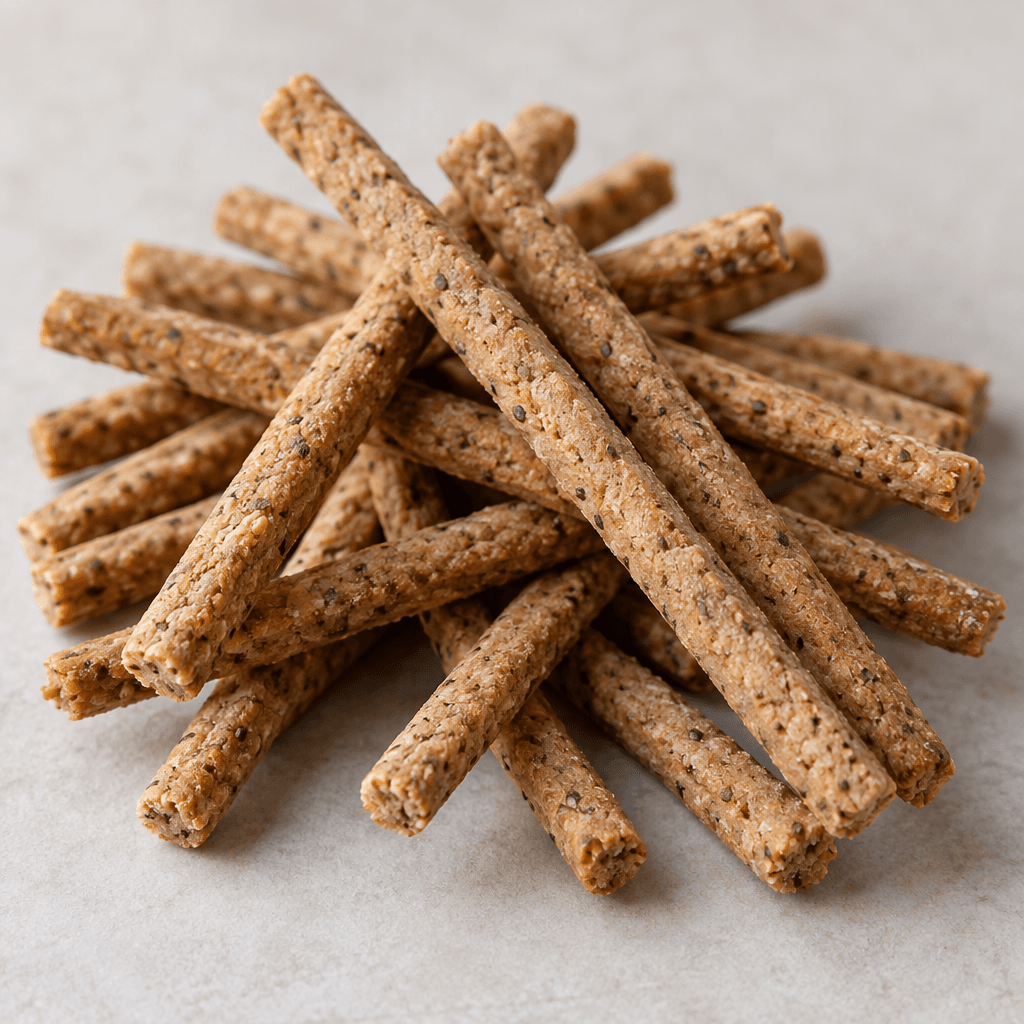
Buckwheat Sticks Calories
Gluten-free, high fiber, healthy snack
In season: Spring · Summer · Autumn · Winter
CALORIES · 100 G
GI
POTASSIUM · 100 G
FIBER · 100 G
Quick answer
1 piece (medium) of Buckwheat Sticks (15 g) has 56 calories. That works out to 370 calories per 100 g. It contains 11.3 g of carbs, 1.3 g of protein, 0.4 g of fat and 1.1 g of fiber. Its 0.2 mg of Manganese covers 7% of the Daily Value. Its glycemic index is 55 (medium), so it raises blood sugar at a moderate pace.
Buckwheat Sticks Nutrition Facts
Selected: 1 piece (medium) · 15 g
56
KCAL / 15G
Carbs
11.3g
· 4% DV
Protein
1.3g
· 3% DV
Fat
0.4g
· 1% DV
Fiber
1.1g
· 4% DV
DV is the share of the daily value covered, on a 2,000 kcal reference diet.
Calories come from: Carbs 84% · Protein 10% · Fat 6%
Buckwheat Sticks nutrition facts table · 1 piece (medium) (15 g)
| Nutrient | Amount | % DV |
|---|---|---|
| Calories | 56 kcal | |
| Total fat | 0.4 g | 1% |
| Saturated fat | 0.08 g | 0% |
| Trans fat | 0 g | |
| Sodium | 48 mg | 2% |
| Total carbohydrate | 11.3 g | 4% |
| Fiber | 1.1 g | 4% |
| Protein | 1.3 g | 3% |
Calories: Calories measure energy. Average daily need is 2,000 kcal. Excess calories are stored as fat, too few cause weight loss.
Carbs: Your body's primary energy source. The brain runs exclusively on carbs. Daily need: 275g.
Protein: Essential for muscle repair and cell growth. Daily need: 50g. Keeps you full and boosts metabolism.
Fat: Needed for hormone production and vitamin absorption. Daily need: 78g. Limit saturated fats, choose unsaturated.
Fiber: Critical for digestive health and satiety. Daily need: 28g. Stabilizes blood sugar, lowers cholesterol.

Log this food in EatBetter
100,000+ people use it
- Get your daily calorie target
- Snap your meal, log it in seconds
- See every vitamin and mineral

📸 Scan the code to get the app free.

How Many Calories in 1 Medium Buckwheat Sticks?
| Serving | Amount | Calories |
|---|---|---|
| 1 piece (medium) | 15 g | 56 kcal |
| 1 piece (small) | 10 g | 37 kcal |
| 1 piece (large) | 25 g | 93 kcal |
| 1 serving (medium) | 30 g | 111 kcal |
| 2 serving (large) | 60 g | 222 kcal |
| 5 piece (medium) | 75 g | 278 kcal |
| 100 g | 100 g | 370 kcal |
| 1 pack (whole) | 100 g | 370 kcal |
| 10 piece (large) | 150 g | 555 kcal |
Calculated from 370 calories per 100 g.
Frequently Asked Questions About Buckwheat Sticks
What are Buckwheat Sticks made of?
Buckwheat Sticks are usually made mainly from buckwheat flour or groats, sometimes with water, oil, salt, or seasonings. Recipes vary between plain and flavored versions, so the ingredient list tells you what is in a particular product.
Are Buckwheat Sticks made from wheat?
No. Despite the name, buckwheat is not the same grain as wheat. Buckwheat Sticks are made from buckwheat, though products may be exposed to wheat during manufacturing; people with coeliac disease should check for cross-contamination warnings.
How do you eat Buckwheat Sticks?
Eat Buckwheat Sticks straight from the pack as a crunchy snack. Plain ones can also be crumbled over soup or eaten with yogurt or a dip; seasoned versions are commonly enjoyed on their own.
Can you make Buckwheat Sticks at home?
Yes. Mix buckwheat flour with water to form a dough, shape it into thin sticks, and bake until crisp and dry. Keep the pieces similar in thickness so they cook evenly; season the dough if you want a savory version.
How should you store Buckwheat Sticks after opening?
Store Buckwheat Sticks in an airtight container in a cool, dry place. Moisture quickly takes away their crunch, so reseal the package or transfer the sticks to a container soon after opening.
Are Buckwheat Sticks a healthy snack?
Buckwheat Sticks can be a convenient snack, and their fiber can make them more satisfying than some low-fiber crunchy snacks. Flavored versions may contain added salt or oil, so compare ingredients if you want a simpler option.
Can Buckwheat Sticks go stale?
Yes. Buckwheat Sticks can lose their crunch when exposed to air or humidity. If they have only softened but still look and smell normal, they may be edible; discard them if they are moldy or smell unusual.
Are Buckwheat Sticks suitable for children?
Yes, children who can chew solid snacks safely can eat Buckwheat Sticks. Their firm, crunchy texture may be difficult for very young children, so offer an age-appropriate texture and supervise them while eating.
Can Buckwheat Sticks be used instead of bread or crackers?
Buckwheat Sticks can replace crackers as a crunchy side or topping, but they are not a direct substitute for bread in sandwiches. Their shape and texture work best for dipping or eating alongside a meal.
Do Buckwheat Sticks go well with dips?
Yes, Buckwheat Sticks work well with thick dips such as hummus, bean dip, or yogurt-based dips. Their crisp texture holds up better with thicker dips than with runny sauces, which can soften them quickly.
Buckwheat Sticks Vitamins & Minerals
Vitamins
B1
0.05mg · 4% DV
B3
0.63mg · 4% DV
B6
0.06mg · 4% DV
Biotin
0.6µg · 2% DV
Minerals
Manganese
0.17mg · 7% DV
Copper
0.05mg · 6% DV
Phosphorus
17mg · 2% DV
Magnesium
9.75mg · 2% DV
Sodium
48mg · 2% DV
Potassium ⭐
35mg · 1% DV
Buckwheat Sticks Glycemic Index
GLYCEMIC INDEX
GLYCEMIC LOAD
Accounts for portion size — a more realistic measure than GI alone.
How to Burn Off Buckwheat Sticks
To burn the 56 calories in 1 piece (medium) (15 g):
🚶
Walking (5 km/h)
🏃
Running (8 km/h)
🚴
Cycling
🏊
Swimming
Times are calculated with the MET equation for a 70 kg adult. Actual burn varies with your weight, age and pace.
What is Buckwheat Sticks?
Buckwheat Sticks are snack pieces shaped like slender rods and made with buckwheat, a seed used much like a grain. Despite its name, buckwheat is not a type of wheat; its earthy, slightly nutty flavour works well in crisp savoury snacks. The exact ingredients and texture can vary by product.
Enjoy them between meals, pack them for a commute, or serve them with a dip; they also make a crunchy alternative to crackers alongside cheese or vegetables. They provide 7.5 g of fibre per 100 g, so a modest handful can be a satisfying snack. Pairing a small portion with fresh vegetables or a protein-rich dip makes for a more balanced bite.
How Nutritious Is Buckwheat Sticks?
Nutrient density
Medium
How many vitamins, minerals and how much fiber this food carries per calorie. A high score means a lot of nutrition for few calories.
Satiety score
Medium
An EatBetter score computed from fiber, protein and calorie density. A high score means staying full longer on the same calories.
Both scores are calculated per 100 g and do not change with the selected portion. The satiety score is EatBetter's own calculation, not a clinical measure.
Is Buckwheat Sticks Processed?
NOVA 3
Processed
1. Unprocessed
2. Minimally Processed
3. Processed
4. Ultra-Processed
NOVA classifies foods into 4 groups by industrial processing. NOVA 1 (unprocessed) is the healthiest.
Does Buckwheat Sticks Contain Allergens?
No known major allergens
Which Diets Is Buckwheat Sticks Good For?
Vegan
✓ Suitable
Vegetarian
✓ Suitable
Gluten-Free
✓ Suitable
Dairy-Free
— Not suitable
Mediterranean
✓ Suitable
Paleo
— Not suitable
Whole30
— Not suitable
DASH
— Not suitable
Keto
— Not suitable
Low FODMAP
— Not suitable
Buckwheat Sticks Fat Profile
SATURATED
0.08g
MONOUNSATURATED
0.11g
POLYUNSATURATED
0.17g
Omega 6:3 ratio 8:1
Above the ideal 4:1 (8:1).
Compare Buckwheat Sticks
Foods Similar to Buckwheat Sticks
Have another question about Buckwheat Sticks?
Ask the AI nutrition coach — calories, portions, alternatives and more, answered in seconds in the app.

Scan calories with your camera
Instant AI nutrition analysis

Nutrition data compiled from USDA FoodData Central and scientific sources.