

Ready & Packaged Foods
All →Vegetables & Legumes
All →Desserts & Confectionery
All →Meat & Protein
All →Grains & Bakery
All →Beverages
All →Milk & Dairy
All →

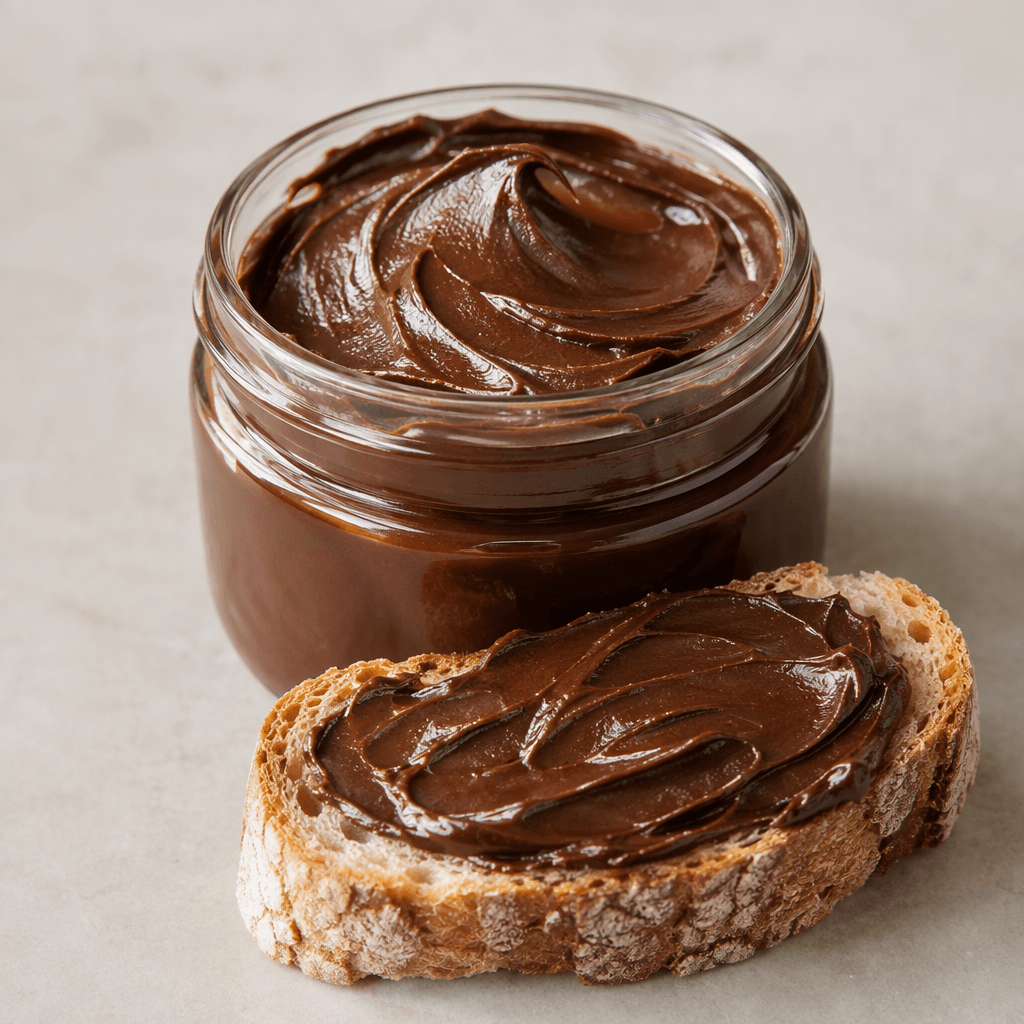
Breakfast chocolate spread Calories
Sweet chocolate breakfast spread, high in sugar
CALORIES
GI
POTASSIUM
FIBER
Quick answer
1 tablespoon (medium) of Breakfast chocolate spread (20 g) has 108 calories. That works out to 539 calories per 100 g. It contains 11.5 g of carbs, 1.3 g of protein, 6.2 g of fat and 0.7 g of fiber. Its 1.2 mg of Vitamin E covers 8% of the Daily Value. Its glycemic index is 33 (low), so it raises blood sugar slowly.
What is Breakfast chocolate spread?
Breakfast chocolate spread is a sweet, spoonable spread made with cocoa and sugar, usually combined with fats and sometimes milk ingredients. It is sold ready to eat and is commonly chosen as a quick, treat-like breakfast topping, though it can also be enjoyed as a snack.
Its smooth, soft texture makes it easy to spread on toast or bread, and it is also used on pancakes, waffles or fruit. Across many countries, it appears at the breakfast table, often alongside tea, coffee or milk. It is energy-dense and high in sugar, with comparatively little protein or fibre, so a modest spoonful can add plenty of sweetness. Pair it with fruit or plain yoghurt, or spread it thinly for a lighter serving.
Breakfast chocolate spread Nutrition Facts
Selected: 100 g
539
KCAL / 100G
Carbs
57.5g
· 21% DV
Protein
6.3g
· 13% DV
Fat
30.9g
· 40% DV
Fiber
3.4g
· 12% DV
DV is the share of the daily value covered, on a 2,000 kcal reference diet.
Calories come from: Carbs 43% · Protein 5% · Fat 52%
Breakfast chocolate spread Vitamins & Minerals
Vitamins
Vitamin E
5.8mg · 39% DV
B2
0.11mg · 8% DV
Biotin
2µg · 7% DV
B3
0.9mg · 6% DV
Minerals
Iron
4mg · 22% DV
Phosphorus
145mg · 21% DV
Magnesium
63mg · 15% DV
Potassium ⭐
372mg · 11% DV
How Nutritious Is Breakfast chocolate spread?
Nutrient density
Low
How many vitamins, minerals and how much fiber this food carries per calorie. A high score means a lot of nutrition for few calories.
Satiety score
Low
An EatBetter score computed from fiber, protein and calorie density. A high score means staying full longer on the same calories.
Both scores are calculated per 100 g and do not change with the selected portion. The satiety score is EatBetter's own calculation, not a clinical measure.
Breakfast chocolate spread Glycemic Index
GLYCEMIC INDEX
GLYCEMIC LOAD
Accounts for portion size — a more realistic measure than GI alone.
How to Burn Off Breakfast chocolate spread
To burn the 539 calories in 100 g:
🚶
Walking (5 km/h)
🏃
Running (8 km/h)
🚴
Cycling
🏊
Swimming
Times are calculated with the MET equation for a 70 kg adult. Actual burn varies with your weight, age and pace.
Is Breakfast chocolate spread Processed?
NOVA 4
Ultra-Processed
1. Unprocessed
2. Minimally Processed
3. Processed
4. Ultra-Processed
NOVA classifies foods into 4 groups by industrial processing. NOVA 1 (unprocessed) is the healthiest.
Does Breakfast chocolate spread Contain Allergens?
Contains these allergens:
Which Diets Is Breakfast chocolate spread Good For?
Vegan
— Not suitable
Vegetarian
✓ Suitable
Gluten-Free
— Not suitable
Dairy-Free
— Not suitable
Mediterranean
— Not suitable
Paleo
— Not suitable
Whole30
— Not suitable
DASH
— Not suitable
Keto
— Not suitable
Low FODMAP
— Not suitable
Breakfast chocolate spread Fat Profile
SATURATED
10.6g
MONOUNSATURATED
15.2g
POLYUNSATURATED
3.9g
Omega 6:3 ratio 126.7:1
Above the ideal 4:1 (126.7:1).
Compare Breakfast chocolate spread
Foods Similar to Breakfast chocolate spread
Frequently Asked Questions About Breakfast chocolate spread
Should breakfast chocolate spread be refrigerated?
Usually, no. Keep breakfast chocolate spread tightly closed in a cool, dry cupboard; refrigeration can make it firm and harder to spread. Follow the storage directions on the jar if they specify otherwise, and avoid introducing moisture or crumbs.
What is breakfast chocolate spread made of?
Breakfast chocolate spread commonly contains sugar, cocoa and fat, and some varieties also include nuts or milk ingredients. Recipes differ between products, so check the ingredient and allergen information on the jar if you have an allergy.
How long does breakfast chocolate spread last after opening?
Breakfast chocolate spread can generally be kept until the date and under the conditions stated on its packaging. Close the lid after use and always use a clean, dry utensil; discard it if its smell, appearance or texture changes unexpectedly.
Why does breakfast chocolate spread get hard?
Breakfast chocolate spread can become firm when it gets cold because some of its fats solidify. Letting the jar stand at room temperature usually softens it enough to spread; avoid heating the jar unless its packaging says that is safe.
Can you use breakfast chocolate spread in baking?
Yes, breakfast chocolate spread works as a filling or topping for cookies, cakes and pastries. It softens as it heats, so seal it inside dough carefully if you do not want it to leak during baking.
Is breakfast chocolate spread the same as Nutella?
Not necessarily. Nutella is a particular branded hazelnut-and-cocoa spread, while breakfast chocolate spread is a broader description for similar sweet spreads. Ingredients and the amount of hazelnut can differ, so compare the products’ ingredient lists.
Can breakfast chocolate spread be frozen?
Freezing breakfast chocolate spread is usually unnecessary and can change its texture when it thaws. Keep it sealed in a cool, dry cupboard instead, unless the product’s packaging specifically recommends freezing.
Can breakfast chocolate spread be warmed in the microwave?
Yes, you can warm a small amount of breakfast chocolate spread in a microwave-safe dish using short intervals and stirring between them. Do not microwave the jar or lid, and stop once it is soft; overheating can make the spread too runny.
Is breakfast chocolate spread healthy to eat every day?
Breakfast chocolate spread is a sweet topping, so it is better treated as an occasional addition than as the main part of breakfast every day. Pair a small amount with foods such as fruit, yogurt or eggs for a more filling meal.
Can people with diabetes eat breakfast chocolate spread?
Some people with diabetes may include a small serving of breakfast chocolate spread, but its sugar can affect blood glucose. The right portion depends on an individual’s meal plan and treatment, so ask your doctor or dietitian for personal guidance.
Have another question about Breakfast chocolate spread?
Ask the AI nutrition coach — calories, portions, alternatives and more, answered in seconds in the app.

Scan calories with your camera
Instant AI nutrition analysis

Nutrition data compiled from USDA FoodData Central and scientific sources.