

Ready & Packaged Foods
All →Vegetables & Legumes
All →Desserts & Confectionery
All →Meat & Protein
All →Grains & Bakery
All →Beverages
All →Milk & Dairy
All →

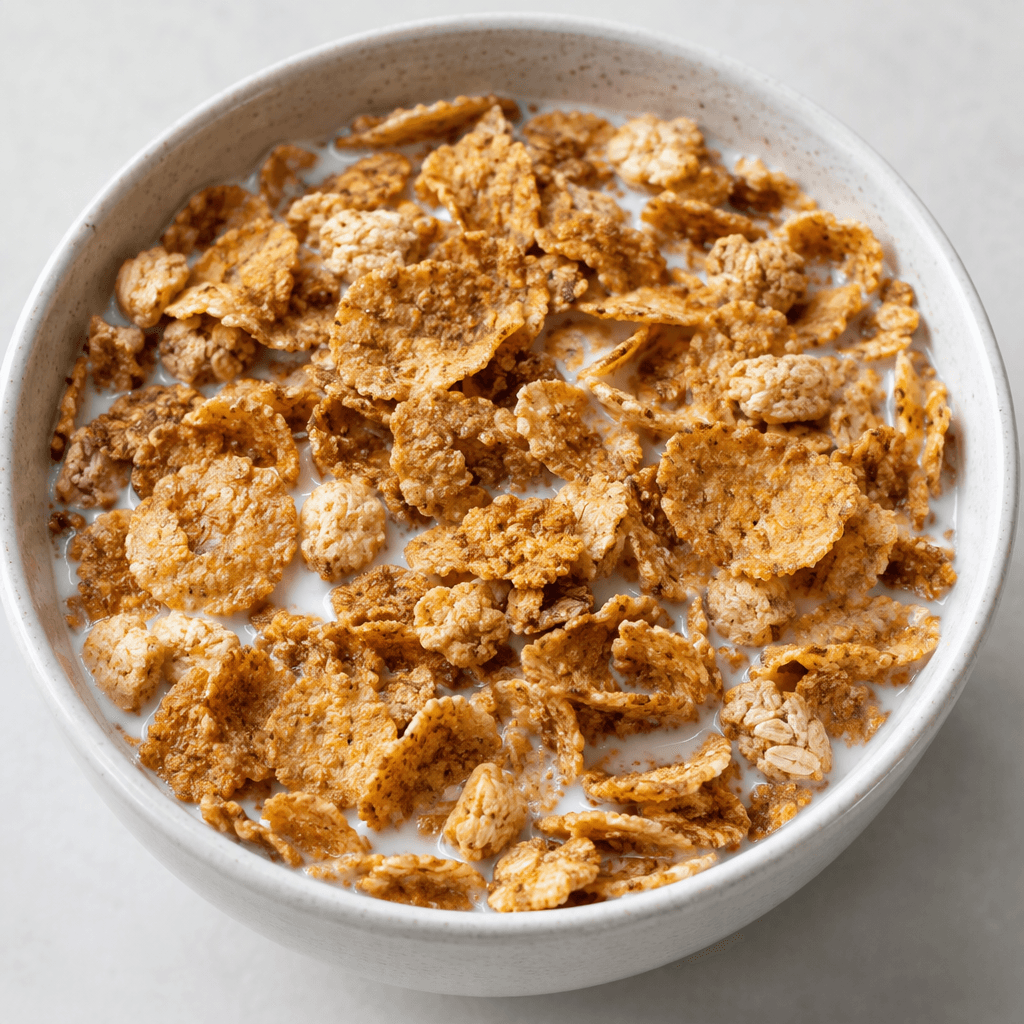
Breakfast Cereal Calories
Popular breakfast item, often eaten with milk, may be fortified with fiber and vitamins.
In season: Spring · Summer · Autumn · Winter
CALORIES
GI
POTASSIUM
FIBER
Quick answer
1 cup (medium) of Breakfast Cereal (30 g) has 114 calories. That works out to 380 calories per 100 g. It contains 24 g of carbs, 2.3 g of protein, 0.8 g of fat and 1.8 g of fiber. Its 0.8 µg of B12 covers 31% of the Daily Value. Its glycemic index is 75 (high), so it raises blood sugar quickly.
What is Breakfast Cereal?
Breakfast cereal is a ready-to-eat breakfast made from grains that have been processed into flakes, puffs or small crisp pieces. Depending on the variety, it may contain corn, wheat, oats or a blend, and some products are fortified with vitamins or fibre.
It is commonly served with cold milk, though yoghurt and fresh fruit work well too. The pieces start crisp and soften as they sit; flavour ranges from lightly toasted and grainy to sweet, depending on the cereal. Nutritionally, it is mainly a source of carbohydrates, with some fibre—6 g per 100 g in this listing. For a more filling bowl, choose a less-sweet variety and add fruit, nuts or yoghurt rather than extra sugar.
Breakfast Cereal Nutrition Facts
Selected: 100 g
380
KCAL / 100G
Carbs
80g
· 29% DV
Protein
7.5g
· 15% DV
Fat
2.5g
· 3% DV
Fiber
6g
· 21% DV
DV is the share of the daily value covered, on a 2,000 kcal reference diet.
Calories come from: Carbs 86% · Protein 8% · Fat 6%
Breakfast Cereal Vitamins & Minerals
Vitamins
B12
2.5µg · 104% DV
B1
1.1mg · 92% DV
B2
1.2mg · 92% DV
B3
13mg · 81% DV
Minerals
Iron
12mg · 67% DV
Zinc
5mg · 45% DV
Manganese
1mg · 43% DV
Phosphorus
250mg · 36% DV
How Nutritious Is Breakfast Cereal?
Nutrient density
Medium
How many vitamins, minerals and how much fiber this food carries per calorie. A high score means a lot of nutrition for few calories.
Satiety score
Medium
An EatBetter score computed from fiber, protein and calorie density. A high score means staying full longer on the same calories.
Both scores are calculated per 100 g and do not change with the selected portion. The satiety score is EatBetter's own calculation, not a clinical measure.
Breakfast Cereal Glycemic Index
GLYCEMIC INDEX
GLYCEMIC LOAD
Accounts for portion size — a more realistic measure than GI alone.
How to Burn Off Breakfast Cereal
To burn the 380 calories in 100 g:
🚶
Walking (5 km/h)
🏃
Running (8 km/h)
🚴
Cycling
🏊
Swimming
Times are calculated with the MET equation for a 70 kg adult. Actual burn varies with your weight, age and pace.
Is Breakfast Cereal Processed?
NOVA 3
Processed
1. Unprocessed
2. Minimally Processed
3. Processed
4. Ultra-Processed
NOVA classifies foods into 4 groups by industrial processing. NOVA 1 (unprocessed) is the healthiest.
Does Breakfast Cereal Contain Allergens?
Contains these allergens:
Which Diets Is Breakfast Cereal Good For?
Vegan
— Not suitable
Vegetarian
✓ Suitable
Gluten-Free
— Not suitable
Dairy-Free
— Not suitable
Mediterranean
— Not suitable
Paleo
— Not suitable
Whole30
— Not suitable
DASH
— Not suitable
Keto
— Not suitable
Low FODMAP
— Not suitable
Breakfast Cereal Fat Profile
SATURATED
0.5g
MONOUNSATURATED
0.7g
POLYUNSATURATED
1.1g
Omega 6:3 ratio 10:1
Above the ideal 4:1 (10:1).
Compare Breakfast Cereal
Foods Similar to Breakfast Cereal
Frequently Asked Questions About Breakfast Cereal
What is breakfast cereal made from?
Breakfast cereal is usually made from grains such as corn, wheat, rice, or oats. Flakes are commonly cooked, shaped, and toasted; ingredients vary, and some varieties include added sugar, flavorings, or extra vitamins and minerals.
Is breakfast cereal healthy?
Breakfast cereal can be a convenient breakfast, especially when paired with milk or yogurt and fruit. Its nutritional value varies by type: whole-grain cereals provide more fiber, while highly sweetened varieties are better treated as an occasional choice.
Can you eat breakfast cereal without milk?
Yes, breakfast cereal can be eaten dry as a snack or served with yogurt instead of milk. Dry cereal is easy to carry, but it may be less filling on its own than a bowl served with a protein-rich food.
Why does breakfast cereal get soggy in milk?
Breakfast cereal gets soggy because its porous flakes absorb milk and lose their crisp texture. Pour milk over the cereal just before eating, or add a small amount at a time to keep the remaining pieces crunchy.
Which milk is best with breakfast cereal?
There is no single best milk for breakfast cereal: dairy milk and unsweetened plant milks both work. Choose based on the flavor and texture you prefer; thicker options, such as some soy or oat drinks, make a creamier bowl.
Is breakfast cereal high in sugar?
Some breakfast cereals are high in added sugar, while plain or whole-grain varieties may contain little or none. Frosted, chocolate-flavored, and honey-coated cereals are often sweeter, so compare the product’s nutrition information when choosing.
How do you keep breakfast cereal crunchy after opening?
Keep breakfast cereal crunchy by sealing the opened package tightly or transferring it to an airtight container. Store it in a cool, dry cupboard, away from steam and other sources of moisture.
Can breakfast cereal be eaten with yogurt?
Yes, breakfast cereal pairs well with yogurt, which gives it a thicker, creamier base than milk. Add the cereal just before serving if you want it crunchy, then top the bowl with fresh fruit.
Does breakfast cereal go bad?
Yes, breakfast cereal can become stale after opening, particularly if moisture gets into the package. Discard it if you notice mold, an unusual smell, or an off taste, and keep the package sealed between servings.
Can you heat breakfast cereal with milk?
Yes, you can warm breakfast cereal with milk, but the flakes soften much faster than they do in cold milk. Heat the milk separately and pour it over the cereal just before eating for a less soggy bowl.
Have another question about Breakfast Cereal?
Ask the AI nutrition coach — calories, portions, alternatives and more, answered in seconds in the app.

Scan calories with your camera
Instant AI nutrition analysis

Nutrition data compiled from USDA FoodData Central and scientific sources.