

Ready & Packaged Foods
All →Vegetables & Legumes
All →Desserts & Confectionery
All →Meat & Protein
All →Grains & Bakery
All →Beverages
All →Milk & Dairy
All →

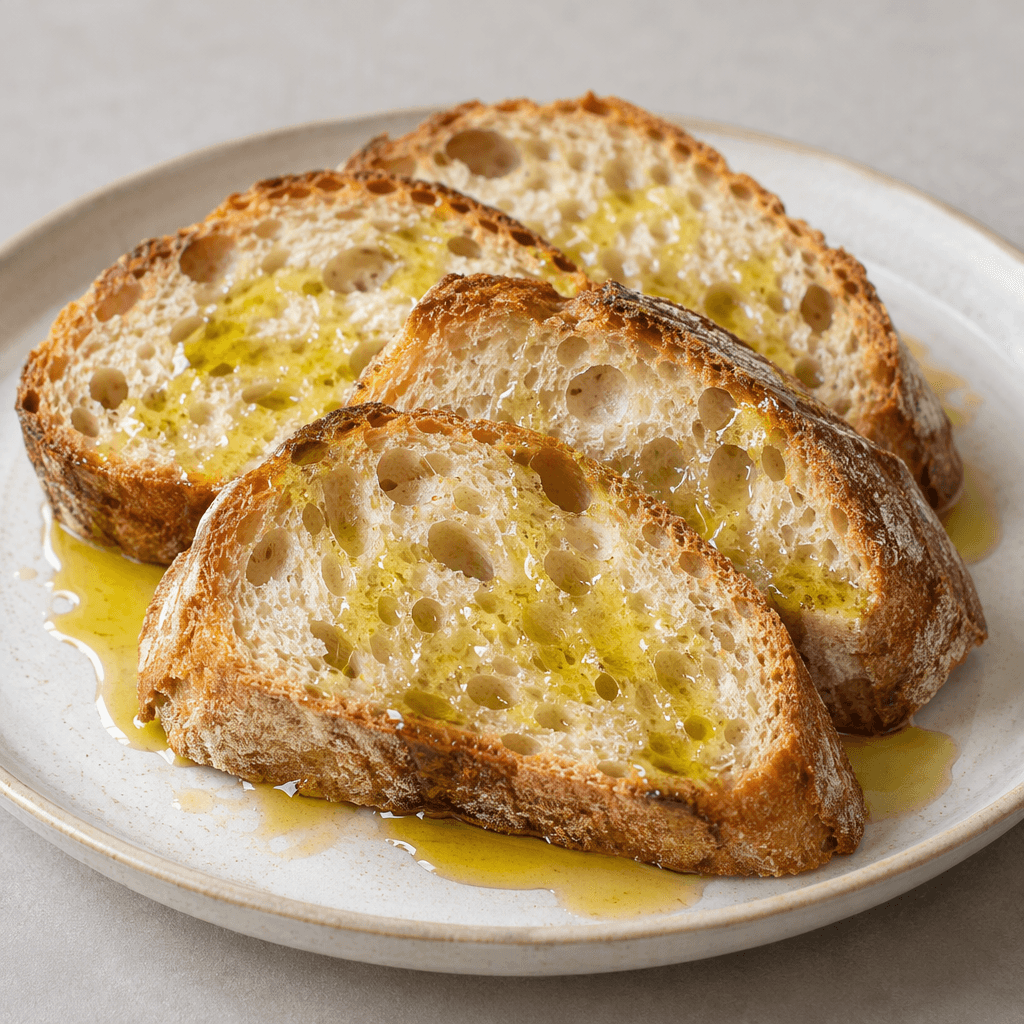
Bread with Oil Calories
Bread with olive or vegetable oil, energy and healthy fats
In season: Spring · Summer · Autumn · Winter
CALORIES
GI
POTASSIUM
FIBER
Quick answer
1 slice (medium) of Bread with Oil (35 g) has 102 calories. That works out to 290 calories per 100 g. It contains 15.4 g of carbs, 2.6 g of protein, 3 g of fat and 0.9 g of fiber. Its 0.1 mg of B1 covers 6% of the Daily Value. Its glycemic index is 65 (medium), so it raises blood sugar at a moderate pace.
What is Bread with Oil?
Bread with Oil is a simple serving of bread topped with a drizzle of olive oil or another cooking oil, rather than a dish with one fixed recipe or place of origin. The oil soaks into the crumb, adding richness while the bread remains the main part of the meal.
It is often enjoyed as a quick breakfast, snack or accompaniment: in Mediterranean settings, it may be served with olives, tomatoes, cheese or herbs, while elsewhere it works alongside soup or a savoury meal. The flavour depends on the bread and oil, from mild and buttery to grassy and peppery. It is mostly a source of carbohydrates, with some fat and modest protein. For a lighter serving, drizzle rather than pour, and add vegetables or a protein-rich side.
Bread with Oil Nutrition Facts
Selected: 100 g
290
KCAL / 100G
Carbs
44g
· 16% DV
Protein
7.5g
· 15% DV
Fat
8.5g
· 11% DV
Fiber
2.5g
· 9% DV
DV is the share of the daily value covered, on a 2,000 kcal reference diet.
Calories come from: Carbs 62% · Protein 11% · Fat 27%
Bread with Oil Vitamins & Minerals
Vitamins
B1
0.22mg · 18% DV
B3
2.1mg · 13% DV
Folate
35µg · 9% DV
Vitamin E
1.2mg · 8% DV
Minerals
Sodium
420mg · 18% DV
Selenium
9µg · 16% DV
Iron
2mg · 11% DV
Phosphorus
70mg · 10% DV
How Nutritious Is Bread with Oil?
Nutrient density
Medium
How many vitamins, minerals and how much fiber this food carries per calorie. A high score means a lot of nutrition for few calories.
Satiety score
Medium
An EatBetter score computed from fiber, protein and calorie density. A high score means staying full longer on the same calories.
Both scores are calculated per 100 g and do not change with the selected portion. The satiety score is EatBetter's own calculation, not a clinical measure.
Bread with Oil Glycemic Index
GLYCEMIC INDEX
GLYCEMIC LOAD
Accounts for portion size — a more realistic measure than GI alone.
How to Burn Off Bread with Oil
To burn the 290 calories in 100 g:
🚶
Walking (5 km/h)
🏃
Running (8 km/h)
🚴
Cycling
🏊
Swimming
Times are calculated with the MET equation for a 70 kg adult. Actual burn varies with your weight, age and pace.
Is Bread with Oil Processed?
NOVA 3
Processed
1. Unprocessed
2. Minimally Processed
3. Processed
4. Ultra-Processed
NOVA classifies foods into 4 groups by industrial processing. NOVA 1 (unprocessed) is the healthiest.
Does Bread with Oil Contain Allergens?
Contains these allergens:
Which Diets Is Bread with Oil Good For?
Vegan
— Not suitable
Vegetarian
✓ Suitable
Gluten-Free
— Not suitable
Dairy-Free
— Not suitable
Mediterranean
✓ Suitable
Paleo
— Not suitable
Whole30
— Not suitable
DASH
— Not suitable
Keto
— Not suitable
Low FODMAP
— Not suitable
Bread with Oil Fat Profile
SATURATED
1.2g
MONOUNSATURATED
5.2g
POLYUNSATURATED
1.3g
Omega 6:3 ratio 13.8:1
Above the ideal 4:1 (13.8:1).
Compare Bread with Oil
Foods Similar to Bread with Oil
Frequently Asked Questions About Bread with Oil
What is bread with oil?
Bread with oil is bread served with oil drizzled over it or alongside it for dipping. Olive oil is a common choice, but other cooking oils work too; the flavor and texture depend on the bread and oil used.
How do you make bread with oil at home?
To make bread with oil, drizzle a little oil over sliced bread just before serving. For a crispier version, toast the slices first and add the oil afterward so the bread does not turn soggy.
What kind of oil is best for bread with oil?
Olive oil is a popular choice for bread with oil because its flavor pairs well with rustic bread. Use a mild, fresh oil if you want the bread to stay the focus, or a more peppery olive oil for a stronger taste.
Which bread works best for bread with oil?
Rustic bread with a firm crust and airy crumb works especially well for bread with oil. Its crumb absorbs some oil without falling apart, while a very soft or thin slice can become greasy and limp.
Why does bread with oil get soggy?
Bread with oil gets soggy when it absorbs too much oil or sits after being dressed. Toast the bread first, drizzle lightly, and serve straight away to keep the outside crisp and the center pleasantly tender.
Should you toast bread before adding oil to bread with oil?
Toasting is optional, but it gives bread with oil a crisp surface and helps it hold its shape. Add the oil after toasting for the crunchiest result; fresh bread makes a softer version that absorbs more oil.
What can you serve with bread with oil?
Bread with oil pairs well with tomato, olives, cheese, soup, or salad. It can also accompany a meal as a simple side; choose fresh or lighter dishes if the bread is generously drizzled.
Can you make bread with oil ahead of time?
It is better to prepare bread with oil just before serving because the oil gradually softens the crumb. You can slice and toast the bread ahead, then drizzle it with oil at the table.
How should you store leftover bread with oil?
Store leftover bread and oil separately when possible, since dressed slices lose their crispness as they sit. Keep the bread in a closed container at room temperature and add fresh oil when you are ready to serve it.
Is bread with oil healthier than plain bread?
Bread with oil is not automatically healthier than plain bread: the added oil changes its fat and energy content, and the type of oil matters. A modest drizzle and a whole-grain loaf can make it a more filling choice.
Have another question about Bread with Oil?
Ask the AI nutrition coach — calories, portions, alternatives and more, answered in seconds in the app.

Scan calories with your camera
Instant AI nutrition analysis

Nutrition data compiled from USDA FoodData Central and scientific sources.