

Ready & Packaged Foods
All →Vegetables & Legumes
All →Desserts & Confectionery
All →Meat & Protein
All →Grains & Bakery
All →Beverages
All →Milk & Dairy
All →

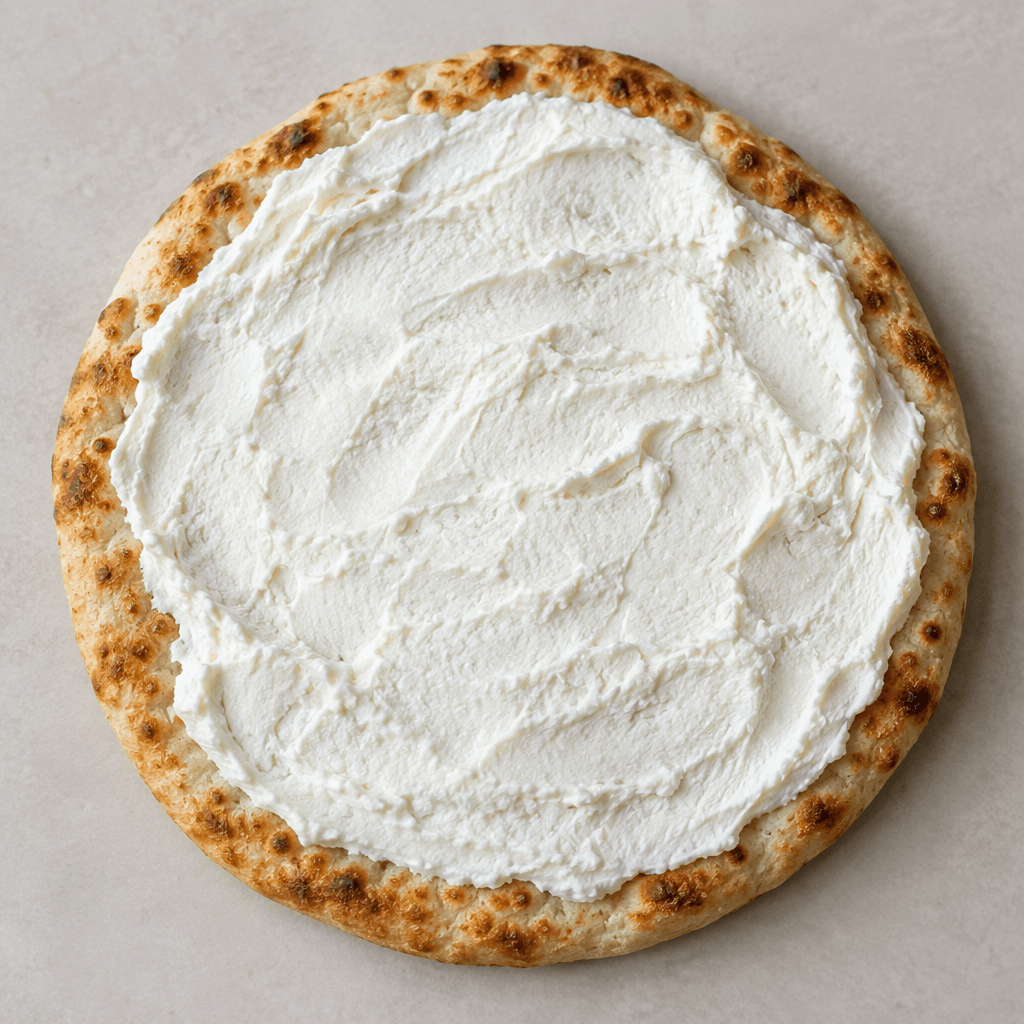
Bread (Labneh) Calories
Bread spread with labneh, source of protein and calcium
In season: Spring · Summer · Autumn · Winter
CALORIES
GI
POTASSIUM
FIBER
Quick answer
1 slice (medium) of Bread (Labneh) (40 g) has 84 calories. That works out to 210 calories per 100 g. It contains 12.8 g of carbs, 2.9 g of protein, 2.2 g of fat and 0.8 g of fiber. Its 3.6 µg of Selenium covers 7% of the Daily Value. Its glycemic index is 65 (medium), so it raises blood sugar at a moderate pace.
What is Bread (Labneh)?
Bread (labneh) is bread topped with labneh, a thick, tangy strained-yogurt cheese common across the Levant and wider Middle East. It is a simple combination rather than one fixed recipe: the bread may be soft or toasted, and the labneh is spread on top, often with a little olive oil or herbs.
It works as part of a breakfast or a quick snack, and can be served alongside sliced vegetables, olives, or tea. The bread supplies most of its carbohydrates, while labneh adds some protein and calcium; a 100 g portion provides 7.2 g of protein. For a lighter serving, use a thinner layer of labneh and add cucumber, tomato, or fresh herbs.
Bread (Labneh) Nutrition Facts
Selected: 100 g
210
KCAL / 100G
Carbs
32g
· 12% DV
Protein
7.2g
· 14% DV
Fat
5.5g
· 7% DV
Fiber
2.1g
· 8% DV
DV is the share of the daily value covered, on a 2,000 kcal reference diet.
Calories come from: Carbs 62% · Protein 14% · Fat 24%
Bread (Labneh) Vitamins & Minerals
Vitamins
B1
0.18mg · 15% DV
B2
0.19mg · 15% DV
B12
0.35µg · 15% DV
B3
1.6mg · 10% DV
Minerals
Selenium
9µg · 16% DV
Sodium
340mg · 15% DV
Calcium
120mg · 12% DV
Phosphorus
85mg · 12% DV
How Nutritious Is Bread (Labneh)?
Nutrient density
Medium
How many vitamins, minerals and how much fiber this food carries per calorie. A high score means a lot of nutrition for few calories.
Satiety score
Medium
An EatBetter score computed from fiber, protein and calorie density. A high score means staying full longer on the same calories.
Both scores are calculated per 100 g and do not change with the selected portion. The satiety score is EatBetter's own calculation, not a clinical measure.
Bread (Labneh) Glycemic Index
GLYCEMIC INDEX
GLYCEMIC LOAD
Accounts for portion size — a more realistic measure than GI alone.
How to Burn Off Bread (Labneh)
To burn the 210 calories in 100 g:
🚶
Walking (5 km/h)
🏃
Running (8 km/h)
🚴
Cycling
🏊
Swimming
Times are calculated with the MET equation for a 70 kg adult. Actual burn varies with your weight, age and pace.
Is Bread (Labneh) Processed?
NOVA 3
Processed
1. Unprocessed
2. Minimally Processed
3. Processed
4. Ultra-Processed
NOVA classifies foods into 4 groups by industrial processing. NOVA 1 (unprocessed) is the healthiest.
Does Bread (Labneh) Contain Allergens?
Contains these allergens:
Which Diets Is Bread (Labneh) Good For?
Vegan
— Not suitable
Vegetarian
✓ Suitable
Gluten-Free
— Not suitable
Dairy-Free
— Not suitable
Mediterranean
✓ Suitable
Paleo
— Not suitable
Whole30
— Not suitable
DASH
— Not suitable
Keto
— Not suitable
Low FODMAP
— Not suitable
Bread (Labneh) Fat Profile
SATURATED
2.7g
MONOUNSATURATED
1.5g
POLYUNSATURATED
0.25g
Omega 6:3 ratio 6:1
Above the ideal 4:1 (6:1).
Compare Bread (Labneh)
Foods Similar to Bread (Labneh)
Frequently Asked Questions About Bread (Labneh)
What is labneh bread?
Labneh bread is bread topped or spread with labneh, a thick, tangy strained-yogurt cheese. It can be made with flatbread or a regular slice, and is often finished with olive oil, herbs, or vegetables.
How do you make labneh bread?
To make labneh bread, spread labneh over bread or flatbread and add your preferred toppings. For a crisp base, toast the bread first and add the labneh after heating rather than baking the topping for a long time.
What toppings go well with labneh bread?
Olive oil, za’atar, fresh mint, cucumber, tomato, olives, and roasted vegetables all pair well with labneh bread. Add watery vegetables just before serving so their moisture does not soften the bread.
Is labneh bread the same as manakish?
No, labneh bread is not necessarily manakish. Manakish is a baked flatbread commonly topped with za’atar or cheese, while labneh bread usually has labneh spread on bread that has already been baked.
Can you make labneh bread with pita?
Yes, pita works well for labneh bread. Toast it briefly if you want a firmer base, then spread on the labneh; adding the topping after heating helps keep the pita from becoming soggy.
How do you keep labneh bread from getting soggy?
Spread labneh on labneh bread shortly before serving. Toasting the bread first creates a firmer surface, and keeping juicy toppings such as tomatoes separate until the last moment also helps preserve its texture.
Can labneh bread be eaten warm?
Yes, labneh bread can be served warm or at room temperature. For the best texture, warm or toast the bread first, then spread on the labneh so the topping stays cool and creamy.
Should labneh bread be refrigerated?
Yes, refrigerate labneh bread if it will not be eaten soon because its labneh topping is a fresh dairy food. Store it covered, although the bread may soften as it sits.
Can you freeze labneh bread?
Freezing assembled labneh bread is not ideal because thawing can make the bread soggy and affect the labneh’s texture. Freeze the bread on its own instead, then thaw, toast, and add fresh labneh.
Can Greek yogurt replace labneh on labneh bread?
Yes, thick Greek yogurt can stand in for labneh on labneh bread, though it may taste less rich and tangy. Strain it through a fine sieve or clean cloth first if it seems too loose to spread.
Have another question about Bread (Labneh)?
Ask the AI nutrition coach — calories, portions, alternatives and more, answered in seconds in the app.

Scan calories with your camera
Instant AI nutrition analysis

Nutrition data compiled from USDA FoodData Central and scientific sources.