

Ready & Packaged Foods
All →Vegetables & Legumes
All →Desserts & Confectionery
All →Meat & Protein
All →Grains & Bakery
All →Beverages
All →Milk & Dairy
All →

Kofteci Yusuf Bread Calories
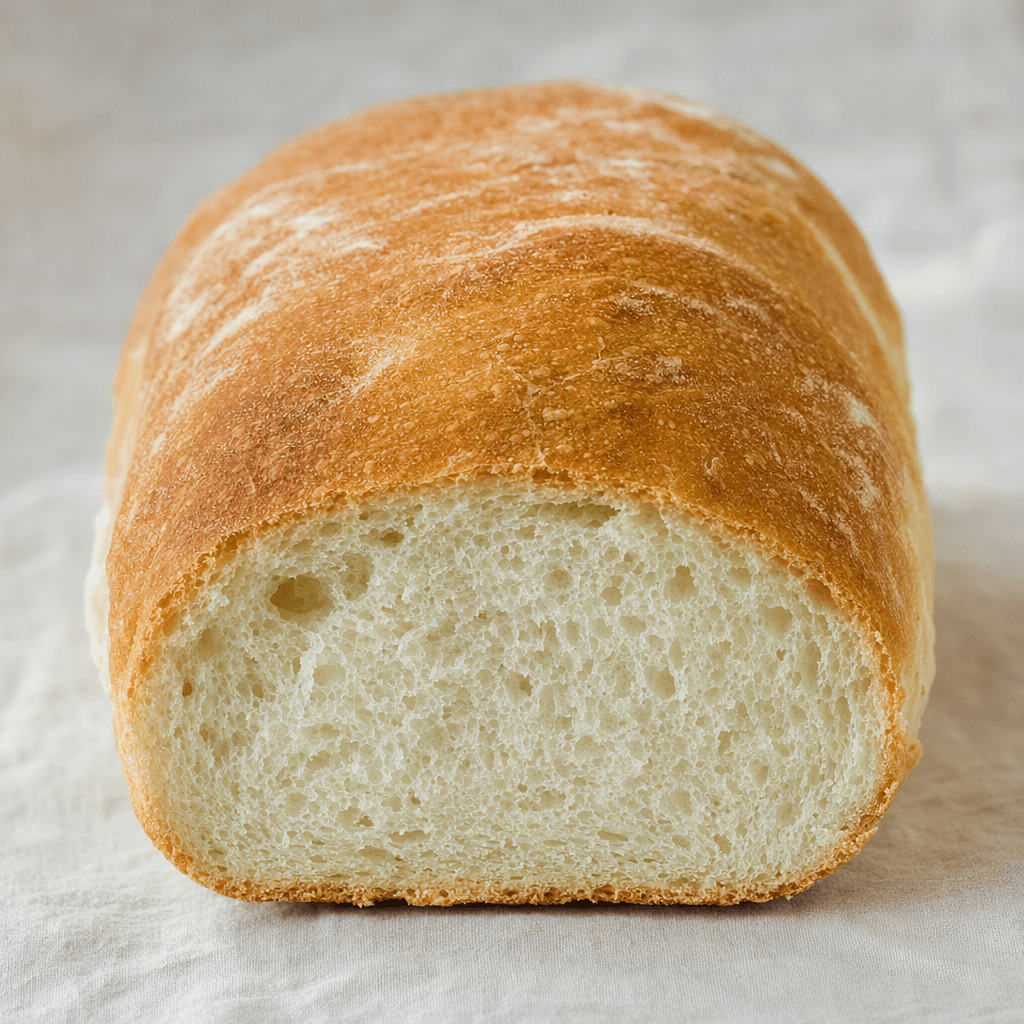
Popular Turkish restaurant bread, soft, white flour, slightly airy
In season: Spring · Summer · Autumn · Winter
CALORIES · 100 G
GI
POTASSIUM · 100 G
FIBER · 100 G
Quick answer
1 piece (medium) of Kofteci Yusuf Bread (60 g) has 156 calories. That works out to 260 calories per 100 g. It contains 31.2 g of carbs, 5.1 g of protein, 1.4 g of fat and 1.3 g of fiber. Its 0.1 mg of B1 covers 9% of the Daily Value. Its glycemic index is 75 (high), so it raises blood sugar quickly.
Kofteci Yusuf Bread Nutrition Facts
Selected: 1 piece (medium) · 60 g
156
KCAL / 60G
Carbs
31.2g
· 11% DV
Protein
5.1g
· 10% DV
Fat
1.4g
· 2% DV
Fiber
1.3g
· 5% DV
DV is the share of the daily value covered, on a 2,000 kcal reference diet.
Calories come from: Carbs 79% · Protein 13% · Fat 8%
Kofteci Yusuf Bread nutrition facts table · 1 piece (medium) (60 g)
| Nutrient | Amount | % DV |
|---|---|---|
| Calories | 156 kcal | |
| Total fat | 1.4 g | 2% |
| Saturated fat | 0.3 g | 2% |
| Trans fat | 0 g | |
| Sodium | 252 mg | 11% |
| Total carbohydrate | 31.2 g | 11% |
| Fiber | 1.3 g | 5% |
| Protein | 5.1 g | 10% |
Calories: Calories measure energy. Average daily need is 2,000 kcal. Excess calories are stored as fat, too few cause weight loss.
Carbs: Your body's primary energy source. The brain runs exclusively on carbs. Daily need: 275g.
Protein: Essential for muscle repair and cell growth. Daily need: 50g. Keeps you full and boosts metabolism.
Fat: Needed for hormone production and vitamin absorption. Daily need: 78g. Limit saturated fats, choose unsaturated.
Fiber: Critical for digestive health and satiety. Daily need: 28g. Stabilizes blood sugar, lowers cholesterol.

Log this food in EatBetter
100,000+ people use it
- Get your daily calorie target
- Snap your meal, log it in seconds
- See every vitamin and mineral

📸 Scan the code to get the app free.

How Many Calories in 1 Kofteci Yusuf Bread?
| Serving | Amount | Calories |
|---|---|---|
| 1 piece (medium) | 60 g | 156 kcal |
| 1 slice (thin) | 25 g | 65 kcal |
| 1 piece (small) | 40 g | 104 kcal |
| 1 slice (thick) | 40 g | 104 kcal |
| 1 serving (medium) | 60 g | 156 kcal |
| 1 serving (large) | 80 g | 208 kcal |
| 1 piece (large) | 90 g | 234 kcal |
| 100 g | 100 g | 260 kcal |
| 2 piece (double) | 120 g | 312 kcal |
Calculated from 260 calories per 100 g.
Frequently Asked Questions About Kofteci Yusuf Bread
What is Kofteci Yusuf Bread?
Kofteci Yusuf Bread is the soft, airy white bread served at the Turkish restaurant chain Kofteci Yusuf. It is commonly eaten alongside köfte (Turkish meatballs) or used as the bread for a meatball sandwich.
Is Kofteci Yusuf Bread served with köfte?
Yes, Kofteci Yusuf Bread is a natural accompaniment to köfte and can also be used to make a sandwich with the meatballs. Its soft texture makes it easy to tear or split at the table.
Can you make a köfte sandwich with Kofteci Yusuf Bread?
Yes, slice Kofteci Yusuf Bread open and fill it with cooked köfte. Add tomato, onion, or greens if you like; the bread is soft, so keeping wet sauces modest helps prevent it from becoming soggy.
How do you reheat Kofteci Yusuf Bread without drying it out?
Lightly dampen the outside of Kofteci Yusuf Bread and warm it briefly in an oven, or heat it in a covered pan. Avoid leaving it exposed to dry heat for too long, since that can make the soft crumb tough.
Can Kofteci Yusuf Bread be frozen?
Yes, Kofteci Yusuf Bread can be frozen. Wrap it tightly to limit air exposure, thaw it before serving, and warm it briefly to soften the crumb again.
What flour is used in Kofteci Yusuf Bread?
Kofteci Yusuf Bread is described as a soft white-flour bread. The restaurant’s full recipe is not publicly specified, so the exact flour blend and other ingredients cannot be confirmed.
Why is Kofteci Yusuf Bread so soft and airy?
Kofteci Yusuf Bread has a light, porous crumb because its dough is leavened and allowed to rise. That texture suits a restaurant bread served with köfte and makes the loaf easy to split for a sandwich.
Is Kofteci Yusuf Bread the same as Turkish pide?
No, Kofteci Yusuf Bread is not simply another name for Turkish pide. It is a soft restaurant-style bread, while pide commonly refers to a distinct Turkish bread style, often shaped as a flat or oval loaf.
How should leftover Kofteci Yusuf Bread be stored?
Once cool, keep leftover Kofteci Yusuf Bread in a closed bag or airtight container at room temperature. Refrigeration can dry bread out; freeze it instead if you need to keep it for longer.
Does Kofteci Yusuf Bread raise blood sugar quickly?
It can: Kofteci Yusuf Bread is made with white flour, which is generally digested faster than whole-grain bread. Pairing a portion with köfte and vegetables adds protein and fibre to the meal, but does not remove the bread’s effect on blood glucose.
Kofteci Yusuf Bread Vitamins & Minerals
Vitamins
B1
0.11mg · 9% DV
B3
1.26mg · 8% DV
Folate
22.8µg · 6% DV
B2
0.05mg · 4% DV
Minerals
Sodium
252mg · 11% DV
Selenium
4.8µg · 9% DV
Manganese
0.18mg · 8% DV
Calcium
66mg · 7% DV
Potassium ⭐
66mg · 2% DV
Kofteci Yusuf Bread Glycemic Index
GLYCEMIC INDEX
GLYCEMIC LOAD
Accounts for portion size — a more realistic measure than GI alone.
How to Burn Off Kofteci Yusuf Bread
To burn the 156 calories in 1 piece (medium) (60 g):
🚶
Walking (5 km/h)
🏃
Running (8 km/h)
🚴
Cycling
🏊
Swimming
Times are calculated with the MET equation for a 70 kg adult. Actual burn varies with your weight, age and pace.
What is Kofteci Yusuf Bread?
Kofteci Yusuf Bread is the soft, white-flour bread served alongside meals at the Turkish restaurant chain Köfteci Yusuf. Its lightly airy crumb makes it easy to tear and eat with a meal, rather than a crusty loaf intended to stand alone.
In Turkey, it commonly accompanies köfte and grilled meats; diners may use a piece to catch the juices on the plate. It is mainly a source of carbohydrate, with 52 g per 100 g, and provides some protein. Pair it with salad or grilled vegetables, and choose a portion that suits your appetite if you want a lighter meal.
How Nutritious Is Kofteci Yusuf Bread?
Nutrient density
Low
How many vitamins, minerals and how much fiber this food carries per calorie. A high score means a lot of nutrition for few calories.
Satiety score
Medium
An EatBetter score computed from fiber, protein and calorie density. A high score means staying full longer on the same calories.
Both scores are calculated per 100 g and do not change with the selected portion. The satiety score is EatBetter's own calculation, not a clinical measure.
Is Kofteci Yusuf Bread Processed?
NOVA 3
Processed
1. Unprocessed
2. Minimally Processed
3. Processed
4. Ultra-Processed
NOVA classifies foods into 4 groups by industrial processing. NOVA 1 (unprocessed) is the healthiest.
Does Kofteci Yusuf Bread Contain Allergens?
Contains these allergens:
Which Diets Is Kofteci Yusuf Bread Good For?
Vegan
— Not suitable
Vegetarian
✓ Suitable
Gluten-Free
— Not suitable
Dairy-Free
— Not suitable
Mediterranean
— Not suitable
Paleo
— Not suitable
Whole30
— Not suitable
DASH
— Not suitable
Keto
— Not suitable
Low FODMAP
— Not suitable
Kofteci Yusuf Bread Fat Profile
SATURATED
0.3g
MONOUNSATURATED
0.3g
POLYUNSATURATED
0.12g
Omega 6:3 ratio 11:1
Above the ideal 4:1 (11:1).
Compare Kofteci Yusuf Bread
Foods Similar to Kofteci Yusuf Bread
Have another question about Kofteci Yusuf Bread?
Ask the AI nutrition coach — calories, portions, alternatives and more, answered in seconds in the app.

Scan calories with your camera
Instant AI nutrition analysis

Nutrition data compiled from USDA FoodData Central and scientific sources.