

Ready & Packaged Foods
All →Vegetables & Legumes
All →Desserts & Confectionery
All →Meat & Protein
All →Grains & Bakery
All →Beverages
All →Milk & Dairy
All →

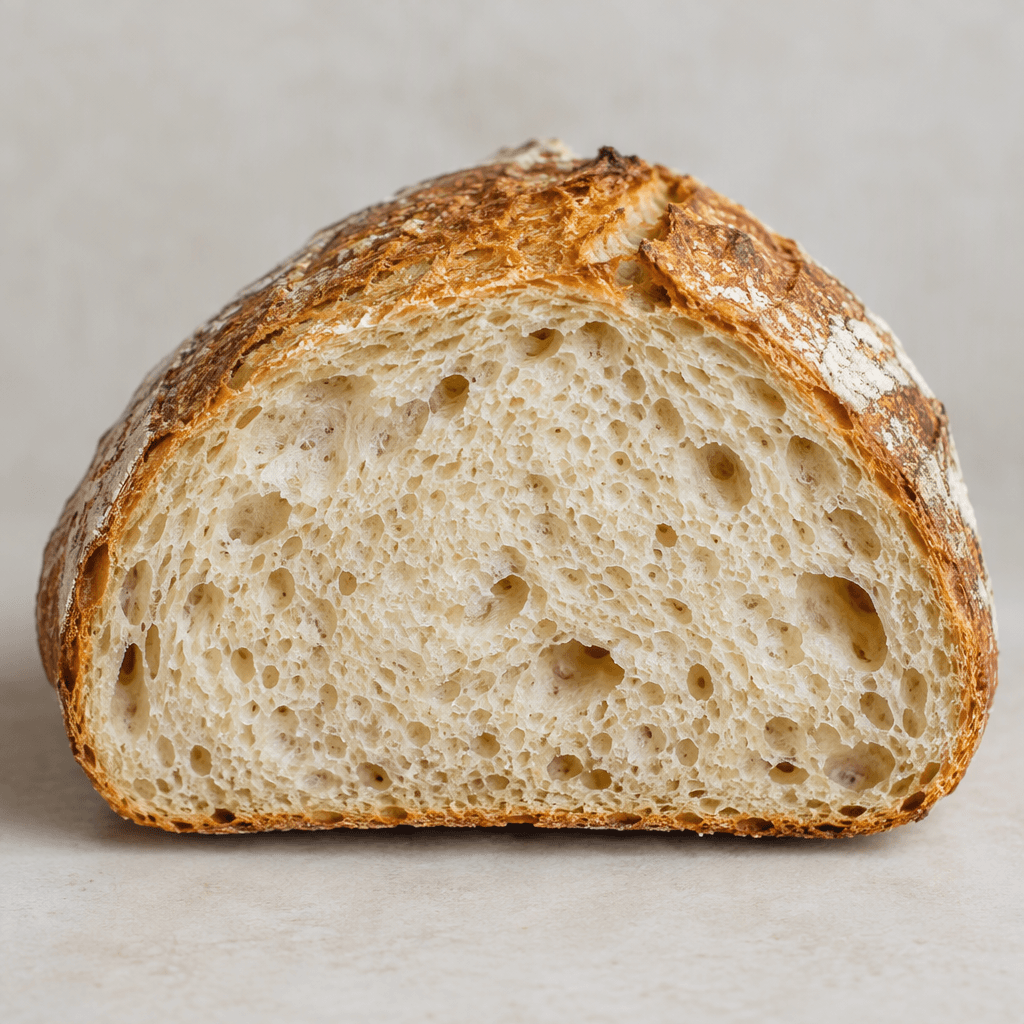
Bread (half) Calories
Staple carbohydrate source, contains fiber and B vitamins
In season: Spring · Summer · Autumn · Winter
CALORIES
GI
POTASSIUM
FIBER
Quick answer
1 piece (half) of Bread (half) (250 g) has 663 calories. That works out to 265 calories per 100 g. It contains 122.5 g of carbs, 22.5 g of protein, 8 g of fat and 6.8 g of fiber. Its 55 µg of Selenium covers 100% of the Daily Value. Its glycemic index is 70 (high), so it raises blood sugar quickly.
What is Bread (half)?
Half a loaf of bread is a portion of a baked loaf, usually made from wheat flour, water, yeast and salt. The pictured style has a browned crust and a soft, airy crumb, and bread like this is a familiar staple in many cuisines.
It can be served alongside soup, stews or a main meal, or used for sandwiches and toast; in Turkey, fresh bread is also common at breakfast and with everyday home-cooked dishes. Its nutritional profile is largely shaped by carbohydrates, with some protein and fibre. A half portion can be substantial, so you might serve smaller pieces with a meal or fill a sandwich with vegetables and a protein-rich ingredient for a more balanced bite.
Bread (half) Nutrition Facts
Selected: 100 g
265
KCAL / 100G
Carbs
49g
· 18% DV
Protein
9g
· 18% DV
Fat
3.2g
· 4% DV
Fiber
2.7g
· 10% DV
DV is the share of the daily value covered, on a 2,000 kcal reference diet.
Calories come from: Carbs 75% · Protein 14% · Fat 11%
Bread (half) Vitamins & Minerals
Vitamins
B3
3.6mg · 23% DV
B1
0.25mg · 21% DV
B2
0.15mg · 12% DV
Biotin
2.5µg · 8% DV
Minerals
Manganese
1mg · 43% DV
Selenium
22µg · 40% DV
Iron
4mg · 22% DV
Sodium
490mg · 21% DV
How Nutritious Is Bread (half)?
Nutrient density
Low
How many vitamins, minerals and how much fiber this food carries per calorie. A high score means a lot of nutrition for few calories.
Satiety score
Medium
An EatBetter score computed from fiber, protein and calorie density. A high score means staying full longer on the same calories.
Both scores are calculated per 100 g and do not change with the selected portion. The satiety score is EatBetter's own calculation, not a clinical measure.
Bread (half) Glycemic Index
GLYCEMIC INDEX
GLYCEMIC LOAD
Accounts for portion size — a more realistic measure than GI alone.
How to Burn Off Bread (half)
To burn the 265 calories in 100 g:
🚶
Walking (5 km/h)
🏃
Running (8 km/h)
🚴
Cycling
🏊
Swimming
Times are calculated with the MET equation for a 70 kg adult. Actual burn varies with your weight, age and pace.
Is Bread (half) Processed?
NOVA 3
Processed
1. Unprocessed
2. Minimally Processed
3. Processed
4. Ultra-Processed
NOVA classifies foods into 4 groups by industrial processing. NOVA 1 (unprocessed) is the healthiest.
Does Bread (half) Contain Allergens?
Contains these allergens:
Which Diets Is Bread (half) Good For?
Vegan
✓ Suitable
Vegetarian
✓ Suitable
Gluten-Free
— Not suitable
Dairy-Free
— Not suitable
Mediterranean
✓ Suitable
Paleo
— Not suitable
Whole30
— Not suitable
DASH
— Not suitable
Keto
— Not suitable
Low FODMAP
— Not suitable
Bread (half) Fat Profile
SATURATED
0.7g
MONOUNSATURATED
0.6g
POLYUNSATURATED
0.5g
Omega 6:3 ratio 15:1
Above the ideal 4:1 (15:1).
Compare Bread (half)
Foods Similar to Bread (half)
Frequently Asked Questions About Bread (half)
Does bread cause weight gain?
Bread does not cause weight gain on its own; overall eating patterns matter. Toppings and fillings can add substantially to a bread-based meal, so consider what goes with the bread as well as the portion.
Can you freeze bread?
Yes, bread freezes well. Slice a half loaf before freezing and seal the portions in an airtight bag so you can take out only what you need. Thaw slices or toast them straight from frozen.
How should you store bread to keep it fresh?
Keep bread in a cool, dry place in a bread box or breathable bag. Store a half loaf with its cut side down to slow drying, and avoid a damp, sealed environment where mold can develop more quickly.
Why does bread go stale?
Bread goes stale as its starch changes structure and moisture moves through the loaf. Refrigeration can speed up this process, so freeze bread you will not use soon rather than keeping it in the fridge.
Can you eat bread if you cut off the mold?
No, discard moldy bread rather than cutting away the visible patch. Bread is porous, so mold can spread below the surface where it cannot be seen; removing one section does not make the rest safe.
How can you use up stale bread?
Stale bread works well as breadcrumbs, croutons, or a base for bread pudding or French toast. Do not use bread that has mold or an unusual smell; staleness alone is different from spoilage.
Is toasted bread healthier than regular bread?
No, toasting does not automatically make bread healthier. It removes some moisture and changes the texture, but does not meaningfully improve the bread’s basic nutrition; avoid letting it become heavily charred.
Can people with diabetes eat bread?
Yes, people with diabetes can eat bread, but it can raise blood glucose and portion size matters. The right amount varies with an individual’s meal plan, so discuss it with a healthcare professional if you need personalized guidance.
Does bread cause bloating?
Bread can cause bloating in some people, particularly if they are sensitive to wheat or have a condition such as coeliac disease. Repeated symptoms after eating bread are worth discussing with a clinician rather than self-diagnosing.
Can you soften a dry half loaf of bread?
Yes, lightly sprinkle the cut surface with water and warm the half loaf briefly in the oven. This can soften the crust and crumb temporarily; serve it soon, since the bread will firm up again as it cools.
Have another question about Bread (half)?
Ask the AI nutrition coach — calories, portions, alternatives and more, answered in seconds in the app.

Scan calories with your camera
Instant AI nutrition analysis

Nutrition data compiled from USDA FoodData Central and scientific sources.