

Ready & Packaged Foods
All →Vegetables & Legumes
All →Desserts & Confectionery
All →Meat & Protein
All →Grains & Bakery
All →Beverages
All →Milk & Dairy
All →

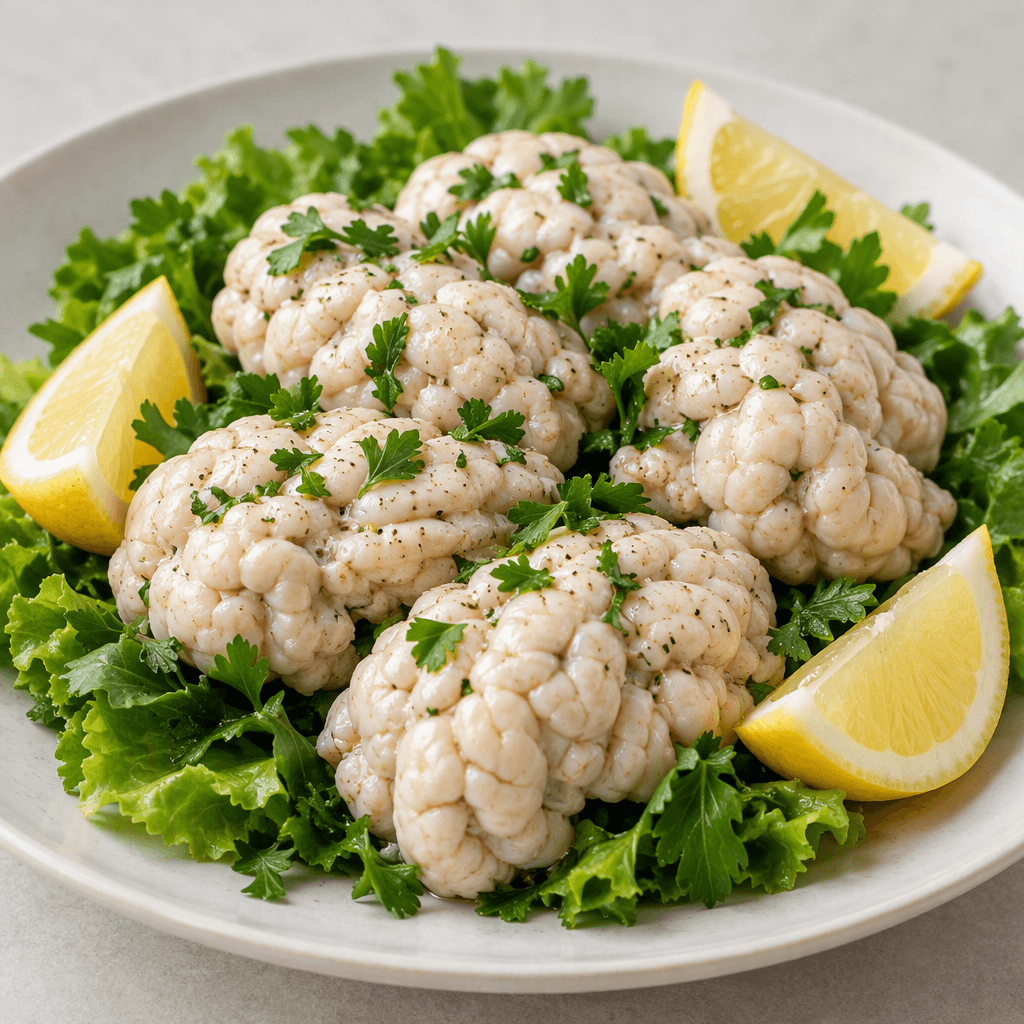
Brain Salad Calories
High in protein, iron, and vitamin B12. Traditional salad made with brain, lemon, olive oil, and spices.
In season: Spring · Summer · Autumn · Winter
CALORIES
GI
POTASSIUM
FIBER
Quick answer
1 serving (medium) of Brain Salad (120 g) has 204 calories. That works out to 170 calories per 100 g. It contains 2.6 g of carbs, 15 g of protein, 15.4 g of fat and 0.8 g of fiber. Its 10.2 µg of B12 covers 425% of the Daily Value. Its glycemic index is 0 (low), so it raises blood sugar slowly.
What is Brain Salad?
Brain Salad is a traditional preparation of cooked, chilled animal brain, usually dressed with lemon, olive oil, herbs and spices. The pieces are soft and creamy, with a mild, distinctive flavour; lemon and parsley bring freshness and balance its richness. It is associated with Turkish and wider Mediterranean offal cookery.
In Turkey it is commonly served cold as a meze, with greens and bread, and it also works as a small starter for a shared meal. Elsewhere, it may be less familiar, but the same bright, lemony dressing makes it easy to serve as part of a Mediterranean-style spread. It provides protein, iron and vitamin B12, while also being fairly rich. Use olive oil sparingly and add plenty of leafy greens for a lighter plate.
Brain Salad Nutrition Facts
Selected: 100 g
170
KCAL / 100G
Carbs
2.2g
· 1% DV
Protein
12.5g
· 25% DV
Fat
12.8g
· 16% DV
Fiber
0.7g
· 3% DV
DV is the share of the daily value covered, on a 2,000 kcal reference diet.
Calories come from: Carbs 5% · Protein 29% · Fat 66%
Brain Salad Vitamins & Minerals
Vitamins
B12
8.5µg · 354% DV
Biotin
7.5µg · 25% DV
B5
1.1mg · 22% DV
B2
0.19mg · 15% DV
Minerals
Selenium
13µg · 24% DV
Phosphorus
160mg · 23% DV
Zinc
2mg · 18% DV
Iron
3mg · 17% DV
How Nutritious Is Brain Salad?
Nutrient density
Very high
How many vitamins, minerals and how much fiber this food carries per calorie. A high score means a lot of nutrition for few calories.
Satiety score
Medium
An EatBetter score computed from fiber, protein and calorie density. A high score means staying full longer on the same calories.
Both scores are calculated per 100 g and do not change with the selected portion. The satiety score is EatBetter's own calculation, not a clinical measure.
Brain Salad Glycemic Index
GLYCEMIC INDEX
GLYCEMIC LOAD
Accounts for portion size — a more realistic measure than GI alone.
How to Burn Off Brain Salad
To burn the 170 calories in 100 g:
🚶
Walking (5 km/h)
🏃
Running (8 km/h)
🚴
Cycling
🏊
Swimming
Times are calculated with the MET equation for a 70 kg adult. Actual burn varies with your weight, age and pace.
Is Brain Salad Processed?
NOVA 2
Minimally Processed
1. Unprocessed
2. Minimally Processed
3. Processed
4. Ultra-Processed
NOVA classifies foods into 4 groups by industrial processing. NOVA 1 (unprocessed) is the healthiest.
Does Brain Salad Contain Allergens?
No known major allergens
Which Diets Is Brain Salad Good For?
Vegan
— Not suitable
Vegetarian
— Not suitable
Gluten-Free
✓ Suitable
Dairy-Free
— Not suitable
Mediterranean
✓ Suitable
Paleo
✓ Suitable
Whole30
— Not suitable
DASH
— Not suitable
Keto
✓ Suitable
Low FODMAP
— Not suitable
Brain Salad Fat Profile
SATURATED
3.7g
MONOUNSATURATED
4.5g
POLYUNSATURATED
1.2g
Omega 6:3 ratio 0.3:1
Below the ideal 4:1 — a good omega balance.
Compare Brain Salad
Foods Similar to Brain Salad
Frequently Asked Questions About Brain Salad
How do you make Brain Salad?
Brain salad is made by gently cooking cleaned animal brain, chilling it, then dressing it with lemon, olive oil, herbs, and seasoning. Fold the dressing through carefully so the delicate pieces hold their shape, and serve it cold over greens.
What kind of brain is used in Brain Salad?
Brain salad can be made with lamb, sheep, or calf brain; the choice varies by cuisine and availability. Buy it from a reputable, inspected source, since safe handling and the animal’s origin matter for brain and other offal.
How do you clean brain for Brain Salad?
To prepare brain for brain salad, rinse it gently under cold running water and remove any visible blood clots. The thin outer membrane is easier to peel after cooking; avoid squeezing or scrubbing the soft tissue.
How do you cook brain for Brain Salad?
Cook brain for brain salad gently in simmering water until it is fully cooked through and no raw or bloody areas remain. Cooking time depends on the size of the pieces, so check the center rather than relying only on a fixed time.
Is Brain Salad safe to eat?
Brain salad can be safe when made with properly sourced brain and cooked thoroughly. Avoid raw or undercooked brain, and be especially cautious about the source of beef brain because animal brain tissue can carry serious food-safety risks.
What does Brain Salad taste like?
Brain salad has a mild, delicate flavor and a soft, creamy texture. Lemon and herbs brighten it, while olive oil adds richness. Its texture is more distinctive than its taste, so serving the brain in intact pieces may suit first-time eaters.
How do you remove the membrane from brain for Brain Salad?
For brain salad, peel the membrane after cooking and cooling the brain slightly. Lift an edge with your fingers or a small knife and ease it away gently; stop if the brain starts breaking apart rather than forcing it.
How is Brain Salad traditionally served?
Brain salad is commonly served chilled with lemon, olive oil, parsley, and spices, sometimes arranged on leafy greens. It works as a small starter or meze; add the lemon close to serving so the delicate brain does not sit in the dressing too long.
How long does Brain Salad keep in the fridge?
Keep brain salad covered in the refrigerator and eat it promptly rather than storing it for an extended period. Do not leave it sitting at room temperature; discard it if its smell, color, or texture changes noticeably.
Can you freeze Brain Salad?
Freezing brain salad is not recommended because thawing can make the brain watery and crumbly, and the lemon-and-oil dressing may separate. For a better texture, prepare only what you plan to eat and refrigerate any leftovers.
Have another question about Brain Salad?
Ask the AI nutrition coach — calories, portions, alternatives and more, answered in seconds in the app.

Scan calories with your camera
Instant AI nutrition analysis

Nutrition data compiled from USDA FoodData Central and scientific sources.