

Ready & Packaged Foods
All →Vegetables & Legumes
All →Desserts & Confectionery
All →Meat & Protein
All →Grains & Bakery
All →Beverages
All →Milk & Dairy
All →

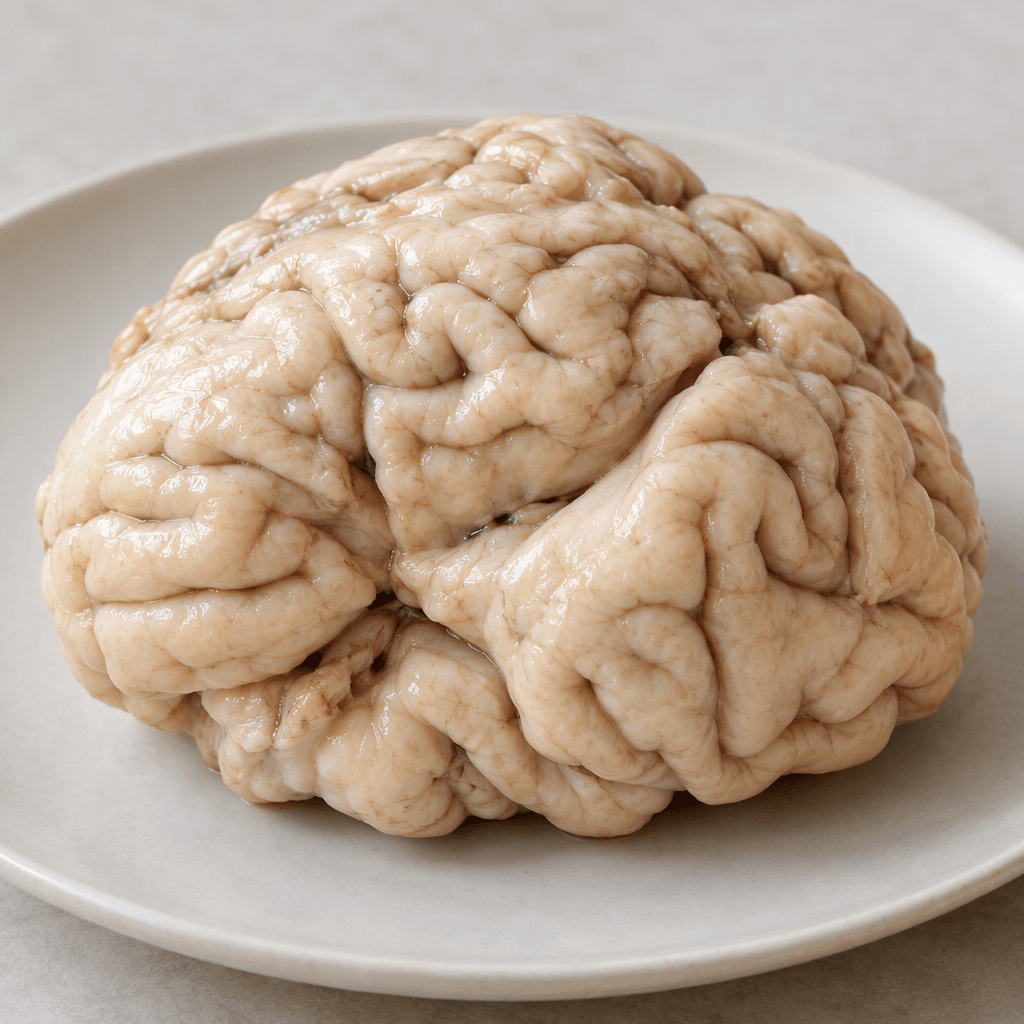
Boiled brain Calories
High protein, rich in B12, good source of iron and phosphorus
In season: Spring · Summer · Autumn · Winter
CALORIES
GI
POTASSIUM
FIBER
Quick answer
1 piece (medium) of Boiled brain (120 g) has 152 calories. That works out to 127 calories per 100 g. It contains 0.8 g of carbs, 12.6 g of protein, 11.2 g of fat and 0 g of fiber. Its 11.4 µg of B12 covers 475% of the Daily Value. Its glycemic index is 0 (low), so it raises blood sugar slowly.
What is Boiled brain?
Boiled brain is the simple preparation behind Turkey’s beyin söğüş: usually lamb brain, gently cooked, cooled and served in pieces or slices. Its texture is very soft and almost creamy, with a mild, distinctive flavour. Lemon, olive oil, parsley and pepper are common ways to season it.
In Turkey it is often served cold as a meze, including at meyhanes, or enjoyed at home with greens or onion. Outside Turkey, you may find it on menus specialising in Turkish or regional offal dishes. It provides protein, while also being relatively rich in fat. If you enjoy offal, it makes a substantial starter; use olive oil sparingly and add plenty of lemon and herbs for a fresher plate.
Boiled brain Nutrition Facts
Selected: 100 g
127
KCAL / 100G
Carbs
0.7g
· 0% DV
Protein
10.5g
· 21% DV
Fat
9.3g
· 12% DV
Fiber
0g
· 0% DV
DV is the share of the daily value covered, on a 2,000 kcal reference diet.
Calories come from: Carbs 2% · Protein 33% · Fat 65%
Boiled brain Vitamins & Minerals
Vitamins
B12
9.5µg · 396% DV
B5
2.8mg · 56% DV
Biotin
8µg · 27% DV
B2
0.23mg · 18% DV
Minerals
Selenium
22µg · 40% DV
Phosphorus
220mg · 31% DV
Iron
3mg · 17% DV
Zinc
1mg · 9% DV
How Nutritious Is Boiled brain?
Nutrient density
Very high
How many vitamins, minerals and how much fiber this food carries per calorie. A high score means a lot of nutrition for few calories.
Satiety score
Medium
An EatBetter score computed from fiber, protein and calorie density. A high score means staying full longer on the same calories.
Both scores are calculated per 100 g and do not change with the selected portion. The satiety score is EatBetter's own calculation, not a clinical measure.
Boiled brain Glycemic Index
GLYCEMIC INDEX
GLYCEMIC LOAD
Accounts for portion size — a more realistic measure than GI alone.
How to Burn Off Boiled brain
To burn the 127 calories in 100 g:
🚶
Walking (5 km/h)
🏃
Running (8 km/h)
🚴
Cycling
🏊
Swimming
Times are calculated with the MET equation for a 70 kg adult. Actual burn varies with your weight, age and pace.
Is Boiled brain Processed?
NOVA 2
Minimally Processed
1. Unprocessed
2. Minimally Processed
3. Processed
4. Ultra-Processed
NOVA classifies foods into 4 groups by industrial processing. NOVA 1 (unprocessed) is the healthiest.
Does Boiled brain Contain Allergens?
No known major allergens
Which Diets Is Boiled brain Good For?
Vegan
— Not suitable
Vegetarian
— Not suitable
Gluten-Free
✓ Suitable
Dairy-Free
— Not suitable
Mediterranean
✓ Suitable
Paleo
✓ Suitable
Whole30
— Not suitable
DASH
— Not suitable
Keto
✓ Suitable
Low FODMAP
— Not suitable
Boiled brain Fat Profile
SATURATED
2.6g
MONOUNSATURATED
3.2g
POLYUNSATURATED
1.1g
Omega 6:3 ratio 0.3:1
Below the ideal 4:1 — a good omega balance.
Compare Boiled brain
Foods Similar to Boiled brain
Frequently Asked Questions About Boiled brain
What does boiled brain taste like?
Boiled brain has a mild, savory flavor and a soft, creamy texture that some people compare to very tender pâté. Lemon, herbs, and spices brighten it; overcooking can make the delicate lobes dry and crumbly.
How do you cook boiled brain without it falling apart?
Cook boiled brain gently in barely simmering water rather than at a rolling boil. Handle it carefully, avoid frequent stirring, and let it cool before slicing; sudden rough handling is a common reason the soft lobes break apart.
Is boiled brain safe to eat?
Boiled brain is generally safe when it comes from an inspected animal, has been kept cold, and is cooked thoroughly. Buy it from a reputable source, prevent raw juices from touching ready-to-eat foods, and refrigerate leftovers promptly.
How do you clean brain before making boiled brain?
Rinse brain gently under cold running water and peel away the thin outer membrane before cooking. Because the tissue is fragile, do not scrub or squeeze it; use a clean work surface and wash your hands and utensils afterward.
Which animal is boiled brain usually made from?
Boiled brain may come from sheep, lamb, calf, or other animals, depending on the cuisine and butcher. The species affects the size and texture, so ask the seller what you are buying rather than assuming all brain dishes use the same animal.
Why do recipes soak brain before making boiled brain?
Some cooks soak brain in cold water or milk to loosen the membrane and soften its strong, mineral-like flavor. The step is optional; keep it refrigerated while soaking, then drain it and handle it with clean utensils.
How is boiled brain served in different cuisines?
Boiled brain is served in many ways: sliced with lemon and herbs in Turkish-style söğüş, or used in dishes such as French cervelle preparations and Mexican tacos de sesos. The seasonings and accompaniments vary widely by region.
How long does boiled brain keep in the refrigerator?
Boiled brain keeps for about 3–4 days in a covered container in a refrigerator set to 40°F (4°C) or colder. Chill it promptly after cooking, and discard it if it was left at room temperature for too long or its smell or appearance changes.
Can you freeze boiled brain?
Yes, you can freeze boiled brain, although thawing may make its delicate texture softer and more prone to breaking. Cool it first, wrap it airtight, and thaw it in the refrigerator; do not refreeze it after thawing.
Can you eat brain raw instead of making boiled brain?
No, raw brain is not a safe substitute for boiled brain because it can carry harmful microbes and parasites. Cooking reduces foodborne risk, but it does not make brain from an uninspected or questionable source safe to eat.
Have another question about Boiled brain?
Ask the AI nutrition coach — calories, portions, alternatives and more, answered in seconds in the app.

Scan calories with your camera
Instant AI nutrition analysis

Nutrition data compiled from USDA FoodData Central and scientific sources.