

Ready & Packaged Foods
All →Vegetables & Legumes
All →Desserts & Confectionery
All →Meat & Protein
All →Grains & Bakery
All →Beverages
All →Milk & Dairy
All →

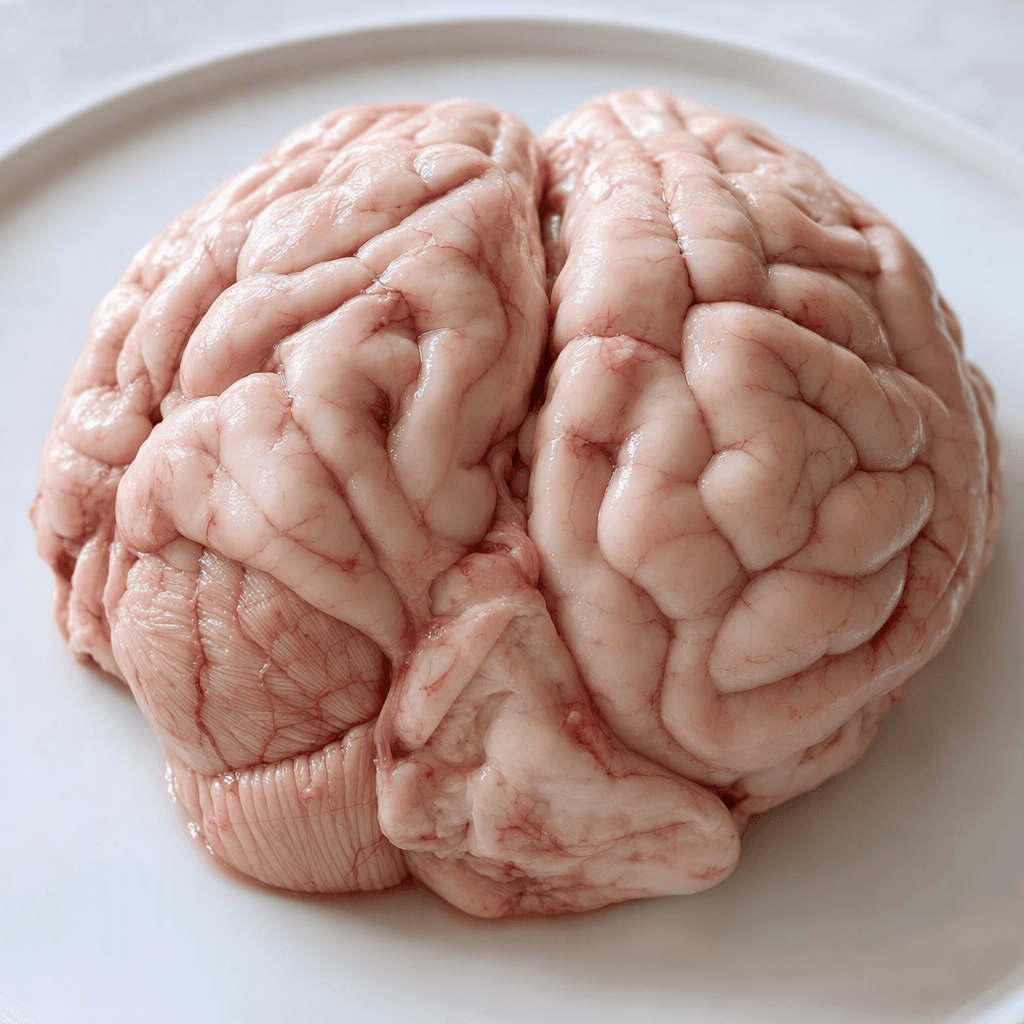
Brain Calories
Extremely high in vitamin B12, iron, and choline. Low in carbs, very high in cholesterol.
In season: Spring · Summer · Autumn · Winter
CALORIES
GI
POTASSIUM
FIBER
Quick answer
1 piece (medium) of Brain (120 g) has 152 calories. That works out to 127 calories per 100 g. It contains 1.3 g of carbs, 13.1 g of protein, 11.4 g of fat and 0 g of fiber. Its 10.8 µg of B12 covers 450% of the Daily Value. Its glycemic index is 0 (low), so it raises blood sugar slowly.
What is Brain?
Brain is the edible organ of animals such as lamb, sheep or calf. It appears in food traditions around the world, with lamb and calf brain used in Turkish cooking and other regional cuisines. It is often gently poached, then served chilled as a salad or cooked in a pan.
Its texture is soft and creamy, with a mild, distinctive taste. In Turkey, it may be served as a meze with lemon and herbs; elsewhere, preparations vary from simple pan-frying to spiced dishes. Brain is low in carbohydrates and provides B12 and choline, but it is also high in fat and cholesterol. For a lighter plate, poach it and serve with lemon, fresh herbs and crisp vegetables rather than relying on a rich coating or generous frying oil.
Brain Nutrition Facts
Selected: 100 g
127
KCAL / 100G
Carbs
1.1g
· 0% DV
Protein
10.9g
· 22% DV
Fat
9.5g
· 12% DV
Fiber
0g
· 0% DV
DV is the share of the daily value covered, on a 2,000 kcal reference diet.
Calories come from: Carbs 3% · Protein 33% · Fat 64%
Brain Vitamins & Minerals
Vitamins
B12
9µg · 375% DV
B5
2mg · 40% DV
Biotin
10µg · 33% DV
B3
4.7mg · 29% DV
Minerals
Phosphorus
335mg · 48% DV
Selenium
20µg · 36% DV
Iron
4mg · 22% DV
Zinc
1mg · 9% DV
How Nutritious Is Brain?
Nutrient density
Very high
How many vitamins, minerals and how much fiber this food carries per calorie. A high score means a lot of nutrition for few calories.
Satiety score
Medium
An EatBetter score computed from fiber, protein and calorie density. A high score means staying full longer on the same calories.
Both scores are calculated per 100 g and do not change with the selected portion. The satiety score is EatBetter's own calculation, not a clinical measure.
Brain Glycemic Index
GLYCEMIC INDEX
GLYCEMIC LOAD
Accounts for portion size — a more realistic measure than GI alone.
How to Burn Off Brain
To burn the 127 calories in 100 g:
🚶
Walking (5 km/h)
🏃
Running (8 km/h)
🚴
Cycling
🏊
Swimming
Times are calculated with the MET equation for a 70 kg adult. Actual burn varies with your weight, age and pace.
Is Brain Processed?
NOVA 1
Unprocessed
1. Unprocessed
2. Minimally Processed
3. Processed
4. Ultra-Processed
NOVA classifies foods into 4 groups by industrial processing. NOVA 1 (unprocessed) is the healthiest.
Does Brain Contain Allergens?
No known major allergens
Which Diets Is Brain Good For?
Vegan
— Not suitable
Vegetarian
— Not suitable
Gluten-Free
✓ Suitable
Dairy-Free
— Not suitable
Mediterranean
✓ Suitable
Paleo
✓ Suitable
Whole30
— Not suitable
DASH
— Not suitable
Keto
✓ Suitable
Low FODMAP
— Not suitable
Brain Fat Profile
SATURATED
2.3g
MONOUNSATURATED
2.2g
POLYUNSATURATED
1g
Omega 6:3 ratio 0.3:1
Below the ideal 4:1 — a good omega balance.
Compare Brain
Foods Similar to Brain
Frequently Asked Questions About Brain
Is brain safe to eat?
Brain from a properly inspected animal can be eaten when handled and cooked safely, but nervous tissue can carry prion-related risks. Cooking does not reliably destroy prions, so avoid brain from unknown or unregulated sources.
What does brain taste like?
Brain has a mild, delicate flavor and a very soft, creamy texture. It readily takes on the flavors around it, which is why recipes often pair it with lemon, herbs, pepper, or crisp toppings.
How do you cook brain?
A common method is to gently poach brain first, then briefly fry it until the outside browns. Its soft texture breaks apart easily, so handle it gently and avoid prolonged cooking.
Which animal brains are eaten?
Lamb, calf, and pig brains are eaten in some cuisines, with lamb and calf especially familiar in parts of the Mediterranean and Middle East. Availability and food-safety rules vary, so choose inspected products.
How do you clean brain before cooking?
Rinse brain gently under cold water and remove any visible membrane with your fingers or a small knife. If the membrane clings, a brief blanch can make it easier to peel without tearing the delicate tissue.
Does brain need to be soaked in milk?
No, soaking brain in milk is optional, not essential. Some cooks use it to mellow the flavor or soften the texture; a gentle rinse and careful removal of the membrane are usually enough for cooking.
Are brain and sweetbreads the same thing?
No. Brain is nervous tissue, while sweetbreads are usually the thymus or pancreas of an animal. They are both types of offal, but their texture, flavor, and cooking methods are different.
Can you freeze brain?
Yes, brain can be frozen while fresh. Seal it well to prevent leaks and freezer burn, thaw it in the refrigerator, and cook it soon after thawing; do not refreeze it.
How long does brain keep in the fridge?
Raw brain is highly perishable, so keep it covered in the coldest part of the refrigerator and use it as soon as possible. Store cooked brain separately in a sealed container and refrigerate promptly.
Is brain high in cholesterol?
Yes, brain is exceptionally high in cholesterol. If you have high blood cholesterol or cardiovascular disease, ask your clinician how often it fits into your eating plan rather than making it a frequent food.
Have another question about Brain?
Ask the AI nutrition coach — calories, portions, alternatives and more, answered in seconds in the app.

Scan calories with your camera
Instant AI nutrition analysis

Nutrition data compiled from USDA FoodData Central and scientific sources.