

Ready & Packaged Foods
All →Vegetables & Legumes
All →Desserts & Confectionery
All →Meat & Protein
All →Grains & Bakery
All →Beverages
All →Milk & Dairy
All →

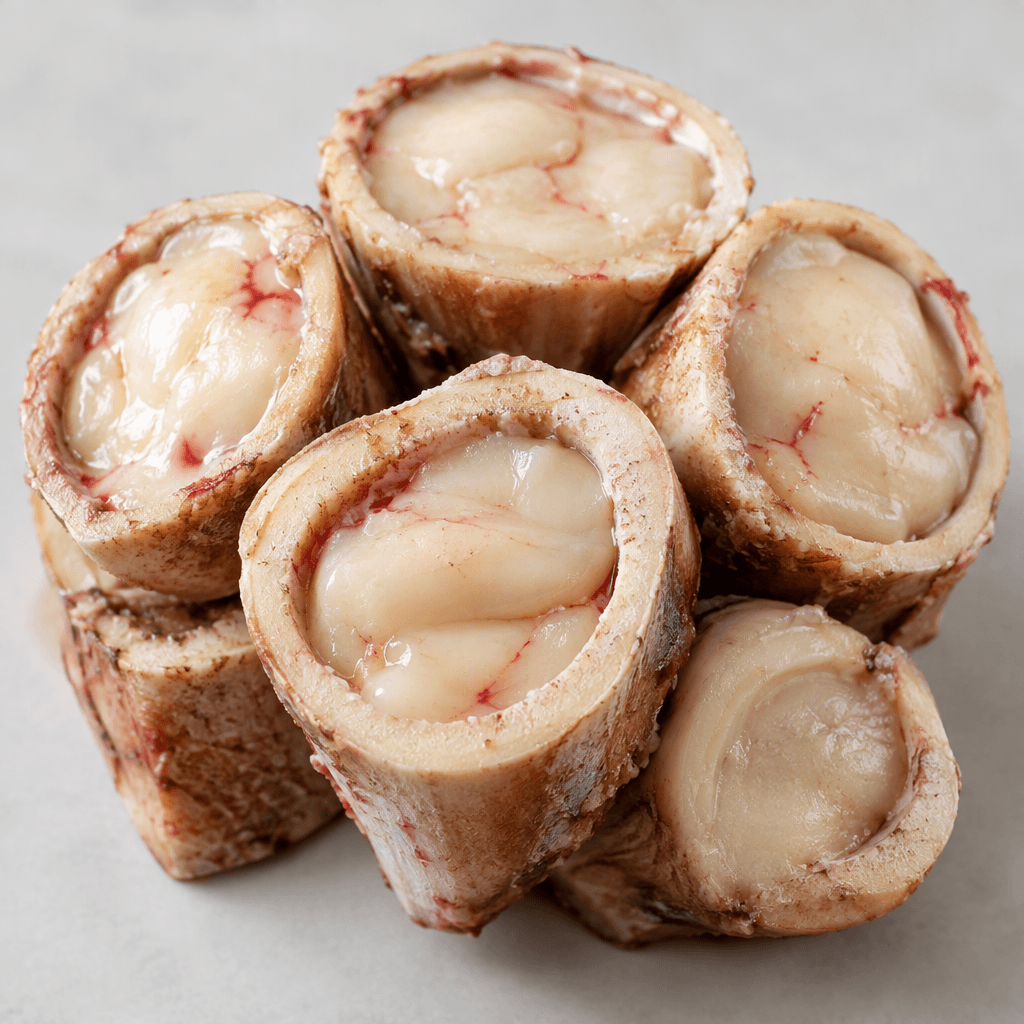
Bone marrow fat Calories
Rich in unsaturated fats, vitamins, and minerals
In season: Winter
CALORIES
GI
POTASSIUM
FIBER
Quick answer
1 tablespoon (medium) of Bone marrow fat (14 g) has 108 calories. That works out to 770 calories per 100 g. It contains 0 g of carbs, 0 g of protein, 11.9 g of fat and 0 g of fiber. Its glycemic index is 0 (low), so it raises blood sugar slowly.
What is Bone marrow fat?
Bone marrow fat is the soft, fatty tissue found inside animal bones. It can be scooped out after the bones are roasted, or used to enrich soups, broths and meat dishes. Roasted marrow is enjoyed in a range of food traditions, often served simply so its rich flavour can stand out.
When warm, it is silky and creamy, with a savoury, almost buttery taste; spread it on toast with a little salt, or stir a small amount into vegetables or soup. It is almost entirely fat—about 85 g per 100 g—so a little goes a long way. Try it with herbs, pepper and crisp bread for a simple serving.
Bone marrow fat Nutrition Facts
Selected: 100 g
770
KCAL / 100G
Carbs
0g
· 0% DV
Protein
0.2g
· 0% DV
Fat
85g
· 109% DV
Fiber
0g
· 0% DV
DV is the share of the daily value covered, on a 2,000 kcal reference diet.
Calories come from: Carbs 0% · Protein 0% · Fat 100%
Bone marrow fat Vitamins & Minerals
Vitamins
B12
0.7µg · 29% DV
Vitamin E
1.5mg · 10% DV
Vitamin A
50µg · 6% DV
B5
0.25mg · 5% DV
Minerals
Zinc
1mg · 9% DV
Selenium
1µg · 2% DV
Phosphorus
15mg · 2% DV
Calcium
10mg · 1% DV
How Nutritious Is Bone marrow fat?
Nutrient density
High
How many vitamins, minerals and how much fiber this food carries per calorie. A high score means a lot of nutrition for few calories.
Satiety score
Low
An EatBetter score computed from fiber, protein and calorie density. A high score means staying full longer on the same calories.
Both scores are calculated per 100 g and do not change with the selected portion. The satiety score is EatBetter's own calculation, not a clinical measure.
Bone marrow fat Glycemic Index
GLYCEMIC INDEX
GLYCEMIC LOAD
Accounts for portion size — a more realistic measure than GI alone.
How to Burn Off Bone marrow fat
To burn the 770 calories in 100 g:
🚶
Walking (5 km/h)
🏃
Running (8 km/h)
🚴
Cycling
🏊
Swimming
Times are calculated with the MET equation for a 70 kg adult. Actual burn varies with your weight, age and pace.
Is Bone marrow fat Processed?
NOVA 2
Minimally Processed
1. Unprocessed
2. Minimally Processed
3. Processed
4. Ultra-Processed
NOVA classifies foods into 4 groups by industrial processing. NOVA 1 (unprocessed) is the healthiest.
Does Bone marrow fat Contain Allergens?
No known major allergens
Which Diets Is Bone marrow fat Good For?
Vegan
— Not suitable
Vegetarian
— Not suitable
Gluten-Free
✓ Suitable
Dairy-Free
— Not suitable
Mediterranean
✓ Suitable
Paleo
✓ Suitable
Whole30
— Not suitable
DASH
— Not suitable
Keto
✓ Suitable
Low FODMAP
— Not suitable
Bone marrow fat Fat Profile
SATURATED
38g
MONOUNSATURATED
40g
POLYUNSATURATED
7g
Omega 6:3 ratio 3:1
Below the ideal 4:1 — a good omega balance.
Compare Bone marrow fat
Foods Similar to Bone marrow fat
Frequently Asked Questions About Bone marrow fat
What is bone marrow fat?
Bone marrow fat is the soft, fatty tissue inside the hollow centre of bones. It is usually sold in marrow bones and can be roasted in the bone, then scooped out to eat.
How do you cook bone marrow fat?
Roast bone marrow fat in bones with the cut sides facing up until the marrow is soft and lightly browned. Keep an eye on it near the end of cooking, since overcooked marrow can melt and run out of the bone.
What does bone marrow fat taste like?
Bone marrow fat tastes rich and savoury, with a mild beef-like flavour and a smooth, buttery texture when warm. A little salt and something acidic, such as lemon, can balance its richness.
How do you eat bone marrow fat?
Scoop cooked bone marrow fat from the bone and spread it on toast, or serve it alongside roasted meat. Parsley, lemon, and a crisp salad are common ways to cut through its richness.
Which bones are best for bone marrow fat?
Large marrow bones from beef or lamb are commonly used for bone marrow fat. Ask a butcher for bones cut across the marrow cavity, often called canoe-cut, so the exposed marrow is easy to roast and scoop out.
Is bone marrow fat the same as bone marrow?
Bone marrow fat refers to the fatty portion of the marrow, while bone marrow means the soft tissue inside a bone as a whole. In recipes and everyday conversation, people often use the terms interchangeably.
Can you eat bone marrow fat raw?
No, cook bone marrow fat rather than eating it raw. Cutting and handling bones can introduce harmful bacteria, and cooking the marrow makes it safer to eat as well as easier to remove from the bone.
Can bone marrow fat be used to make bone broth?
Yes, marrow bones can be used to make bone broth. The marrow releases flavour and fat as the bones simmer; for a less oily broth, chill it and lift off the fat that firms on the surface.
How should you store bone marrow fat?
Keep raw marrow bones covered in the refrigerator and cook them within a few days. Once cooked, remove the bone marrow fat from the bones, place it in a sealed container, and refrigerate the leftovers promptly.
Is bone marrow fat bad for your heart?
Bone marrow fat is rich in fat, so frequent large servings can add substantially to your overall fat intake. If you have high cholesterol or heart disease and need to limit certain fats, ask your doctor or dietitian what portion suits your diet.
Have another question about Bone marrow fat?
Ask the AI nutrition coach — calories, portions, alternatives and more, answered in seconds in the app.

Scan calories with your camera
Instant AI nutrition analysis

Nutrition data compiled from USDA FoodData Central and scientific sources.