

Ready & Packaged Foods
All →Vegetables & Legumes
All →Desserts & Confectionery
All →Meat & Protein
All →Grains & Bakery
All →Beverages
All →Milk & Dairy
All →

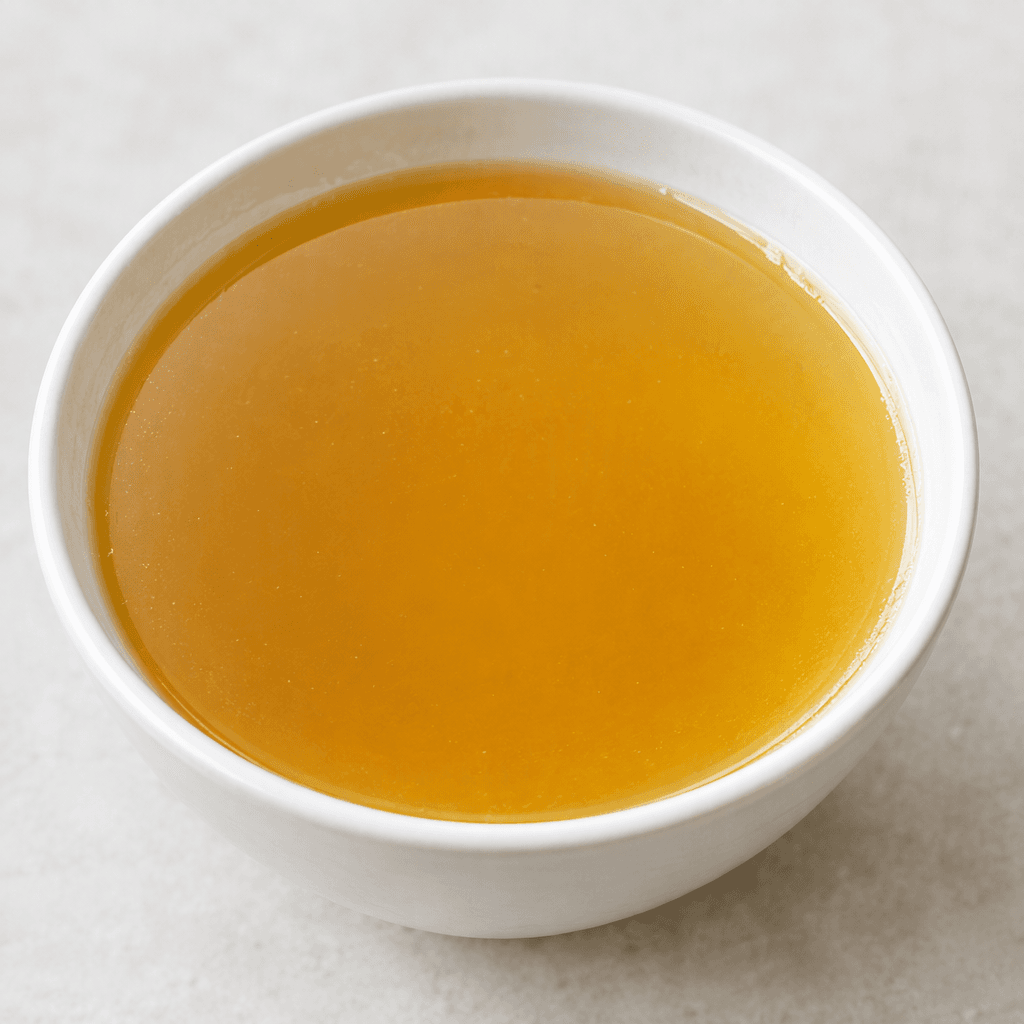
Bone Broth Calories
Rich in minerals and collagen, immune-supportive
In season: Winter · Autumn
CALORIES
GI
POTASSIUM
FIBER
Quick answer
1 cup (medium) of Bone Broth (240 g) has 84 calories. That works out to 35 calories per 100 g. It contains 1.2 g of carbs, 15.6 g of protein, 2.4 g of fat and 0 g of fiber. Its 504 mg of Sodium covers 22% of the Daily Value. Its glycemic index is 0 (low), so it raises blood sugar slowly.
What is Bone Broth?
Bone broth is a lightly flavored liquid food made by simmering bones in water, with a naturally protein-containing nutritional profile. Per 100 grams, it provides 35 calories and 6.5 grams of protein, alongside 0.5 grams of carbohydrates and 1 gram of fat. It contains no fiber and has a glycemic index of 0.
As a minimally processed option, bone broth can add depth to soups, sauces, and warm drinks. It fits omnivore, keto, paleo, Mediterranean, flexitarian, gluten-free, ketovore, and carnivore eating patterns.
Bone Broth Nutrition Facts
Selected: 100 g
35
KCAL / 100G
Carbs
0.5g
· 0% DV
Protein
6.5g
· 13% DV
Fat
1g
· 1% DV
Fiber
0g
· 0% DV
DV is the share of the daily value covered, on a 2,000 kcal reference diet.
Calories come from: Carbs 5% · Protein 70% · Fat 25%
Bone Broth Vitamins & Minerals
Vitamins
B3
0.5mg · 3% DV
B2
0.03mg · 2% DV
B6
0.04mg · 2% DV
Biotin
0.5µg · 2% DV
Minerals
Zinc
1mg · 9% DV
Sodium
210mg · 9% DV
Phosphorus
40mg · 6% DV
Calcium
45mg · 5% DV
How Nutritious Is Bone Broth?
Nutrient density
Medium
How many vitamins, minerals and how much fiber this food carries per calorie. A high score means a lot of nutrition for few calories.
Satiety score
Medium
An EatBetter score computed from fiber, protein and calorie density. A high score means staying full longer on the same calories.
Both scores are calculated per 100 g and do not change with the selected portion. The satiety score is EatBetter's own calculation, not a clinical measure.
Bone Broth Glycemic Index
GLYCEMIC INDEX
GLYCEMIC LOAD
Accounts for portion size — a more realistic measure than GI alone.
How to Burn Off Bone Broth
To burn the 35 calories in 100 g:
🚶
Walking (5 km/h)
🏃
Running (8 km/h)
🚴
Cycling
🏊
Swimming
Times are calculated with the MET equation for a 70 kg adult. Actual burn varies with your weight, age and pace.
Is Bone Broth Processed?
NOVA 2
Minimally Processed
1. Unprocessed
2. Minimally Processed
3. Processed
4. Ultra-Processed
NOVA classifies foods into 4 groups by industrial processing. NOVA 1 (unprocessed) is the healthiest.
Does Bone Broth Contain Allergens?
No known major allergens
Which Diets Is Bone Broth Good For?
Vegan
— Not suitable
Vegetarian
— Not suitable
Gluten-Free
✓ Suitable
Dairy-Free
— Not suitable
Mediterranean
✓ Suitable
Paleo
✓ Suitable
Whole30
— Not suitable
DASH
— Not suitable
Keto
✓ Suitable
Low FODMAP
— Not suitable
Bone Broth Fat Profile
SATURATED
0.3g
MONOUNSATURATED
0.3g
POLYUNSATURATED
0.1g
Omega 6:3 ratio 2:1
Below the ideal 4:1 — a good omega balance.
Compare Bone Broth
Foods Similar to Bone Broth
Frequently Asked Questions About Bone Broth
What is bone broth made from?
Bone broth is made by simmering animal bones, often with connective tissue, in water. Vegetables and seasonings may be added for flavour; straining removes the bones and other solids, leaving a savoury liquid.
Is bone broth actually good for you?
Bone broth can provide protein and makes a warming, savoury drink or cooking base. Claims that it boosts immunity or treats joint, gut, or skin problems go beyond what has been established.
Does bone broth contain collagen?
Yes, bone broth can contain gelatin formed from collagen in bones and connective tissue during cooking. Its amount varies by recipe, and eating it does not send collagen directly to your skin or joints.
Why does bone broth turn into jelly in the fridge?
Bone broth can set because gelatin from the bones and connective tissue firms up as it cools. This is normal, and the broth usually becomes liquid again when warmed.
What is the difference between bone broth and stock?
Bone broth is generally simmered from bones, while stock is commonly made as a cooking base from bones, meat, and vegetables. The terms overlap in recipes, but bone broth is often served on its own.
Can you make bone broth in a pressure cooker?
Yes, a pressure cooker can make bone broth more quickly than a conventional simmer. Use the cooker’s instructions, avoid filling it beyond its limit, and strain the broth after cooking.
How should you store bone broth after cooking?
Cool bone broth promptly and refrigerate it in a covered container. Don’t leave a large pot sitting at room temperature; freeze the broth if you won’t use it soon.
Can you freeze bone broth?
Yes, bone broth freezes well. Divide it into portions in freezer-safe containers, leaving room for expansion, and thaw it in the refrigerator before reheating.
Does bone broth break a fast?
Yes, bone broth breaks a fast because it contains protein and energy, even when it is served as a clear liquid. It may fit some modified fasting plans, but it is not a calorie-free drink.
Can you drink bone broth on a low-sodium diet?
You can make bone broth with little or no added salt, but its sodium content depends on the ingredients and preparation. If you have kidney disease or have been prescribed a sodium limit, ask your clinician what amount is appropriate.
Have another question about Bone Broth?
Ask the AI nutrition coach — calories, portions, alternatives and more, answered in seconds in the app.

Scan calories with your camera
Instant AI nutrition analysis

Nutrition data compiled from USDA FoodData Central and scientific sources.