

Ready & Packaged Foods
All →Vegetables & Legumes
All →Desserts & Confectionery
All →Meat & Protein
All →Grains & Bakery
All →Beverages
All →Milk & Dairy
All →

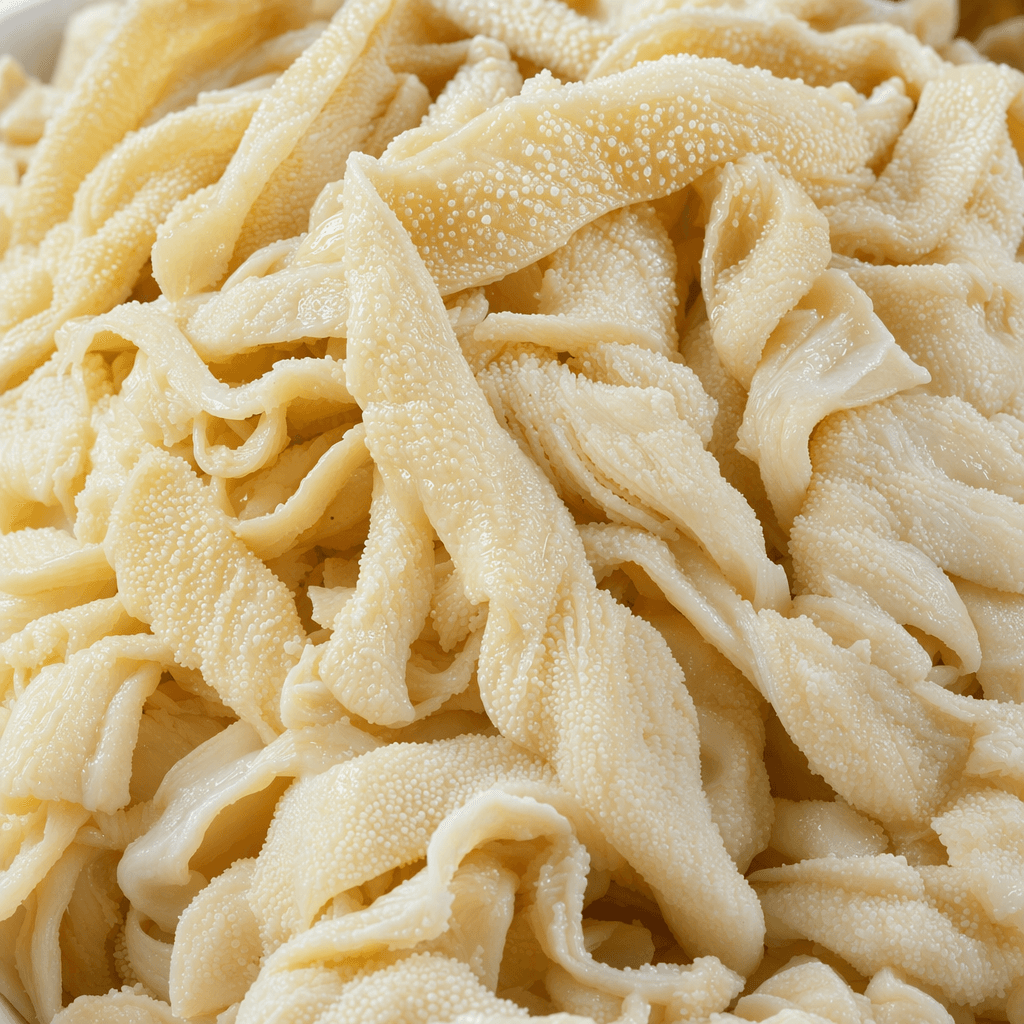
Boiled tripe Calories
High-protein, low-carb organ meat with collagen
CALORIES · 100 G
GI
POTASSIUM · 100 G
FIBER · 100 G
Quick answer
1 serving (medium) of Boiled tripe (150 g) has 128 calories. That works out to 85 calories per 100 g. It contains 0 g of carbs, 18.2 g of protein, 5.6 g of fat and 0 g of fiber. Its 1.8 µg of B12 covers 75% of the Daily Value. Its glycemic index is 0 (low), so it raises blood sugar slowly.
Boiled tripe Nutrition Facts
Selected: 1 serving (medium) · 150 g
128
KCAL / 150G
Carbs
0g
· 0% DV
Protein
18.2g
· 36% DV
Fat
5.6g
· 7% DV
Fiber
0g
· 0% DV
DV is the share of the daily value covered, on a 2,000 kcal reference diet.
Calories come from: Carbs 0% · Protein 59% · Fat 41%
Boiled tripe nutrition facts table · 1 serving (medium) (150 g)
| Nutrient | Amount | % DV |
|---|---|---|
| Calories | 128 kcal | |
| Total fat | 5.6 g | 7% |
| Saturated fat | 1.95 g | 10% |
| Trans fat | 0.08 g | |
| Sodium | 146 mg | 6% |
| Total carbohydrate | 0 g | 0% |
| Fiber | 0 g | 0% |
| Protein | 18.2 g | 36% |
Calories: Calories measure energy. Average daily need is 2,000 kcal. Excess calories are stored as fat, too few cause weight loss.
Carbs: Your body's primary energy source. The brain runs exclusively on carbs. Daily need: 275g.
Protein: Essential for muscle repair and cell growth. Daily need: 50g. Keeps you full and boosts metabolism.
Fat: Needed for hormone production and vitamin absorption. Daily need: 78g. Limit saturated fats, choose unsaturated.
Fiber: Critical for digestive health and satiety. Daily need: 28g. Stabilizes blood sugar, lowers cholesterol.

Log this food in EatBetter
100,000+ people use it
- Get your daily calorie target
- Snap your meal, log it in seconds
- See every vitamin and mineral

📸 Scan the code to get the app free.

How Many Calories in 1 Serving of Boiled tripe?
| Serving | Amount | Calories |
|---|---|---|
| 1 serving (medium) | 150 g | 128 kcal |
| 1 ounce (whole) | 28 g | 24 kcal |
| 1 piece (small) | 40 g | 34 kcal |
| 1 piece (medium) | 70 g | 59 kcal |
| 100 g | 100 g | 85 kcal |
| 1 piece (large) | 110 g | 94 kcal |
| 1 cup (chopped) | 140 g | 119 kcal |
| 1 cup (diced) | 160 g | 136 kcal |
| 1 serving (large) | 220 g | 187 kcal |
Calculated from 85 calories per 100 g.
Frequently Asked Questions About Boiled tripe
What is boiled tripe, and what part of the animal is it?
Boiled tripe is the cleaned, cooked lining of an animal’s stomach, most commonly beef stomach. It is an edible organ meat, not muscle meat; the folds and ridges are natural features of the stomach lining.
What does boiled tripe taste like?
Boiled tripe has a mild, savory flavor and a springy, slightly chewy texture when cooked properly. It readily takes on the taste of broth, garlic, vinegar, and spices, so its seasoning often shapes the dish more than the tripe itself.
How do you cook boiled tripe so it becomes tender?
Simmer boiled tripe gently in broth or water until it yields easily when pierced. If it is still tough, keep cooking it covered and check periodically; a pressure cooker can soften it faster, but overcooking may make the pieces fall apart.
How do you clean boiled tripe before eating it?
Rinse boiled tripe under cool running water and drain it before cutting or reheating. Store-bought boiled tripe is generally already cleaned and cooked, so it usually needs no intensive scrubbing; follow any preparation directions supplied with the product.
How do you get rid of the smell of boiled tripe?
Rinse and drain boiled tripe, then warm it with aromatic ingredients such as garlic, bay leaf, or onion to mellow its odor. A strongly unpleasant or sour smell can indicate spoilage, so do not try to cover it up with seasoning.
Can boiled tripe be used to make tripe soup?
Yes, boiled tripe is a convenient base for tripe soup. Slice it into bite-size pieces, warm it in broth, and add the soup’s chosen thickener or seasonings; add acidic garnishes such as lemon or vinegar just before serving.
How long does boiled tripe last in the fridge?
Boiled tripe keeps for about 3–4 days in the refrigerator when stored promptly in a covered container. Reheat it thoroughly before serving, and discard it if it has an unusual sour smell, slimy surface, or signs of spoilage.
Can you freeze boiled tripe?
Yes, boiled tripe can be frozen. Cool it, divide it into meal-size portions, and seal them in freezer-safe containers; thaw in the refrigerator and reheat thoroughly. Freezing may slightly change its texture, but it remains useful in soups and stews.
Why is boiled tripe chewy?
Boiled tripe is chewy when it has not been cooked long enough to soften its connective tissue. Continue simmering it gently in liquid and test a piece periodically; cutting it into smaller strips can also make it easier to eat.
Is boiled tripe healthy to eat?
Boiled tripe can be a nutritious source of protein, but it is still an organ meat and is not a source of every nutrient. Its healthfulness also depends on how it is prepared: heavily salted broth or rich sauces add ingredients beyond the tripe itself.
Boiled tripe Vitamins & Minerals
Vitamins
B12
1.8µg · 75% DV
B5
0.52mg · 10% DV
B3
1.65mg · 10% DV
B2
0.12mg · 9% DV
Minerals
Selenium
24µg · 44% DV
Zinc
2.4mg · 22% DV
Phosphorus
96mg · 14% DV
Calcium
104mg · 10% DV
Sodium
146mg · 6% DV
Potassium ⭐
68mg · 2% DV
Boiled tripe Glycemic Index
GLYCEMIC INDEX
GLYCEMIC LOAD
Accounts for portion size — a more realistic measure than GI alone.
How to Burn Off Boiled tripe
To burn the 128 calories in 1 serving (medium) (150 g):
🚶
Walking (5 km/h)
🏃
Running (8 km/h)
🚴
Cycling
🏊
Swimming
Times are calculated with the MET equation for a 70 kg adult. Actual burn varies with your weight, age and pace.
What is Boiled tripe?
Boiled tripe is the cleaned lining of an animal’s stomach, most often beef, simmered until tender. It is a traditional ingredient in many cuisines rather than one single fixed recipe, appearing in soups and stews across Europe, Asia, Africa and Latin America.
Its folds hold onto broth and seasoning; the texture is soft but pleasantly chewy, with a mild flavour that takes well to aromatics. It is usually sliced or cut into pieces and served hot, often with garlic, herbs, chilli or a sharp splash of vinegar or lemon. In English-speaking kitchens, it can be added to a hearty soup or stew.
Boiled tripe is protein-rich and contains no carbohydrates. For a lighter bowl, keep the broth clear and brighten it with herbs and citrus rather than a rich, fatty sauce.
How Nutritious Is Boiled tripe?
Nutrient density
Medium
How many vitamins, minerals and how much fiber this food carries per calorie. A high score means a lot of nutrition for few calories.
Satiety score
Medium
An EatBetter score computed from fiber, protein and calorie density. A high score means staying full longer on the same calories.
Both scores are calculated per 100 g and do not change with the selected portion. The satiety score is EatBetter's own calculation, not a clinical measure.
Is Boiled tripe Processed?
NOVA 2
Minimally Processed
1. Unprocessed
2. Minimally Processed
3. Processed
4. Ultra-Processed
NOVA classifies foods into 4 groups by industrial processing. NOVA 1 (unprocessed) is the healthiest.
Does Boiled tripe Contain Allergens?
No known major allergens
Which Diets Is Boiled tripe Good For?
Vegan
— Not suitable
Vegetarian
— Not suitable
Gluten-Free
✓ Suitable
Dairy-Free
— Not suitable
Mediterranean
✓ Suitable
Paleo
✓ Suitable
Whole30
— Not suitable
DASH
— Not suitable
Keto
✓ Suitable
Low FODMAP
— Not suitable
Boiled tripe Fat Profile
SATURATED
1.95g
MONOUNSATURATED
1.65g
POLYUNSATURATED
0.3g
Omega 6:3 ratio 2.3:1
Below the ideal 4:1 — a good omega balance.
Compare Boiled tripe
Foods Similar to Boiled tripe
Have another question about Boiled tripe?
Ask the AI nutrition coach — calories, portions, alternatives and more, answered in seconds in the app.

Scan calories with your camera
Instant AI nutrition analysis

Nutrition data compiled from USDA FoodData Central and scientific sources.