

Ready & Packaged Foods
All →Vegetables & Legumes
All →Desserts & Confectionery
All →Meat & Protein
All →Grains & Bakery
All →Beverages
All →Milk & Dairy
All →

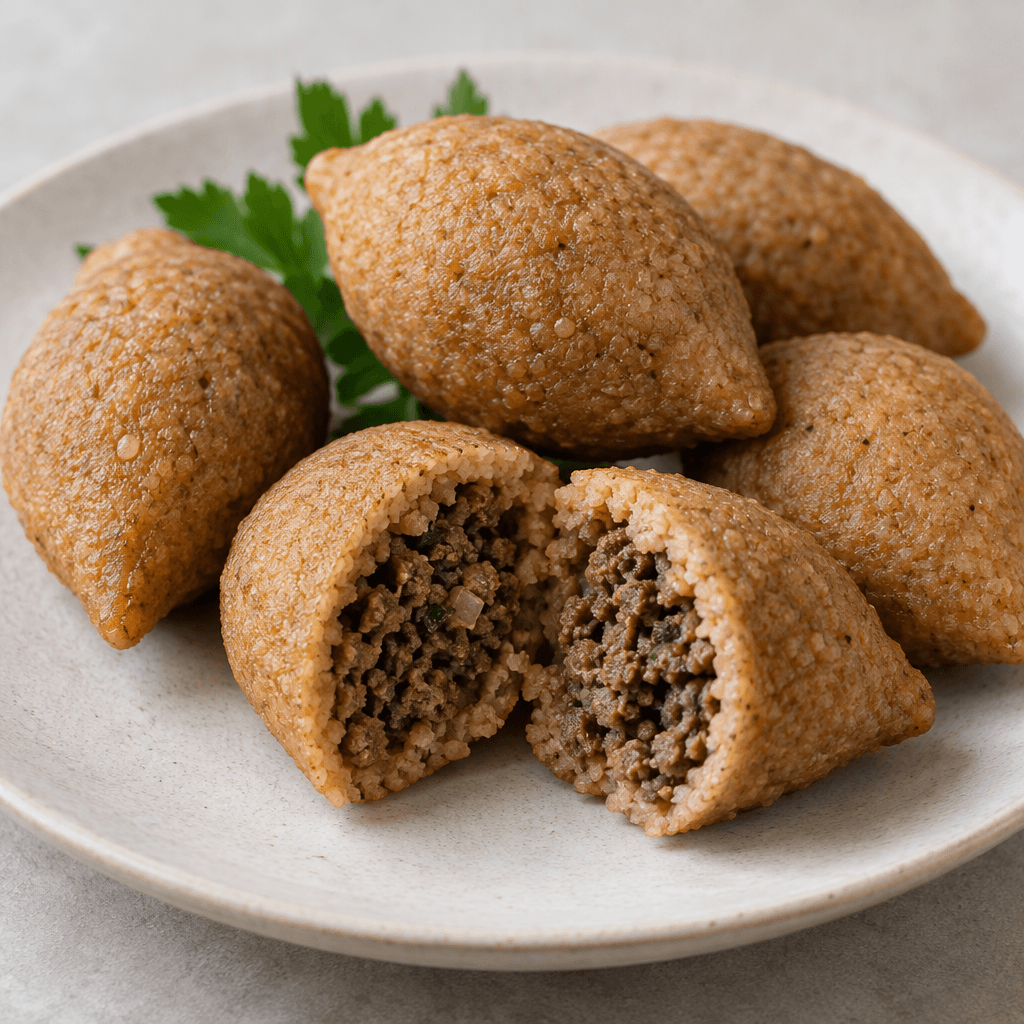
Boiled kitel Calories
Boiled bulgur dumpling with meat filling
In season: Spring · Summer · Autumn · Winter
CALORIES · 100 G
GI
POTASSIUM · 100 G
FIBER · 100 G
Quick answer
1 piece (medium) of Boiled kitel (85 g) has 158 calories. That works out to 186 calories per 100 g. It contains 20.5 g of carbs, 7.1 g of protein, 5.2 g of fat and 2.3 g of fiber. Its 0.5 µg of B12 covers 22% of the Daily Value. Its glycemic index is 48 (low), so it raises blood sugar slowly.
Boiled kitel Nutrition Facts
Selected: 1 piece (medium) · 85 g
158
KCAL / 85G
Carbs
20.5g
· 7% DV
Protein
7.1g
· 14% DV
Fat
5.2g
· 7% DV
Fiber
2.3g
· 8% DV
DV is the share of the daily value covered, on a 2,000 kcal reference diet.
Calories come from: Carbs 52% · Protein 18% · Fat 30%
Boiled kitel nutrition facts table · 1 piece (medium) (85 g)
| Nutrient | Amount | % DV |
|---|---|---|
| Calories | 158 kcal | |
| Total fat | 5.2 g | 7% |
| Saturated fat | 1.53 g | 8% |
| Trans fat | 0.04 g | |
| Sodium | 202 mg | 9% |
| Total carbohydrate | 20.5 g | 7% |
| Fiber | 2.3 g | 8% |
| Protein | 7.1 g | 14% |
Calories: Calories measure energy. Average daily need is 2,000 kcal. Excess calories are stored as fat, too few cause weight loss.
Carbs: Your body's primary energy source. The brain runs exclusively on carbs. Daily need: 275g.
Protein: Essential for muscle repair and cell growth. Daily need: 50g. Keeps you full and boosts metabolism.
Fat: Needed for hormone production and vitamin absorption. Daily need: 78g. Limit saturated fats, choose unsaturated.
Fiber: Critical for digestive health and satiety. Daily need: 28g. Stabilizes blood sugar, lowers cholesterol.

Log this food in EatBetter
100,000+ people use it
- Get your daily calorie target
- Snap your meal, log it in seconds
- See every vitamin and mineral

📸 Scan the code to get the app free.

How Many Calories in 1 Medium Boiled kitel?
| Serving | Amount | Calories |
|---|---|---|
| 1 piece (medium) | 85 g | 158 kcal |
| 1 piece (small) | 60 g | 112 kcal |
| 100 g | 100 g | 186 kcal |
| 1 piece (large) | 110 g | 205 kcal |
| 1 cup (diced) | 140 g | 260 kcal |
| 1 serving (medium) | 150 g | 279 kcal |
| 2 piece (double) | 170 g | 316 kcal |
| 1 serving (large) | 220 g | 409 kcal |
| 3 piece (triple) | 255 g | 474 kcal |
Calculated from 186 calories per 100 g.
Frequently Asked Questions About Boiled kitel
What is boiled kitel?
Boiled kitel is a bulgur dumpling filled with seasoned minced meat and cooked in water, traditionally associated with Kurdish cuisine in southeastern Turkey. It is a prepared, processed food, but that classification does not by itself mean it is industrially or ultra-processed.
Where does boiled kitel come from?
Boiled kitel is associated with Kurdish food traditions in southeastern Turkey, including areas such as Siirt and its surroundings. Recipes vary between households and local communities, especially in the dumpling’s shape, the bulgur dough, and the spices used in the meat filling.
How do you make boiled kitel?
To make boiled kitel, soften and knead fine bulgur into a pliable outer dough. Enclose a seasoned minced-meat filling inside each portion, seal the edges carefully, and gently boil the dumplings until cooked through. A smooth dough and well-sealed seams help prevent splitting.
What is the difference between boiled kitel and içli köfte?
Boiled kitel and içli köfte are both bulgur dumplings with a meat filling, but kitel is a regional preparation with its own dough texture and shaping traditions. İçli köfte is often fried, though boiled versions also exist, so the cooking method alone does not define the difference.
Why does boiled kitel fall apart while cooking?
Boiled kitel usually falls apart when its bulgur shell is too dry, poorly kneaded, cracked, or overfilled. Make the dough cohesive, seal each dumpling without trapped gaps, and lower them gently into the water. Avoid vigorous stirring while they cook.
What is inside boiled kitel?
Boiled kitel is usually filled with minced meat, finely chopped onion, and seasonings such as pepper. Some regional or family recipes add other spices or ingredients. Keep the filling fairly dry and cool before shaping so the shell is easier to seal.
How is boiled kitel served?
Boiled kitel is served hot, often with yogurt or melted butter on top. A fresh salad, soup, or a yogurt drink makes a common accompaniment. Add yogurt just before serving so the dumplings stay warm and their texture is not softened for too long.
Can you freeze boiled kitel before cooking it?
Yes, you can freeze shaped boiled kitel before cooking. Arrange the dumplings separately on a tray until firm, then transfer them to a sealed freezer container. Cook them straight from frozen, lowering them carefully into the water to reduce the chance of cracking.
How long does boiled kitel keep in the fridge?
Refrigerate leftover boiled kitel promptly in a covered container and eat it within three to four days. Reheat it until hot throughout, handling the dumplings gently so they do not break. Discard leftovers that smell or look unusual.
Can boiled kitel be made without meat?
Yes, you can make a meatless version of boiled kitel by filling the bulgur shell with a seasoned mixture such as sautéed onions, herbs, or lentils. Keep the filling compact rather than wet, and seal the shell well before boiling.
Boiled kitel Vitamins & Minerals
Vitamins
B12
0.53µg · 22% DV
B3
1.79mg · 11% DV
B6
0.15mg · 9% DV
Biotin
2.04µg · 7% DV
Minerals
Selenium
9.69µg · 18% DV
Manganese
0.39mg · 17% DV
Phosphorus
100mg · 14% DV
Zinc
1.36mg · 12% DV
Sodium
202mg · 9% DV
Potassium ⭐
150mg · 4% DV
Boiled kitel Glycemic Index
GLYCEMIC INDEX
GLYCEMIC LOAD
Accounts for portion size — a more realistic measure than GI alone.
How to Burn Off Boiled kitel
To burn the 158 calories in 1 piece (medium) (85 g):
🚶
Walking (5 km/h)
🏃
Running (8 km/h)
🚴
Cycling
🏊
Swimming
Times are calculated with the MET equation for a 70 kg adult. Actual burn varies with your weight, age and pace.
What is Boiled kitel?
Boiled kitel is a bulgur dumpling associated with Siirt and southeastern Turkey. A kneaded bulgur shell is shaped around a minced-meat filling, then cooked in water rather than fried. The outside turns tender while keeping a little bite, and the savoury filling makes it a substantial dish.
In its home region, it is typically served warm as part of a meal, often with yoghurt or salad. It provides carbohydrates from the bulgur as well as protein from the meat; a 100 g portion has 8.4 g of protein. For a balanced plate, pair it with plain yoghurt and a fresh salad, particularly if you want to keep the meal feeling lighter.
How Nutritious Is Boiled kitel?
Nutrient density
Medium
How many vitamins, minerals and how much fiber this food carries per calorie. A high score means a lot of nutrition for few calories.
Satiety score
Medium
An EatBetter score computed from fiber, protein and calorie density. A high score means staying full longer on the same calories.
Both scores are calculated per 100 g and do not change with the selected portion. The satiety score is EatBetter's own calculation, not a clinical measure.
Is Boiled kitel Processed?
NOVA 3
Processed
1. Unprocessed
2. Minimally Processed
3. Processed
4. Ultra-Processed
NOVA classifies foods into 4 groups by industrial processing. NOVA 1 (unprocessed) is the healthiest.
Does Boiled kitel Contain Allergens?
Contains these allergens:
Which Diets Is Boiled kitel Good For?
Vegan
— Not suitable
Vegetarian
— Not suitable
Gluten-Free
— Not suitable
Dairy-Free
— Not suitable
Mediterranean
✓ Suitable
Paleo
— Not suitable
Whole30
— Not suitable
DASH
— Not suitable
Keto
— Not suitable
Low FODMAP
— Not suitable
Boiled kitel Fat Profile
SATURATED
1.53g
MONOUNSATURATED
1.95g
POLYUNSATURATED
1.02g
Omega 6:3 ratio 21.8:1
Above the ideal 4:1 (21.8:1).
Compare Boiled kitel
Foods Similar to Boiled kitel
Have another question about Boiled kitel?
Ask the AI nutrition coach — calories, portions, alternatives and more, answered in seconds in the app.

Scan calories with your camera
Instant AI nutrition analysis

Nutrition data compiled from USDA FoodData Central and scientific sources.