

Ready & Packaged Foods
All →Vegetables & Legumes
All →Desserts & Confectionery
All →Meat & Protein
All →Grains & Bakery
All →Beverages
All →Milk & Dairy
All →

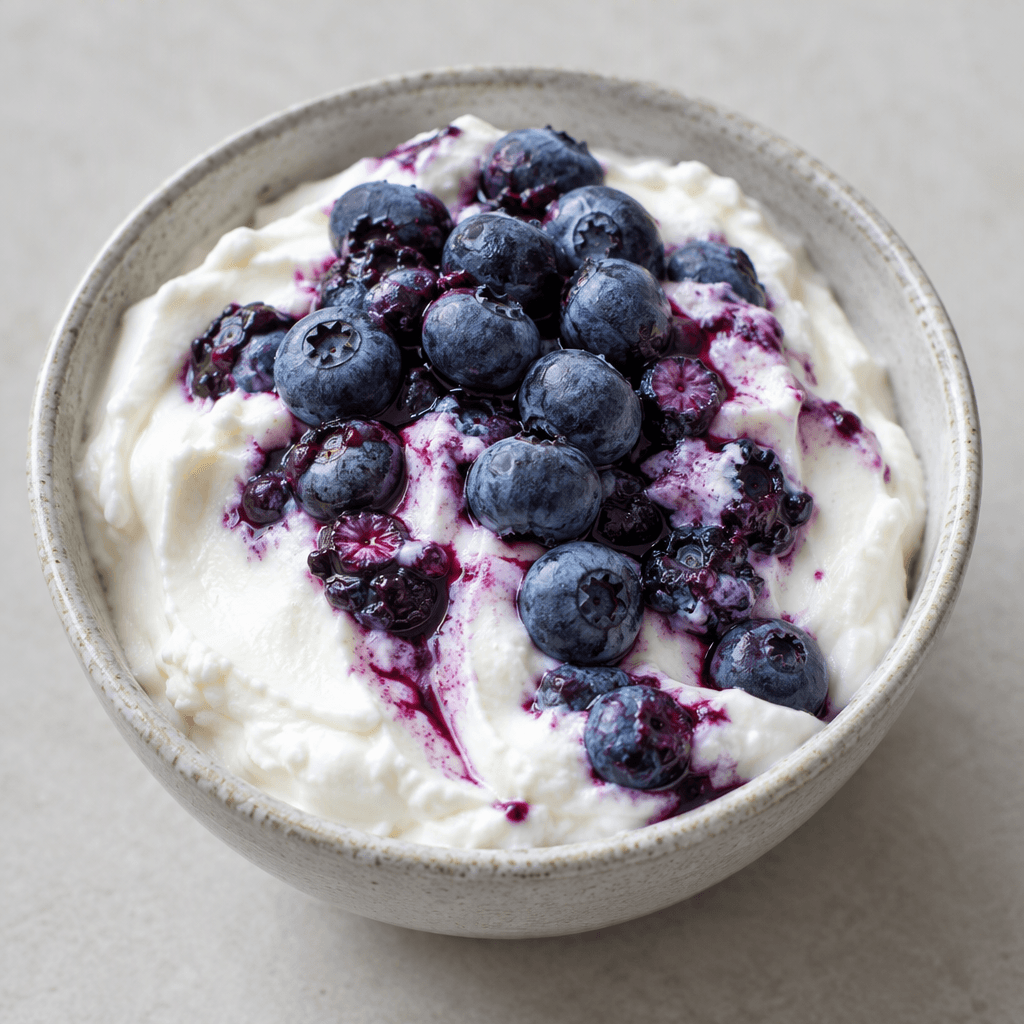
Blueberry quark Calories
High-protein, calcium-rich dairy dessert with antioxidants from blueberries
In season: Spring · Summer · Autumn
CALORIES
GI
POTASSIUM
FIBER
Quick answer
1 cup (medium) of Blueberry quark (150 g) has 143 calories. That works out to 95 calories per 100 g. It contains 17.7 g of carbs, 11.3 g of protein, 3.8 g of fat and 1.8 g of fiber. Its 0.8 µg of B12 covers 31% of the Daily Value. Its glycemic index is 40 (low), so it raises blood sugar slowly.
What is Blueberry quark?
Blueberry quark combines quark—a soft, fresh cultured cheese common in Central and Northern Europe—with blueberries. It has a thick, smooth texture and a gently tangy dairy flavour, balanced by the berries’ sweet-tart taste. Some berries may be stirred in or crushed, colouring the quark purple.
In Germany and nearby countries, it is often served for breakfast or as a simple dessert; elsewhere, it works much like a rich yoghurt bowl for breakfast or a snack. It offers protein and calcium, with 7.5 g of protein per 100 g, while the berries add fruit and fibre. Pair it with oats or fresh fruit for a more filling bowl, or enjoy it plain when you want something simple.
Blueberry quark Nutrition Facts
Selected: 100 g
95
KCAL / 100G
Carbs
11.8g
· 4% DV
Protein
7.5g
· 15% DV
Fat
2.5g
· 3% DV
Fiber
1.2g
· 4% DV
DV is the share of the daily value covered, on a 2,000 kcal reference diet.
Calories come from: Carbs 47% · Protein 30% · Fat 23%
Blueberry quark Vitamins & Minerals
Vitamins
B12
0.5µg · 21% DV
B2
0.22mg · 17% DV
B5
0.5mg · 10% DV
Biotin
2.5µg · 8% DV
Minerals
Phosphorus
95mg · 14% DV
Calcium
110mg · 11% DV
Zinc
1mg · 9% DV
Selenium
3.5µg · 6% DV
How Nutritious Is Blueberry quark?
Nutrient density
High
How many vitamins, minerals and how much fiber this food carries per calorie. A high score means a lot of nutrition for few calories.
Satiety score
Medium
An EatBetter score computed from fiber, protein and calorie density. A high score means staying full longer on the same calories.
Both scores are calculated per 100 g and do not change with the selected portion. The satiety score is EatBetter's own calculation, not a clinical measure.
Blueberry quark Glycemic Index
GLYCEMIC INDEX
GLYCEMIC LOAD
Accounts for portion size — a more realistic measure than GI alone.
How to Burn Off Blueberry quark
To burn the 95 calories in 100 g:
🚶
Walking (5 km/h)
🏃
Running (8 km/h)
🚴
Cycling
🏊
Swimming
Times are calculated with the MET equation for a 70 kg adult. Actual burn varies with your weight, age and pace.
Is Blueberry quark Processed?
NOVA 2
Minimally Processed
1. Unprocessed
2. Minimally Processed
3. Processed
4. Ultra-Processed
NOVA classifies foods into 4 groups by industrial processing. NOVA 1 (unprocessed) is the healthiest.
Does Blueberry quark Contain Allergens?
Contains these allergens:
Which Diets Is Blueberry quark Good For?
Vegan
— Not suitable
Vegetarian
✓ Suitable
Gluten-Free
— Not suitable
Dairy-Free
— Not suitable
Mediterranean
✓ Suitable
Paleo
— Not suitable
Whole30
— Not suitable
DASH
— Not suitable
Keto
— Not suitable
Low FODMAP
— Not suitable
Blueberry quark Fat Profile
SATURATED
1.5g
MONOUNSATURATED
0.6g
POLYUNSATURATED
0.12g
Omega 6:3 ratio 2.7:1
Below the ideal 4:1 — a good omega balance.
Compare Blueberry quark
Foods Similar to Blueberry quark
Frequently Asked Questions About Blueberry quark
What is blueberry quark?
Blueberry quark is a thick, fresh dairy product mixed with blueberries. Quark has a smooth, soft-cheese-like texture, so blueberry quark is spoonable and creamier than many fruit yogurts.
How do you make blueberry quark at home?
Blueberry quark is made by stirring blueberries into plain quark. Mash some berries for a purple swirl and leave others whole for texture; add a little honey or another sweetener only if you want it sweeter.
What does blueberry quark taste like?
Blueberry quark tastes creamy and mildly tangy, with sweet-tart fruit notes from the berries. Its texture is typically thicker than yogurt, and the flavor varies with how ripe the blueberries are and whether the quark is sweetened.
Can you use blueberry quark instead of yogurt in a smoothie?
Yes, blueberry quark can replace yogurt in a smoothie. It makes the drink thicker and adds a mild tang; blend it with fruit and a splash of milk or water if you prefer a thinner consistency.
Can blueberry quark be used in cheesecake?
Yes, blueberry quark can be used in cheesecake, especially in a filling that suits a soft, tangy dairy texture. Drain excess liquid first if the quark seems wet, and adjust the recipe’s sweetness to account for any sweetening already in the product.
Is blueberry quark the same as blueberry yogurt?
No, blueberry quark is not the same as blueberry yogurt. Quark is a fresh cheese-like dairy product with a dense, creamy texture, while yogurt is made from fermented milk and is often looser; recipes may not behave identically when you swap them.
What goes well with blueberry quark?
Blueberry quark pairs well with granola, oats, nuts, or fresh fruit. For a simple snack, layer it with crunchy cereal; for dessert, add a little lemon zest or crumble biscuits over the top.
Can you freeze blueberry quark?
Yes, you can freeze blueberry quark, but thawing may make it grainy or watery. Stir it well after thawing and use it in a smoothie or cooked recipe rather than expecting its original smooth texture.
How should you store blueberry quark after opening?
Store opened blueberry quark in the refrigerator with its container tightly covered. Use a clean spoon each time and follow the package’s use-by date and storage directions; discard it if it develops an off smell or unusual appearance.
Can you eat blueberry quark for breakfast?
Yes, blueberry quark works well for breakfast because it is easy to serve and pairs with filling toppings. Add oats, muesli, or nuts for crunch, or eat it on its own when you want a quick, spoonable breakfast.
Have another question about Blueberry quark?
Ask the AI nutrition coach — calories, portions, alternatives and more, answered in seconds in the app.

Scan calories with your camera
Instant AI nutrition analysis

Nutrition data compiled from USDA FoodData Central and scientific sources.