

Ready & Packaged Foods
All →Vegetables & Legumes
All →Desserts & Confectionery
All →Meat & Protein
All →Grains & Bakery
All →Beverages
All →Milk & Dairy
All →

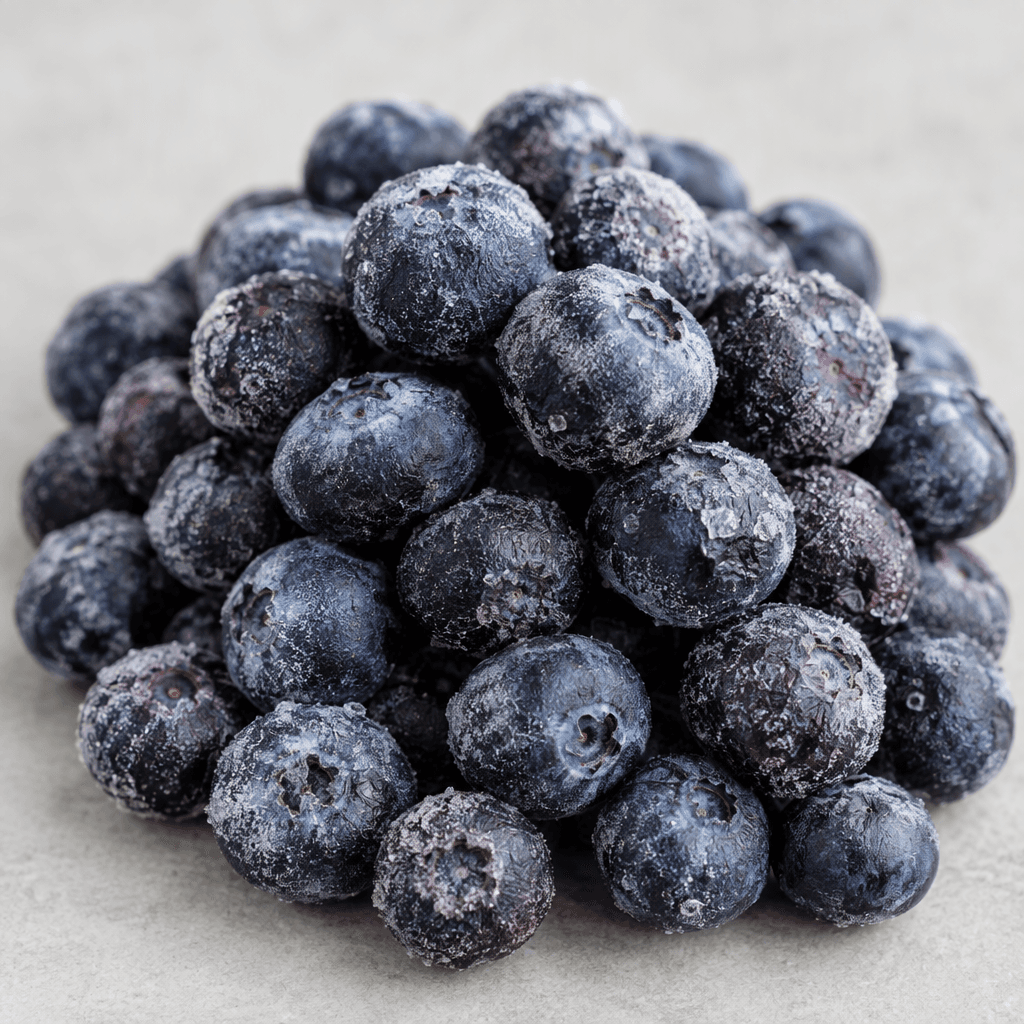
Blueberries (Frozen) Calories
Rich in antioxidants, low calorie, source of vitamin C
In season: Summer · Autumn
CALORIES
GI
POTASSIUM
FIBER
Quick answer
1 cup (medium) of Blueberries (Frozen) (140 g) has 80 calories. That works out to 57 calories per 100 g. It contains 20.3 g of carbs, 1 g of protein, 0.4 g of fat and 3.4 g of fiber. Its 27 µg of Vitamin K covers 23% of the Daily Value. Its glycemic index is 53 (low), so it raises blood sugar slowly.
What is Blueberries (Frozen)?
Frozen blueberries are whole berries picked and frozen for convenient use beyond their fresh season. They have a sweet-tart, fruity flavour; once thawed, they soften and release some juice, while still-frozen berries blend smoothly into drinks and sauces.
They’re often stirred into porridge, yoghurt or cereal, blended into smoothies, or baked into muffins and pancakes. In the US and elsewhere, they’re a familiar addition to breakfast and desserts; you can also use them straight from the freezer in many recipes. Blueberries are low in calories and provide fibre and vitamin C. Pair them with plain yoghurt or oats for a simple snack, or add them to baking without thawing first.
Blueberries (Frozen) Nutrition Facts
Selected: 100 g
57
KCAL / 100G
Carbs
14.5g
· 5% DV
Protein
0.7g
· 1% DV
Fat
0.3g
· 0% DV
Fiber
2.4g
· 9% DV
DV is the share of the daily value covered, on a 2,000 kcal reference diet.
Calories come from: Carbs 91% · Protein 4% · Fat 5%
Blueberries (Frozen) Vitamins & Minerals
Vitamins
Vitamin K
19.3µg · 16% DV
Vitamin C
9.7mg · 11% DV
Vitamin E
0.57mg · 4% DV
B1
0.04mg · 3% DV
Minerals
Phosphorus
12mg · 2% DV
Potassium ⭐
77mg · 2% DV
Calcium
6mg · 1% DV
Magnesium
6mg · 1% DV
How Nutritious Is Blueberries (Frozen)?
Nutrient density
High
How many vitamins, minerals and how much fiber this food carries per calorie. A high score means a lot of nutrition for few calories.
Satiety score
Medium
An EatBetter score computed from fiber, protein and calorie density. A high score means staying full longer on the same calories.
Both scores are calculated per 100 g and do not change with the selected portion. The satiety score is EatBetter's own calculation, not a clinical measure.
Blueberries (Frozen) Glycemic Index
GLYCEMIC INDEX
GLYCEMIC LOAD
Accounts for portion size — a more realistic measure than GI alone.
How to Burn Off Blueberries (Frozen)
To burn the 57 calories in 100 g:
🚶
Walking (5 km/h)
🏃
Running (8 km/h)
🚴
Cycling
🏊
Swimming
Times are calculated with the MET equation for a 70 kg adult. Actual burn varies with your weight, age and pace.
Is Blueberries (Frozen) Processed?
NOVA 2
Minimally Processed
1. Unprocessed
2. Minimally Processed
3. Processed
4. Ultra-Processed
NOVA classifies foods into 4 groups by industrial processing. NOVA 1 (unprocessed) is the healthiest.
Does Blueberries (Frozen) Contain Allergens?
No known major allergens
Which Diets Is Blueberries (Frozen) Good For?
Vegan
✓ Suitable
Vegetarian
✓ Suitable
Gluten-Free
✓ Suitable
Dairy-Free
— Not suitable
Mediterranean
✓ Suitable
Paleo
✓ Suitable
Whole30
— Not suitable
DASH
— Not suitable
Keto
— Not suitable
Low FODMAP
— Not suitable
Blueberries (Frozen) Fat Profile
SATURATED
0.02g
MONOUNSATURATED
0.04g
POLYUNSATURATED
0.07g
Omega 6:3 ratio 1.7:1
Below the ideal 4:1 — a good omega balance.
Compare Blueberries (Frozen)
Foods Similar to Blueberries (Frozen)
Frequently Asked Questions About Blueberries (Frozen)
Can you eat frozen blueberries straight from the freezer?
Yes, frozen blueberries can be eaten straight from the freezer, though they are firm and very cold. Let them soften briefly for a less icy texture, especially when serving them to young children.
Do frozen blueberries need to be washed?
Usually not; packaged frozen blueberries are often washed before freezing. Follow the package directions, and avoid rinsing them after thawing if you want to keep them from becoming watery and soft.
How do you thaw frozen blueberries?
Thaw frozen blueberries in a covered container in the refrigerator for the best texture. For quicker use, let them sit at room temperature briefly, then drain or use the released juice in your recipe.
Can you put frozen blueberries straight into a smoothie?
Yes, add frozen blueberries directly to the blender with the other ingredients. They make the smoothie cold and thick; blend in a little extra milk, water, or yogurt if the mixture is too thick.
Can you use frozen blueberries in muffins?
Yes, frozen blueberries work well in muffins and other baked goods. Fold them into the batter while still frozen and do so gently; thawing first can release juice and streak the batter with color.
Why do frozen blueberries get mushy after thawing?
Frozen blueberries often soften because ice crystals formed during freezing damage some of the fruit’s cells. Thaw them slowly in the refrigerator and use them in yogurt, oatmeal, or baking if their texture is too soft to eat plain.
Can you refreeze thawed blueberries?
Yes, you can refreeze blueberries thawed in the refrigerator if they have stayed cold, but their texture may become softer. Do not refreeze them if they have been left at room temperature for an extended time.
How should you store an opened bag of frozen blueberries?
Keep opened frozen blueberries in a tightly sealed freezer-safe container or reseal the original bag securely. Return them to the freezer promptly so they do not thaw and refreeze, which can worsen their texture.
Are frozen blueberries as nutritious as fresh blueberries?
Generally, yes: properly frozen blueberries retain most of their nutrients. Freezing can reduce some vitamins slightly, but it is a convenient way to keep blueberries available when fresh ones are out of season.
Can you put frozen blueberries on cereal or oatmeal?
Yes, scatter frozen blueberries over cereal or oatmeal, then give them a few minutes to soften. On hot oatmeal they thaw quickly and release juice, which naturally colors and flavors the bowl.
Have another question about Blueberries (Frozen)?
Ask the AI nutrition coach — calories, portions, alternatives and more, answered in seconds in the app.

Scan calories with your camera
Instant AI nutrition analysis

Nutrition data compiled from USDA FoodData Central and scientific sources.