

Ready & Packaged Foods
All →Vegetables & Legumes
All →Desserts & Confectionery
All →Meat & Protein
All →Grains & Bakery
All →Beverages
All →Milk & Dairy
All →

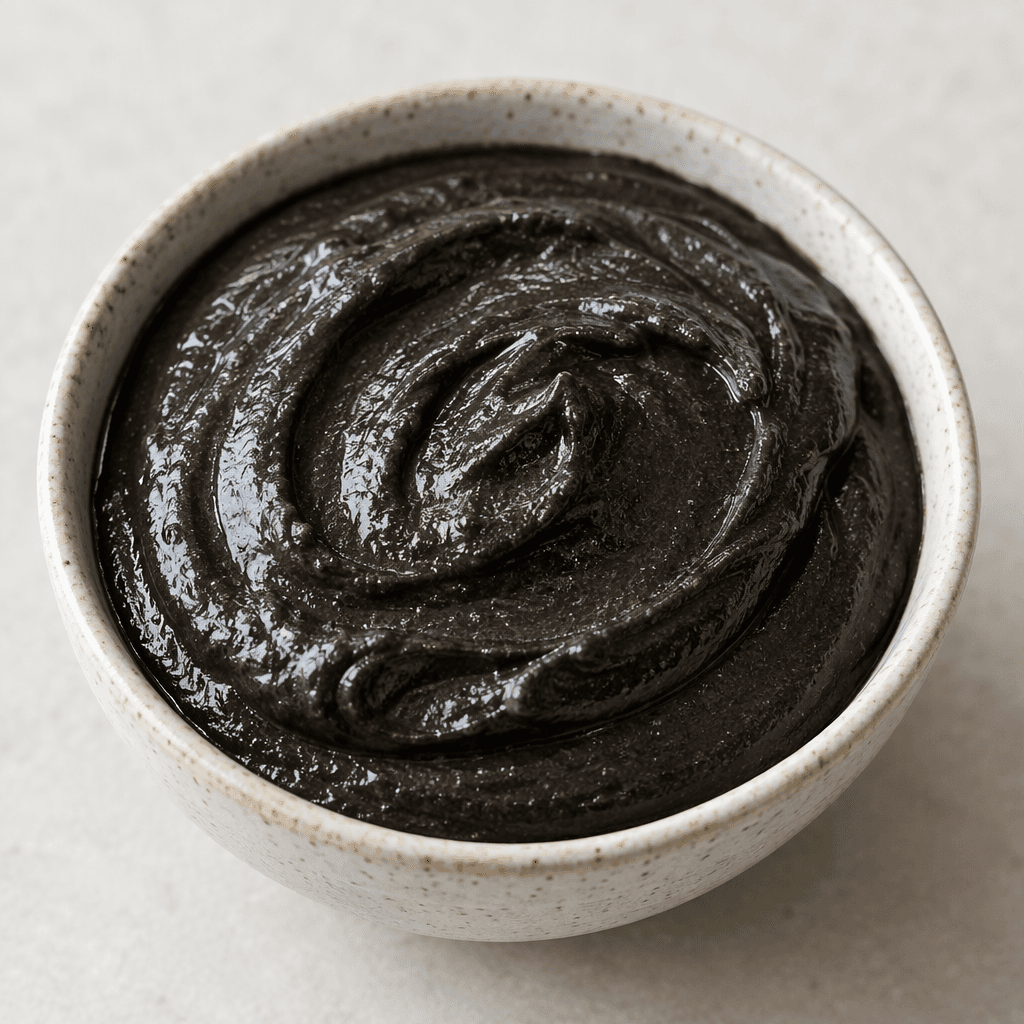
Black tahini Calories
Tahini made from black sesame seeds, rich in antioxidants and minerals.
In season: Spring · Summer · Autumn · Winter
CALORIES
GI
POTASSIUM
FIBER
Quick answer
1 tablespoon (medium) of Black tahini (15 g) has 89 calories. That works out to 595 calories per 100 g. It contains 3.5 g of carbs, 2.9 g of protein, 8 g of fat and 1.8 g of fiber. Its 0.4 mg of Copper covers 45% of the Daily Value. Its glycemic index is 35 (low), so it raises blood sugar slowly.
What is Black tahini?
Black tahini is a thick, smooth paste made by grinding black sesame seeds. Tahini is a long-established ingredient in Middle Eastern cooking, while black sesame is also widely used in East Asian cuisines. Its flavour is deeply toasted and more pronounced than that of pale sesame tahini, with a rich, slightly earthy finish.
It can be stirred into sauces and dressings, spread on toast, or used in sweets and baking; in Turkey, tahini is often paired with molasses at breakfast. Black tahini is energy-dense and provides fats, fibre and plant protein. A little goes a long way, so try it in a dressing or blend it with yoghurt or lighter-coloured tahini for a milder taste.
Black tahini Nutrition Facts
Selected: 100 g
595
KCAL / 100G
Carbs
23g
· 8% DV
Protein
19.5g
· 39% DV
Fat
53g
· 68% DV
Fiber
11.8g
· 42% DV
DV is the share of the daily value covered, on a 2,000 kcal reference diet.
Calories come from: Carbs 14% · Protein 12% · Fat 74%
Black tahini Vitamins & Minerals
Vitamins
B1
0.79mg · 66% DV
B6
0.79mg · 46% DV
B3
4.6mg · 29% DV
Folate
97µg · 24% DV
Minerals
Copper
3mg · 333% DV
Manganese
3mg · 130% DV
Calcium
1170mg · 117% DV
Phosphorus
720mg · 103% DV
How Nutritious Is Black tahini?
Nutrient density
Very high
How many vitamins, minerals and how much fiber this food carries per calorie. A high score means a lot of nutrition for few calories.
Satiety score
Medium
An EatBetter score computed from fiber, protein and calorie density. A high score means staying full longer on the same calories.
Both scores are calculated per 100 g and do not change with the selected portion. The satiety score is EatBetter's own calculation, not a clinical measure.
Black tahini Glycemic Index
GLYCEMIC INDEX
GLYCEMIC LOAD
Accounts for portion size — a more realistic measure than GI alone.
How to Burn Off Black tahini
To burn the 595 calories in 100 g:
🚶
Walking (5 km/h)
🏃
Running (8 km/h)
🚴
Cycling
🏊
Swimming
Times are calculated with the MET equation for a 70 kg adult. Actual burn varies with your weight, age and pace.
Is Black tahini Processed?
NOVA 2
Minimally Processed
1. Unprocessed
2. Minimally Processed
3. Processed
4. Ultra-Processed
NOVA classifies foods into 4 groups by industrial processing. NOVA 1 (unprocessed) is the healthiest.
Does Black tahini Contain Allergens?
Contains these allergens:
Which Diets Is Black tahini Good For?
Vegan
✓ Suitable
Vegetarian
✓ Suitable
Gluten-Free
✓ Suitable
Dairy-Free
— Not suitable
Mediterranean
✓ Suitable
Paleo
✓ Suitable
Whole30
— Not suitable
DASH
— Not suitable
Keto
✓ Suitable
Low FODMAP
— Not suitable
Black tahini Fat Profile
SATURATED
7.5g
MONOUNSATURATED
19.2g
POLYUNSATURATED
24.5g
Omega 6:3 ratio 131.3:1
Above the ideal 4:1 (131.3:1).
Compare Black tahini
Foods Similar to Black tahini
Frequently Asked Questions About Black tahini
What is black tahini made from?
Black tahini is a thick paste made by grinding black sesame seeds. Its dark color comes from the seeds, and its flavor is usually more pronounced and earthier than that of tahini made from pale sesame.
What does black tahini taste like?
Black tahini has a deep, nutty sesame flavor that can taste earthy or mildly bitter, especially when the seeds are heavily roasted. Pairing it with honey, fruit, or another sweet ingredient can balance that intensity.
How do you use black tahini?
Use black tahini as a spread, stir it into porridge or yogurt, or whisk it into a dressing or sauce. If it is too thick, loosen it with a little water, lemon juice, or another liquid.
Is black tahini the same as black sesame paste?
Black tahini is a type of black sesame paste, usually made from ground black sesame seeds alone. Some products called black sesame paste are sweetened or blended with other ingredients, so the terms do not always describe identical products.
Can you substitute black tahini for regular tahini?
Yes, black tahini can replace regular tahini in most recipes. It brings a darker color and a stronger, earthier sesame flavor, so it may change the appearance and taste of dips, sauces, and baked goods.
Why does black tahini separate?
Oil can rise to the surface of black tahini as the sesame paste sits because the seeds contain natural oil. This separation alone does not mean it has spoiled; stir it thoroughly from the bottom before using.
Should black tahini be refrigerated after opening?
Black tahini can be stored tightly sealed in a cool, dry, dark cupboard. Refrigeration may help preserve freshness, though it can make the paste firmer and harder to stir; use a clean utensil each time.
Can you make black tahini at home?
Yes, grind black sesame seeds in a powerful blender or food processor until they release their oils and form a smooth paste. Lightly toasting the seeds first can deepen the flavor, but over-toasting may make it bitter.
Can you bake with black tahini?
Yes, black tahini works in cookies, cakes, and other baked goods, adding a pronounced sesame taste and a dark color. It can also be swirled into dough or used in a filling; start with a recipe designed for tahini.
Is black tahini good for you?
Black tahini provides unsaturated fats, fiber, minerals, and antioxidant compounds from sesame seeds. It is a nutrient-rich ingredient, but its concentrated nature makes it easy to use more than intended, so a modest serving is practical.
Have another question about Black tahini?
Ask the AI nutrition coach — calories, portions, alternatives and more, answered in seconds in the app.

Scan calories with your camera
Instant AI nutrition analysis

Nutrition data compiled from USDA FoodData Central and scientific sources.