

Ready & Packaged Foods
All →Vegetables & Legumes
All →Desserts & Confectionery
All →Meat & Protein
All →Grains & Bakery
All →Beverages
All →Milk & Dairy
All →

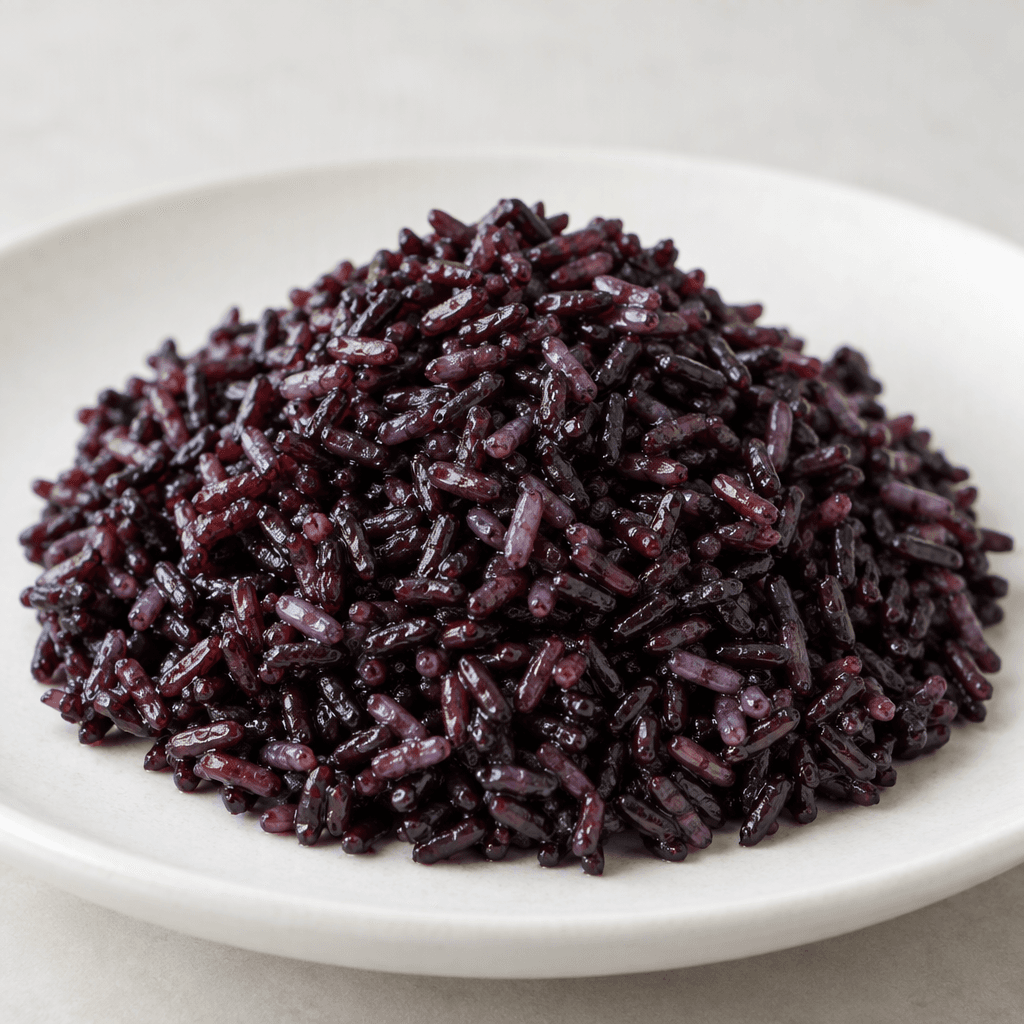
Black Rice (Cooked) Calories
Rich in antioxidants, fiber, minerals, and vitamins
In season: Spring · Summer · Autumn · Winter
CALORIES · 100 G
GI
POTASSIUM · 100 G
FIBER · 100 G
Quick answer
1 cup (medium) of Black Rice (Cooked) (160 g) has 176 calories. That works out to 110 calories per 100 g. It contains 37.6 g of carbs, 4.6 g of protein, 1.4 g of fat and 3.5 g of fiber. Its 1 mg of Manganese covers 42% of the Daily Value. Its glycemic index is 42 (low), so it raises blood sugar slowly.
Black Rice (Cooked) Nutrition Facts
Selected: 1 cup (medium) · 160 g
176
KCAL / 160G
Carbs
37.6g
· 14% DV
Protein
4.6g
· 9% DV
Fat
1.4g
· 2% DV
Fiber
3.5g
· 13% DV
DV is the share of the daily value covered, on a 2,000 kcal reference diet.
Calories come from: Carbs 83% · Protein 10% · Fat 7%
Black Rice (Cooked) nutrition facts table · 1 cup (medium) (160 g)
| Nutrient | Amount | % DV |
|---|---|---|
| Calories | 176 kcal | |
| Total fat | 1.4 g | 2% |
| Saturated fat | 0.32 g | 2% |
| Trans fat | 0 g | |
| Sodium | 3.2 mg | 0% |
| Total carbohydrate | 37.6 g | 14% |
| Fiber | 3.5 g | 13% |
| Protein | 4.6 g | 9% |
Calories: Calories measure energy. Average daily need is 2,000 kcal. Excess calories are stored as fat, too few cause weight loss.
Carbs: Your body's primary energy source. The brain runs exclusively on carbs. Daily need: 275g.
Protein: Essential for muscle repair and cell growth. Daily need: 50g. Keeps you full and boosts metabolism.
Fat: Needed for hormone production and vitamin absorption. Daily need: 78g. Limit saturated fats, choose unsaturated.
Fiber: Critical for digestive health and satiety. Daily need: 28g. Stabilizes blood sugar, lowers cholesterol.

Log this food in EatBetter
100,000+ people use it
- Get your daily calorie target
- Snap your meal, log it in seconds
- See every vitamin and mineral

📸 Scan the code to get the app free.

How Many Calories in 1 Cup of Black Rice (Cooked)?
| Serving | Amount | Calories |
|---|---|---|
| 1 cup (medium) | 160 g | 176 kcal |
| 1 tablespoon (medium) | 15 g | 17 kcal |
| 1 piece (small) | 50 g | 55 kcal |
| 1 serving (small) | 80 g | 88 kcal |
| 100 g | 100 g | 110 kcal |
| 1 cup (small) | 100 g | 110 kcal |
| 1 piece (medium) | 120 g | 132 kcal |
| 1 serving (medium) | 150 g | 165 kcal |
| 1 serving (large) | 200 g | 220 kcal |
| 1 cup (large) | 250 g | 275 kcal |
Calculated from 110 calories per 100 g.
Frequently Asked Questions About Black Rice (Cooked)
How do you cook black rice?
Rinse black rice, then simmer it in water until the grains are tender but still pleasantly chewy. Cooking time varies by variety, so follow the package directions; let it stand briefly after cooking to finish absorbing moisture.
Why does black rice turn purple when cooked?
Black rice releases anthocyanin pigments from its dark outer layer, tinting the cooking water and sometimes nearby ingredients purple. This color change is normal and is not a sign that the rice has gone bad.
What does black rice taste like?
Black rice has a mildly nutty, earthy flavor and a firmer, chewier texture than white rice. Its distinctive taste works well in grain bowls, salads, and dishes with vegetables or beans.
Is black rice the same as wild rice?
No. Black rice is a type of rice, while wild rice comes from aquatic grasses and is not the same grain. Both have dark grains and a chewy bite, but their flavors and cooking requirements differ.
Do you need to soak black rice before cooking it?
No, soaking black rice is optional. Soaking can help the grains cook more evenly and may shorten the cooking time; drain the soaking water before cooking and use the package instructions for the best result.
Can you freeze cooked black rice?
Yes, cooked black rice freezes well. Cool it promptly, portion it into airtight freezer-safe containers, and thaw it in the refrigerator or reheat it from frozen with a splash of water to restore moisture.
How long does cooked black rice last in the fridge?
Cooked black rice generally keeps for 3–4 days in a refrigerator when cooled promptly and stored in a covered container. Discard it if it smells sour, feels unusually slimy, or shows mold.
Is black rice healthier than brown rice?
Neither is automatically healthier for everyone. Black rice gets its dark color from anthocyanins and offers a distinctive chewy texture; brown rice has its own nutrients and may be a more familiar choice. Both can fit into a varied diet.
Can black rice be used for sushi?
Yes, black rice can be used in sushi, but it will not behave exactly like traditional short-grain white sushi rice. Its grains are often chewier and may not cling as well, so use a variety intended to become sticky if shaping rolls.
Does black rice contain arsenic?
Black rice, like other rice, can contain small amounts of naturally occurring arsenic absorbed from soil and water. Varying grains in your diet and cooking rice in excess water, then draining it, can reduce exposure.
Black Rice (Cooked) Vitamins & Minerals
Vitamins
B5
0.8mg · 16% DV
B3
2.4mg · 15% DV
B6
0.21mg · 12% DV
B1
0.13mg · 11% DV
Minerals
Manganese
0.96mg · 42% DV
Copper
0.21mg · 23% DV
Phosphorus
136mg · 19% DV
Magnesium
51mg · 12% DV
Potassium ⭐
144mg · 4% DV
Sodium
3.2mg · 0% DV
Black Rice (Cooked) Glycemic Index
GLYCEMIC INDEX
GLYCEMIC LOAD
Accounts for portion size — a more realistic measure than GI alone.
How to Burn Off Black Rice (Cooked)
To burn the 176 calories in 1 cup (medium) (160 g):
🚶
Walking (5 km/h)
🏃
Running (8 km/h)
🚴
Cycling
🏊
Swimming
Times are calculated with the MET equation for a 70 kg adult. Actual burn varies with your weight, age and pace.
What is Black Rice (Cooked)?
Cooked black rice is the boiled form of a dark, pigmented rice variety grown and eaten across parts of Asia. Its colour comes from pigments in the outer layer of the grain, which also give it a gently nutty, earthy flavour. Once cooked, the grains are pleasantly chewy and often hold their shape rather than turning fluffy like some white rice.
It can be served as a side, tossed into salads or grain bowls, or paired with vegetables, beans, fish or meat. Its fibre and naturally occurring plant pigments make it a hearty, colourful alternative to everyday rice. For a softer texture, soak it before cooking; a squeeze of citrus and fresh herbs make a bright counterpoint to its earthy taste.
How Nutritious Is Black Rice (Cooked)?
Nutrient density
High
How many vitamins, minerals and how much fiber this food carries per calorie. A high score means a lot of nutrition for few calories.
Satiety score
Medium
An EatBetter score computed from fiber, protein and calorie density. A high score means staying full longer on the same calories.
Both scores are calculated per 100 g and do not change with the selected portion. The satiety score is EatBetter's own calculation, not a clinical measure.
Is Black Rice (Cooked) Processed?
NOVA 2
Minimally Processed
1. Unprocessed
2. Minimally Processed
3. Processed
4. Ultra-Processed
NOVA classifies foods into 4 groups by industrial processing. NOVA 1 (unprocessed) is the healthiest.
Does Black Rice (Cooked) Contain Allergens?
No known major allergens
Which Diets Is Black Rice (Cooked) Good For?
Vegan
✓ Suitable
Vegetarian
✓ Suitable
Gluten-Free
✓ Suitable
Dairy-Free
— Not suitable
Mediterranean
✓ Suitable
Paleo
✓ Suitable
Whole30
— Not suitable
DASH
— Not suitable
Keto
— Not suitable
Low FODMAP
— Not suitable
Black Rice (Cooked) Fat Profile
SATURATED
0.32g
MONOUNSATURATED
0.48g
POLYUNSATURATED
0.48g
Omega 6:3 ratio 14.5:1
Above the ideal 4:1 (14.5:1).
Compare Black Rice (Cooked)
Foods Similar to Black Rice (Cooked)
Have another question about Black Rice (Cooked)?
Ask the AI nutrition coach — calories, portions, alternatives and more, answered in seconds in the app.

Scan calories with your camera
Instant AI nutrition analysis

Nutrition data compiled from USDA FoodData Central and scientific sources.