

Ready & Packaged Foods
All →Vegetables & Legumes
All →Desserts & Confectionery
All →Meat & Protein
All →Grains & Bakery
All →Beverages
All →Milk & Dairy
All →

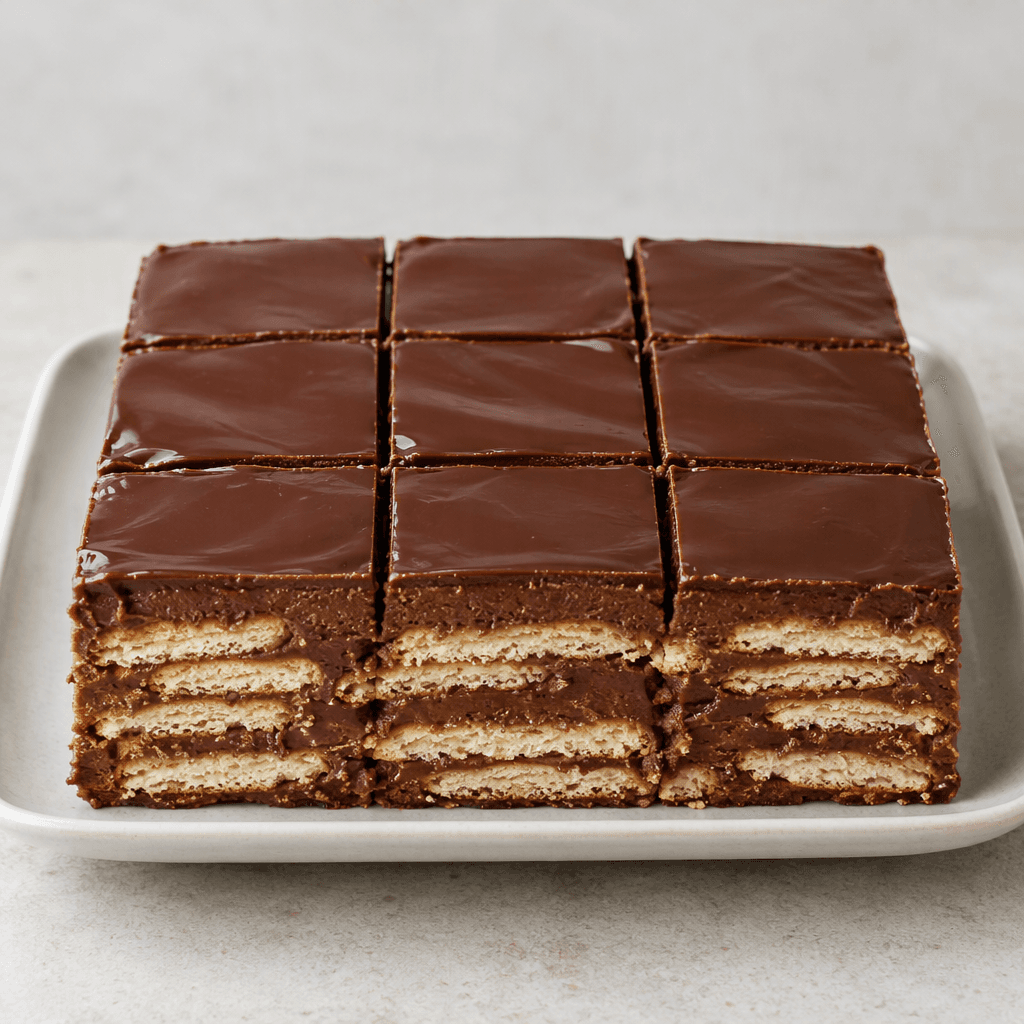
Biscuit pudding cake Calories
Layered cake made with biscuits, pudding, and milk.
In season: Spring · Summer · Autumn · Winter
CALORIES
GI
POTASSIUM
FIBER
Quick answer
1 slice (medium) of Biscuit pudding cake (80 g) has 208 calories. That works out to 260 calories per 100 g. It contains 32.8 g of carbs, 3.4 g of protein, 6.8 g of fat and 1 g of fiber. Its 0.1 mg of B2 covers 10% of the Daily Value. Its glycemic index is 65 (high), so it raises blood sugar quickly.
What is Biscuit pudding cake?
Biscuit pudding cake is a chilled, usually no-bake dessert made by layering plain biscuits with milk-based pudding. Many home-style versions use chocolate pudding and finish with a smooth chocolate topping; recipes vary, and the biscuits soften as the cake rests in the refrigerator.
Serve it in neat slices or squares, often with tea or coffee, as an afternoon treat or after a meal. Its soft, creamy layers contrast with the biscuit base, making it richer and sweeter than an everyday snack. It is mainly a source of carbohydrates, with a modest amount of protein from the milk-based pudding. For a lighter portion, cut smaller squares or use a thinner layer of chocolate topping.
Biscuit pudding cake Nutrition Facts
Selected: 100 g
260
KCAL / 100G
Carbs
41g
· 15% DV
Protein
4.2g
· 8% DV
Fat
8.5g
· 11% DV
Fiber
1.2g
· 4% DV
DV is the share of the daily value covered, on a 2,000 kcal reference diet.
Calories come from: Carbs 64% · Protein 7% · Fat 29%
Biscuit pudding cake Vitamins & Minerals
Vitamins
B2
0.16mg · 12% DV
B12
0.22µg · 9% DV
B1
0.09mg · 8% DV
Biotin
2.2µg · 7% DV
Minerals
Phosphorus
65mg · 9% DV
Calcium
80mg · 8% DV
Sodium
180mg · 8% DV
Selenium
4.2µg · 8% DV
How Nutritious Is Biscuit pudding cake?
Nutrient density
Low
How many vitamins, minerals and how much fiber this food carries per calorie. A high score means a lot of nutrition for few calories.
Satiety score
Low
An EatBetter score computed from fiber, protein and calorie density. A high score means staying full longer on the same calories.
Both scores are calculated per 100 g and do not change with the selected portion. The satiety score is EatBetter's own calculation, not a clinical measure.
Biscuit pudding cake Glycemic Index
GLYCEMIC INDEX
GLYCEMIC LOAD
Accounts for portion size — a more realistic measure than GI alone.
How to Burn Off Biscuit pudding cake
To burn the 260 calories in 100 g:
🚶
Walking (5 km/h)
🏃
Running (8 km/h)
🚴
Cycling
🏊
Swimming
Times are calculated with the MET equation for a 70 kg adult. Actual burn varies with your weight, age and pace.
Is Biscuit pudding cake Processed?
NOVA 3
Processed
1. Unprocessed
2. Minimally Processed
3. Processed
4. Ultra-Processed
NOVA classifies foods into 4 groups by industrial processing. NOVA 1 (unprocessed) is the healthiest.
Does Biscuit pudding cake Contain Allergens?
Contains these allergens:
Which Diets Is Biscuit pudding cake Good For?
Vegan
— Not suitable
Vegetarian
✓ Suitable
Gluten-Free
— Not suitable
Dairy-Free
— Not suitable
Mediterranean
— Not suitable
Paleo
— Not suitable
Whole30
— Not suitable
DASH
— Not suitable
Keto
— Not suitable
Low FODMAP
— Not suitable
Biscuit pudding cake Fat Profile
SATURATED
3.3g
MONOUNSATURATED
2.4g
POLYUNSATURATED
0.5g
Omega 6:3 ratio 19:1
Above the ideal 4:1 (19:1).
Compare Biscuit pudding cake
Foods Similar to Biscuit pudding cake
Frequently Asked Questions About Biscuit pudding cake
How do you make biscuit pudding cake?
Biscuit pudding cake is made by layering biscuits with cooked pudding and chilling the dessert until set. Spread the pudding while it is still warm so it softens the biscuits, then add another layer and finish with chocolate topping if you like.
Does biscuit pudding cake need to be baked?
No, biscuit pudding cake usually does not need baking. The pudding is cooked on the stove, then layered with biscuits and chilled until firm. This makes it a convenient no-bake dessert, though the pudding itself must be cooked if your recipe calls for it.
What biscuits work best in biscuit pudding cake?
Plain tea biscuits or digestive-style biscuits work well in biscuit pudding cake because they soften as the pudding chills without overpowering its flavor. Chocolate biscuits make a richer version, while crisp, sturdy biscuits are less likely to turn mushy too quickly.
Why is my biscuit pudding cake runny?
Biscuit pudding cake can turn runny if the pudding has too much milk or the dessert has not chilled long enough. Follow the pudding recipe’s liquid measurements and refrigerate the assembled cake for several hours before cutting it.
Can you make biscuit pudding cake the day before?
Yes, biscuit pudding cake is well suited to making a day ahead. Overnight chilling gives the pudding time to set and the biscuits time to soften evenly. Cover the dish and keep it refrigerated until you are ready to serve.
Should you dip the biscuits before making biscuit pudding cake?
Usually, no: biscuit pudding cake does not require dipping the biscuits, because the warm pudding softens them as the dessert chills. If you prefer very soft layers, briefly dip them in milk, but avoid soaking them or the cake may become soggy.
How do you cut biscuit pudding cake neatly?
To cut biscuit pudding cake neatly, chill it until fully set and use a sharp knife. Wipe the blade between slices to keep the chocolate topping and pudding layers from smearing. If the topping is firm, briefly warm the knife under hot water and dry it first.
Can you freeze biscuit pudding cake?
Yes, you can freeze biscuit pudding cake, but its texture may change after thawing: the pudding can release moisture and the biscuits may become very soft. Wrap individual portions tightly and thaw them in the refrigerator before serving.
What can you put on top of biscuit pudding cake?
Biscuit pudding cake is often topped with chocolate ganache, chocolate shavings, or a dusting of cocoa. Chopped nuts or coconut are also easy additions. Add a crunchy topping shortly before serving so it stays crisp against the chilled pudding.
How long does biscuit pudding cake last in the fridge?
Biscuit pudding cake generally keeps for about 2–3 days in a covered container in the refrigerator. Since it contains milk-based pudding, do not leave it at room temperature for extended periods; return uneaten portions to the fridge promptly.
Have another question about Biscuit pudding cake?
Ask the AI nutrition coach — calories, portions, alternatives and more, answered in seconds in the app.

Scan calories with your camera
Instant AI nutrition analysis

Nutrition data compiled from USDA FoodData Central and scientific sources.