

Ready & Packaged Foods
All →Vegetables & Legumes
All →Desserts & Confectionery
All →Meat & Protein
All →Grains & Bakery
All →Beverages
All →Milk & Dairy
All →

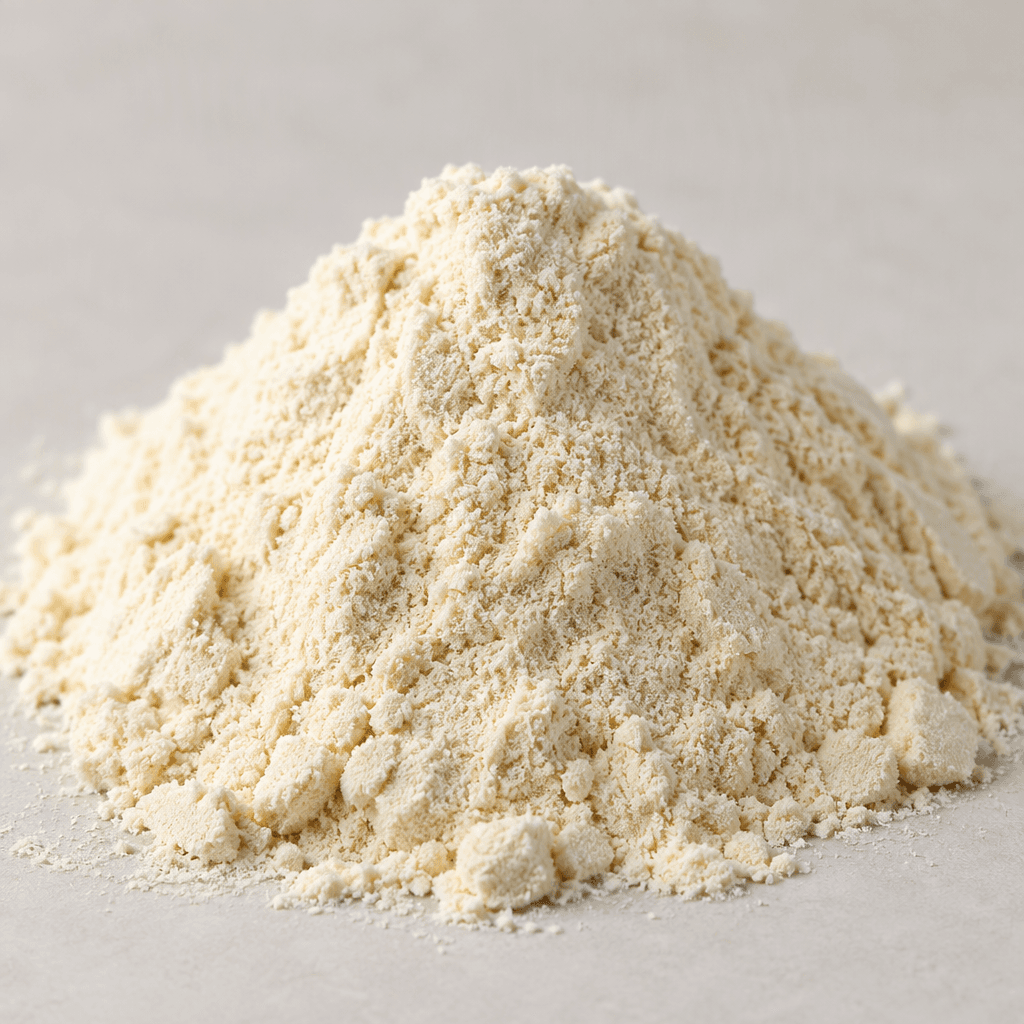
Bigjoy protein powder (24g protein) Calories
High protein, sports nutrition, muscle growth
In season: Spring · Summer · Autumn · Winter
CALORIES · 100 G
GI
POTASSIUM · 100 G
FIBER · 100 G
Quick answer
1 serving (medium) of Bigjoy protein powder (24g protein) (30 g) has 120 calories. That works out to 400 calories per 100 g. It contains 2.1 g of carbs, 24 g of protein, 1.5 g of fat and 0.3 g of fiber. Its 120 mg of Phosphorus covers 17% of the Daily Value. Its glycemic index is 30 (low), so it raises blood sugar slowly.
Bigjoy protein powder (24g protein) Nutrition Facts
Selected: 1 serving (medium) · 30 g
120
KCAL / 30G
Carbs
2.1g
· 1% DV
Protein
24g
· 48% DV
Fat
1.5g
· 2% DV
Fiber
0.3g
· 1% DV
DV is the share of the daily value covered, on a 2,000 kcal reference diet.
Calories come from: Carbs 7% · Protein 81% · Fat 12%
Bigjoy protein powder (24g protein) nutrition facts table · 1 serving (medium) (30 g)
| Nutrient | Amount | % DV |
|---|---|---|
| Calories | 120 kcal | |
| Total fat | 1.5 g | 2% |
| Saturated fat | 0.75 g | 4% |
| Trans fat | 0 g | |
| Sodium | 45 mg | 2% |
| Total carbohydrate | 2.1 g | 1% |
| Fiber | 0.3 g | 1% |
| Protein | 24 g | 48% |
Calories: Calories measure energy. Average daily need is 2,000 kcal. Excess calories are stored as fat, too few cause weight loss.
Carbs: Your body's primary energy source. The brain runs exclusively on carbs. Daily need: 275g.
Protein: Essential for muscle repair and cell growth. Daily need: 50g. Keeps you full and boosts metabolism.
Fat: Needed for hormone production and vitamin absorption. Daily need: 78g. Limit saturated fats, choose unsaturated.
Fiber: Critical for digestive health and satiety. Daily need: 28g. Stabilizes blood sugar, lowers cholesterol.

Log this food in EatBetter
100,000+ people use it
- Get your daily calorie target
- Snap your meal, log it in seconds
- See every vitamin and mineral

📸 Scan the code to get the app free.

How Many Calories in 1 Serving of Bigjoy protein powder (24g protein)?
| Serving | Amount | Calories |
|---|---|---|
| 1 serving (medium) | 30 g | 120 kcal |
| 1 tablespoon (medium) | 10 g | 40 kcal |
| 1 tablespoon (large) | 15 g | 60 kcal |
| 2 tablespoon (large) | 20 g | 80 kcal |
| 1 serving (small) | 24 g | 96 kcal |
| 1 pack (large) | 40 g | 160 kcal |
| 1 serving (large) | 40 g | 160 kcal |
| 1 serving (extra large) | 60 g | 240 kcal |
| 1 pack (extra large) | 60 g | 240 kcal |
| 100 g | 100 g | 400 kcal |
Calculated from 400 calories per 100 g.
Frequently Asked Questions About Bigjoy protein powder (24g protein)
How much protein is in one serving of Bigjoy protein powder?
The supplied serving information gives about 24 grams of protein in a roughly 30-gram serving of Bigjoy protein powder. Scoop sizes can vary, so weighing a serving is more reliable than assuming every scoop holds the same amount.
How do you mix Bigjoy protein powder without lumps?
Add Bigjoy protein powder to liquid and shake it until smooth; a shaker bottle usually makes this easiest. Adding the powder to the liquid rather than pouring liquid over a dry pile also helps prevent clumps.
Is Bigjoy protein powder whey protein?
The protein source can vary across Bigjoy products, so the brand name alone does not confirm that this one is whey. Look in the ingredients for whey concentrate, whey isolate, or another named protein source on your specific package.
When should you take Bigjoy protein powder for muscle growth?
You can take Bigjoy protein powder after training if that is convenient, but there is no special post-workout requirement. It can help supply protein at another time of day too; regular resistance training and adequate overall nutrition matter more than the exact timing.
Can you bake with Bigjoy protein powder?
Yes, Bigjoy protein powder can be added to pancakes, muffins, or other baked recipes. It may make the result drier or denser, so replace only part of the flour and add enough liquid to keep the batter moist.
Is Bigjoy protein powder better with milk or water?
Either works for Bigjoy protein powder. Water keeps the drink lighter and lets the powder’s flavor stand out, while milk makes it creamier and changes the drink’s overall nutrition and taste.
Can you take Bigjoy protein powder every day?
Yes, Bigjoy protein powder can be used daily, but it is not necessary if meals already provide enough protein. Use it to supplement your usual diet rather than routinely replacing balanced meals with shakes.
Does Bigjoy protein powder cause weight gain?
Bigjoy protein powder does not automatically cause weight gain. Weight can increase if adding it regularly raises your overall energy intake beyond what you use, so consider whether the shake replaces a snack or is added on top.
Can people with lactose intolerance use Bigjoy protein powder?
It depends on the specific Bigjoy product: some protein powders contain whey ingredients that may retain lactose, while others may use different formulations. Check the ingredient information for that product, and choose one explicitly labeled lactose-free if you need to avoid lactose.
Can Bigjoy protein powder damage your kidneys?
Bigjoy protein powder is not known to damage healthy kidneys when used as directed, but people with kidney disease may need to limit protein. Ask your doctor or dietitian before using a protein supplement if you have a kidney condition.
Bigjoy protein powder (24g protein) Vitamins & Minerals
Vitamins
B12
0.3µg · 13% DV
B6
0.12mg · 7% DV
B2
0.09mg · 7% DV
B1
0.06mg · 5% DV
Minerals
Phosphorus
120mg · 17% DV
Calcium
120mg · 12% DV
Copper
0.06mg · 7% DV
Zinc
0.6mg · 5% DV
Potassium ⭐
90mg · 3% DV
Sodium
45mg · 2% DV
Bigjoy protein powder (24g protein) Glycemic Index
GLYCEMIC INDEX
GLYCEMIC LOAD
Accounts for portion size — a more realistic measure than GI alone.
How to Burn Off Bigjoy protein powder (24g protein)
To burn the 120 calories in 1 serving (medium) (30 g):
🚶
Walking (5 km/h)
🏃
Running (8 km/h)
🚴
Cycling
🏊
Swimming
Times are calculated with the MET equation for a 70 kg adult. Actual burn varies with your weight, age and pace.
What is Bigjoy protein powder (24g protein)?
Bigjoy protein powder (24g protein) is a powdered protein supplement stirred or shaken into a drink. It can also be blended into smoothies or mixed into foods such as porridge; flavour and texture depend on the particular variety.
People commonly use it after exercise, at breakfast, or as a convenient snack, mixing it with water or milk. A serving provides 24 g of protein, making it a straightforward way to add protein to a meal or snack, though it need not replace one. Use water for a lighter shake, or add milk, fruit, or oats for a more filling option.
How Nutritious Is Bigjoy protein powder (24g protein)?
Nutrient density
High
How many vitamins, minerals and how much fiber this food carries per calorie. A high score means a lot of nutrition for few calories.
Satiety score
Medium
An EatBetter score computed from fiber, protein and calorie density. A high score means staying full longer on the same calories.
Both scores are calculated per 100 g and do not change with the selected portion. The satiety score is EatBetter's own calculation, not a clinical measure.
Is Bigjoy protein powder (24g protein) Processed?
NOVA 3
Processed
1. Unprocessed
2. Minimally Processed
3. Processed
4. Ultra-Processed
NOVA classifies foods into 4 groups by industrial processing. NOVA 1 (unprocessed) is the healthiest.
Does Bigjoy protein powder (24g protein) Contain Allergens?
Contains these allergens:
Which Diets Is Bigjoy protein powder (24g protein) Good For?
Vegan
— Not suitable
Vegetarian
— Not suitable
Gluten-Free
✓ Suitable
Dairy-Free
— Not suitable
Mediterranean
✓ Suitable
Paleo
✓ Suitable
Whole30
— Not suitable
DASH
— Not suitable
Keto
✓ Suitable
Low FODMAP
— Not suitable
Bigjoy protein powder (24g protein) Fat Profile
SATURATED
0.75g
MONOUNSATURATED
0.45g
POLYUNSATURATED
0.3g
Omega 6:3 ratio 2:1
Below the ideal 4:1 — a good omega balance.
Compare Bigjoy protein powder (24g protein)
Foods Similar to Bigjoy protein powder (24g protein)
Have another question about Bigjoy protein powder (24g protein)?
Ask the AI nutrition coach — calories, portions, alternatives and more, answered in seconds in the app.

Scan calories with your camera
Instant AI nutrition analysis

Nutrition data compiled from USDA FoodData Central and scientific sources.