

Ready & Packaged Foods
All →Vegetables & Legumes
All →Desserts & Confectionery
All →Meat & Protein
All →Grains & Bakery
All →Beverages
All →Milk & Dairy
All →

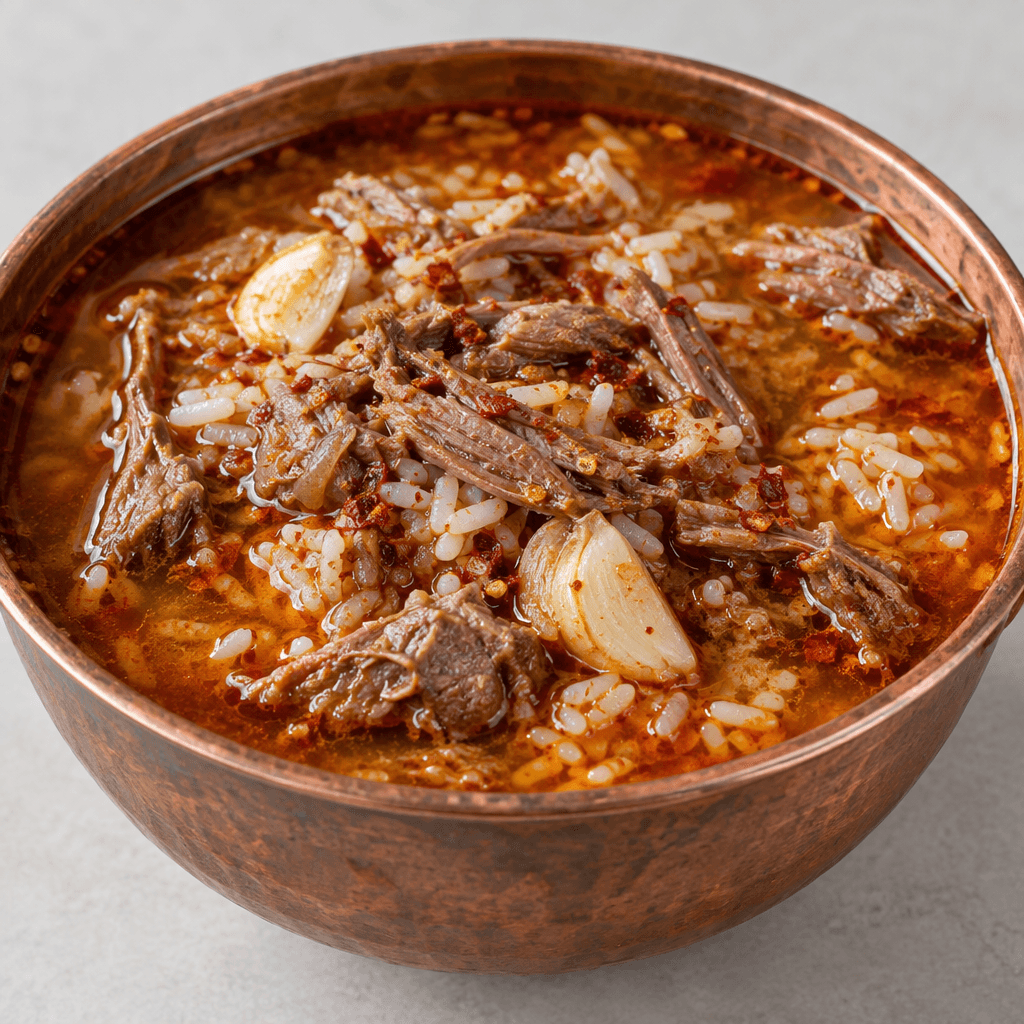
Beyran Calories
Traditional spicy soup from Gaziantep, Turkey, made with lamb, rice, garlic, and hot pepper
In season: Winter
CALORIES
GI
POTASSIUM
FIBER
Quick answer
1 bottle (medium) of Beyran (350 g) has 420 calories. That works out to 120 calories per 100 g. It contains 24.5 g of carbs, 26.3 g of protein, 22.8 g of fat and 2.8 g of fiber. Its 2.4 µg of B12 covers 102% of the Daily Value. Its glycemic index is 65 (medium), so it raises blood sugar at a moderate pace.
What is Beyran?
Beyran is a traditional soup from Gaziantep in southeastern Turkey, made with tender lamb, rice, garlic and hot pepper in a rich broth. The ingredients are brought together piping hot, giving the soup its reddish, oily surface and deeply savoury flavour.
In Gaziantep, Beyran is especially associated with breakfast, though it also makes a substantial meal at any time of day. Its soft rice and shredded lamb contrast with the sharp heat of the broth; bread is a natural accompaniment. It offers protein alongside rice-based carbohydrates, with 7.5 g of protein per 100 g. For a lighter bowl, skim off some of the surface oil before serving and adjust the pepper to taste.
Beyran Nutrition Facts
Selected: 100 g
120
KCAL / 100G
Carbs
7g
· 3% DV
Protein
7.5g
· 15% DV
Fat
6.5g
· 8% DV
Fiber
0.8g
· 3% DV
DV is the share of the daily value covered, on a 2,000 kcal reference diet.
Calories come from: Carbs 24% · Protein 26% · Fat 50%
Beyran Vitamins & Minerals
Vitamins
B12
0.7µg · 29% DV
B3
2.1mg · 13% DV
B5
0.6mg · 12% DV
B6
0.13mg · 8% DV
Minerals
Sodium
410mg · 18% DV
Phosphorus
85mg · 12% DV
Selenium
5.5µg · 10% DV
Zinc
1mg · 9% DV
How Nutritious Is Beyran?
Nutrient density
High
How many vitamins, minerals and how much fiber this food carries per calorie. A high score means a lot of nutrition for few calories.
Satiety score
Medium
An EatBetter score computed from fiber, protein and calorie density. A high score means staying full longer on the same calories.
Both scores are calculated per 100 g and do not change with the selected portion. The satiety score is EatBetter's own calculation, not a clinical measure.
Beyran Glycemic Index
GLYCEMIC INDEX
GLYCEMIC LOAD
Accounts for portion size — a more realistic measure than GI alone.
How to Burn Off Beyran
To burn the 120 calories in 100 g:
🚶
Walking (5 km/h)
🏃
Running (8 km/h)
🚴
Cycling
🏊
Swimming
Times are calculated with the MET equation for a 70 kg adult. Actual burn varies with your weight, age and pace.
Is Beyran Processed?
NOVA 2
Minimally Processed
1. Unprocessed
2. Minimally Processed
3. Processed
4. Ultra-Processed
NOVA classifies foods into 4 groups by industrial processing. NOVA 1 (unprocessed) is the healthiest.
Does Beyran Contain Allergens?
No known major allergens
Which Diets Is Beyran Good For?
Vegan
— Not suitable
Vegetarian
— Not suitable
Gluten-Free
✓ Suitable
Dairy-Free
— Not suitable
Mediterranean
✓ Suitable
Paleo
✓ Suitable
Whole30
— Not suitable
DASH
— Not suitable
Keto
— Not suitable
Low FODMAP
— Not suitable
Beyran Fat Profile
SATURATED
2.2g
MONOUNSATURATED
2.3g
POLYUNSATURATED
0.5g
Omega 6:3 ratio 2.4:1
Below the ideal 4:1 — a good omega balance.
Compare Beyran
Foods Similar to Beyran
Frequently Asked Questions About Beyran
What is Beyran?
Beyran is a traditional lamb-and-rice soup from Gaziantep, southeastern Turkey. It combines shredded lamb, rice, garlic, hot pepper, and rich broth, and is usually served piping hot.
What does Beyran taste like?
Beyran tastes savory and meaty, with the warmth of garlic and red pepper. Its heat and richness vary by recipe, so a bowl from one restaurant may taste noticeably different from another.
Is Beyran spicy?
Yes, Beyran is commonly made with hot red pepper, though its heat level varies. If ordering it, ask whether the pepper can be adjusted; when cooking it at home, add the pepper gradually.
Where did Beyran originate?
Beyran comes from Gaziantep, a city in southeastern Turkey known for its distinctive cuisine. It is strongly associated with the city’s food culture and is traditionally served in local eateries, including in the morning.
What meat is used in Beyran?
Traditional Beyran uses lamb, both for the shredded meat and for the broth. The exact cut can vary among cooks; the meat is cooked until tender, then combined with rice, garlic, and seasoned broth.
How is Beyran traditionally prepared?
Beyran starts with lamb cooked in broth until tender. For serving, the meat is shredded and combined with cooked rice, garlic, and pepper, then brought together with very hot broth; methods vary between kitchens.
Why is Beyran served so hot?
Beyran is traditionally assembled and served piping hot, with the broth brought to a vigorous heat around the meat and rice. This is part of its customary preparation and gives the soup its freshly cooked, steaming presentation.
Is Beyran usually eaten for breakfast?
Yes, Beyran is traditionally associated with breakfast in Gaziantep, where it is served as a substantial hot soup. It is not limited to mornings, and restaurants may offer it at other times of day.
What can I serve with Beyran?
Beyran is often filling enough to serve on its own. Lemon, bread, or pickles can accompany it, depending on the restaurant or household; these are serving options rather than required ingredients.
How should leftover Beyran be stored and reheated?
Refrigerate leftover Beyran promptly in a covered container and reheat it thoroughly until steaming hot. Rice absorbs broth as it sits, so the reheated soup may be thicker; stir in a little hot water or broth if needed.
Have another question about Beyran?
Ask the AI nutrition coach — calories, portions, alternatives and more, answered in seconds in the app.

Scan calories with your camera
Instant AI nutrition analysis

Nutrition data compiled from USDA FoodData Central and scientific sources.