

Ready & Packaged Foods
All →Vegetables & Legumes
All →Desserts & Confectionery
All →Meat & Protein
All →Grains & Bakery
All →Beverages
All →Milk & Dairy
All →

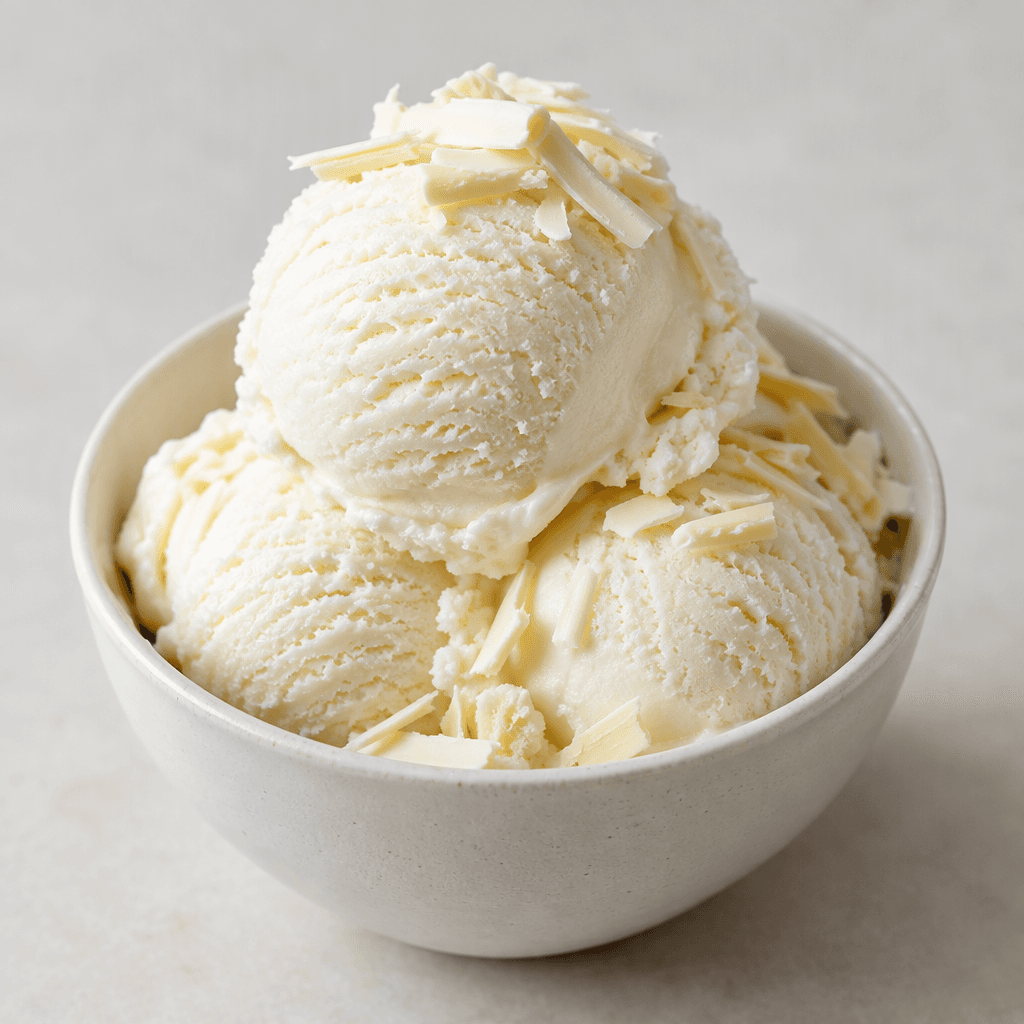
White chocolate ice cream Calories
Sweet, creamy, energy-dense ice cream
In season: Spring · Summer · Autumn · Winter
CALORIES
GI
POTASSIUM
FIBER
Quick answer
100 g of White chocolate ice cream has 216 calories. It contains 24.2 g of carbs, 3.6 g of protein, 11.8 g of fat and 0.2 g of fiber. Its 0.4 µg of B12 covers 16% of the Daily Value. Its glycemic index is 61 (medium), so it raises blood sugar at a moderate pace.
What is White chocolate ice cream?
White chocolate ice cream combines a milk or cream base with sugar and white chocolate, which is made with cocoa butter and milk solids. It is a modern variation on ice cream rather than a dish tied to one particular place, and recipes range from gently flavoured to distinctly sweet and rich.
Its smooth, creamy texture makes it a familiar dessert served in a cone or bowl, often with chocolate shavings, fruit or a drizzle of sauce. It also works alongside a warm brownie or pie. The sweetness and fat make it energy-dense, while it provides only a modest amount of protein. For a lighter serving, keep the scoop small and pair it with fresh berries.
White chocolate ice cream Nutrition Facts
Selected: 100 g
216
KCAL / 100G
Carbs
24.2g
· 9% DV
Protein
3.6g
· 7% DV
Fat
11.8g
· 15% DV
Fiber
0.2g
· 1% DV
DV is the share of the daily value covered, on a 2,000 kcal reference diet.
Calories come from: Carbs 45% · Protein 7% · Fat 48%
White chocolate ice cream Vitamins & Minerals
Vitamins
B12
0.38µg · 16% DV
B2
0.19mg · 15% DV
Vitamin A
98µg · 11% DV
B5
0.43mg · 9% DV
Minerals
Phosphorus
102mg · 15% DV
Calcium
128mg · 13% DV
Iodine
9µg · 6% DV
Selenium
2.6µg · 5% DV
How Nutritious Is White chocolate ice cream?
Nutrient density
Low
How many vitamins, minerals and how much fiber this food carries per calorie. A high score means a lot of nutrition for few calories.
Satiety score
Low
An EatBetter score computed from fiber, protein and calorie density. A high score means staying full longer on the same calories.
Both scores are calculated per 100 g and do not change with the selected portion. The satiety score is EatBetter's own calculation, not a clinical measure.
White chocolate ice cream Glycemic Index
GLYCEMIC INDEX
GLYCEMIC LOAD
Accounts for portion size — a more realistic measure than GI alone.
How to Burn Off White chocolate ice cream
To burn the 216 calories in 100 g:
🚶
Walking (5 km/h)
🏃
Running (8 km/h)
🚴
Cycling
🏊
Swimming
Times are calculated with the MET equation for a 70 kg adult. Actual burn varies with your weight, age and pace.
Is White chocolate ice cream Processed?
NOVA 3
Processed
1. Unprocessed
2. Minimally Processed
3. Processed
4. Ultra-Processed
NOVA classifies foods into 4 groups by industrial processing. NOVA 1 (unprocessed) is the healthiest.
Does White chocolate ice cream Contain Allergens?
Contains these allergens:
Which Diets Is White chocolate ice cream Good For?
Vegan
— Not suitable
Vegetarian
✓ Suitable
Gluten-Free
✓ Suitable
Dairy-Free
— Not suitable
Mediterranean
— Not suitable
Paleo
— Not suitable
Whole30
— Not suitable
DASH
— Not suitable
Keto
— Not suitable
Low FODMAP
— Not suitable
White chocolate ice cream Fat Profile
SATURATED
7.3g
MONOUNSATURATED
3.1g
POLYUNSATURATED
0.4g
Omega 6:3 ratio 6.4:1
Above the ideal 4:1 (6.4:1).
Compare White chocolate ice cream
Foods Similar to White chocolate ice cream
Frequently Asked Questions About White chocolate ice cream
How do you make white chocolate ice cream at home?
You can make white chocolate ice cream with cream, milk, sugar and melted white chocolate. Chill the mixture, then churn it in an ice cream maker; without one, freeze it in a covered container and stir it several times as it firms.
What is white chocolate ice cream made of?
White chocolate ice cream is usually made with milk or cream, sugar and white chocolate. Some recipes also use egg yolks or a stabilizer for a richer texture, so the exact ingredients vary between homemade recipes and store-bought products.
Does white chocolate ice cream contain cocoa?
Usually, white chocolate ice cream contains cocoa butter through its white chocolate, but not cocoa solids. Cocoa butter comes from the cacao bean, while cocoa solids provide the dark color and characteristic cocoa flavor of regular chocolate.
What is the difference between white chocolate ice cream and vanilla ice cream?
White chocolate ice cream gets its flavor from white chocolate, giving it a sweeter, richer taste than vanilla ice cream. Vanilla ice cream is flavored mainly with vanilla, although some recipes may combine vanilla and white chocolate.
Is white chocolate ice cream sweeter than regular chocolate ice cream?
White chocolate ice cream often tastes sweeter than regular chocolate ice cream because it lacks the bitter cocoa solids found in dark or milk chocolate. The actual sweetness depends on the recipe and how much sugar and chocolate it contains.
What toppings go well with white chocolate ice cream?
Tart fruit such as raspberries, strawberries or cherries pairs especially well with white chocolate ice cream. Their acidity cuts through its creamy sweetness; toasted nuts, dark chocolate shavings or a little citrus zest also make good toppings.
Can you make white chocolate ice cream without an ice cream maker?
Yes, you can make white chocolate ice cream without a machine. Freeze the mixture in a shallow, covered container and stir it periodically while it sets; this breaks up ice crystals and helps produce a smoother texture.
How should you store white chocolate ice cream after opening?
Keep opened white chocolate ice cream tightly covered in the freezer, with the container placed away from the door where temperatures fluctuate more. Pressing a piece of parchment against the surface can help limit ice crystals and freezer burn.
Can you refreeze white chocolate ice cream after it melts?
Do not refreeze white chocolate ice cream that has fully melted and sat at room temperature for an extended period, as bacteria may grow. If it is still very cold and partly frozen, return it to the freezer promptly, though the texture may become icy.
Does white chocolate ice cream contain caffeine?
White chocolate ice cream typically has little to no caffeine because white chocolate contains cocoa butter rather than caffeine-rich cocoa solids. Small traces may occur depending on the recipe or added ingredients, but it is generally not a meaningful caffeine source.
Have another question about White chocolate ice cream?
Ask the AI nutrition coach — calories, portions, alternatives and more, answered in seconds in the app.

Scan calories with your camera
Instant AI nutrition analysis

Nutrition data compiled from USDA FoodData Central and scientific sources.