

Ready & Packaged Foods
All →Vegetables & Legumes
All →Desserts & Confectionery
All →Meat & Protein
All →Grains & Bakery
All →Beverages
All →Milk & Dairy
All →

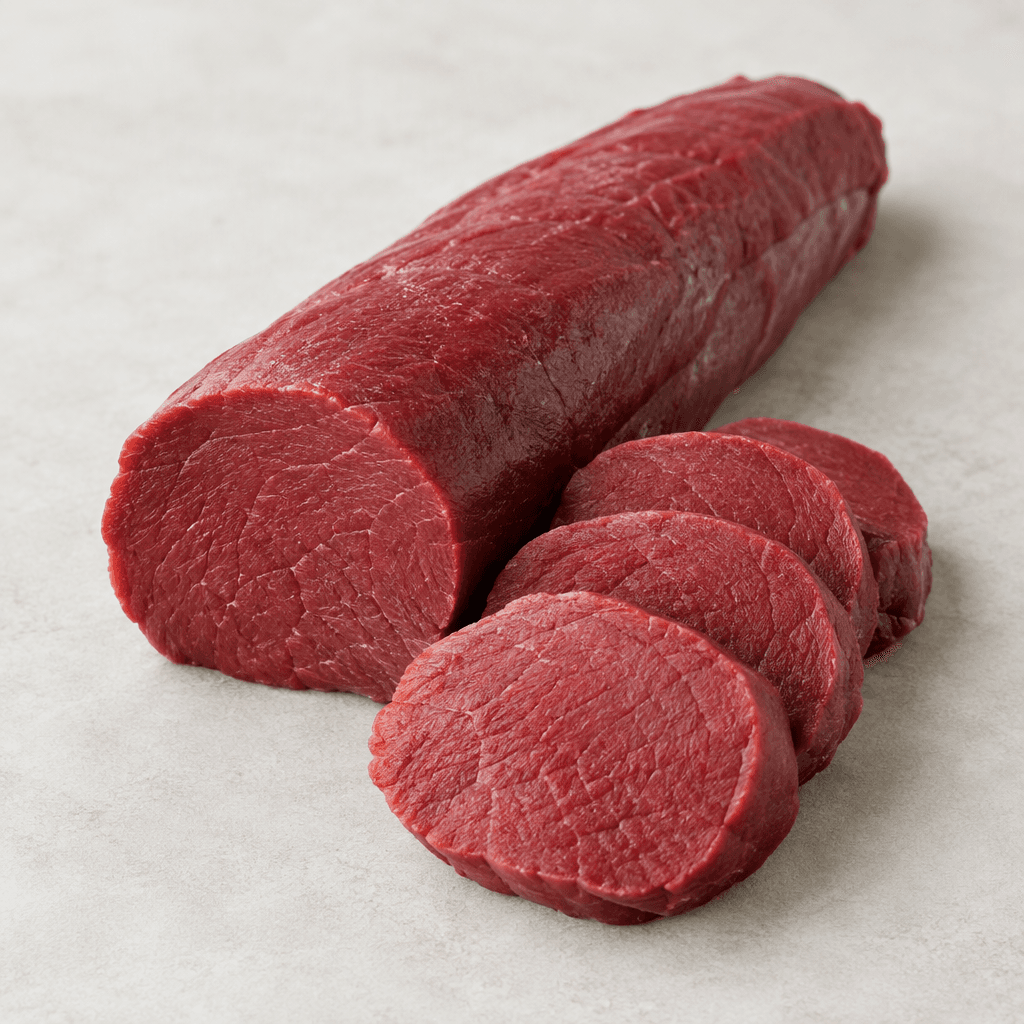
Beef Tenderloin Calories
Lean, high-protein, rich in iron and B vitamins
In season: Spring · Summer · Autumn · Winter
CALORIES
GI
POTASSIUM
FIBER
Quick answer
1 piece (medium) of Beef Tenderloin (150 g) has 180 calories. That works out to 120 calories per 100 g. It contains 0 g of carbs, 32.3 g of protein, 5.3 g of fat and 0 g of fiber. Its 3.3 µg of B12 covers 138% of the Daily Value. Its glycemic index is 0 (low), so it raises blood sugar slowly.
What is Beef Tenderloin?
Beef tenderloin is a long, naturally tender cut taken from along the cow’s back, where the muscle does relatively little work. It is sold whole or in thick round steaks, often called filet steaks, and its mild flavour makes it well suited to simple seasoning.
Across its place of origin and in kitchens worldwide, it is commonly seared in a hot pan or grilled, then served as a steak or sliced into medallions. Because it is lean, careful cooking helps keep it juicy; pair it with roasted vegetables, salad or potatoes for a straightforward meal. Beef tenderloin is high in protein and also provides iron and B vitamins. For a lighter plate, use a modest amount of cooking fat and choose a vegetable-rich side.
Beef Tenderloin Nutrition Facts
Selected: 100 g
120
KCAL / 100G
Carbs
0g
· 0% DV
Protein
21.5g
· 43% DV
Fat
3.5g
· 4% DV
Fiber
0g
· 0% DV
DV is the share of the daily value covered, on a 2,000 kcal reference diet.
Calories come from: Carbs 0% · Protein 73% · Fat 27%

Log this food in EatBetter
100,000+ people use it
- Get your daily calorie target
- Snap your meal, log it in seconds
- See every vitamin and mineral

📸 Scan the code to get the app free.

Beef Tenderloin Vitamins & Minerals
Vitamins
B12
2.2µg · 92% DV
B3
4.5mg · 28% DV
B6
0.45mg · 26% DV
B2
0.21mg · 16% DV
Minerals
Zinc
4mg · 36% DV
Selenium
18µg · 33% DV
Phosphorus
210mg · 30% DV
Iron
3mg · 17% DV
Potassium ⭐
330mg · 10% DV
How Nutritious Is Beef Tenderloin?
Nutrient density
Very high
How many vitamins, minerals and how much fiber this food carries per calorie. A high score means a lot of nutrition for few calories.
Satiety score
Medium
An EatBetter score computed from fiber, protein and calorie density. A high score means staying full longer on the same calories.
Both scores are calculated per 100 g and do not change with the selected portion. The satiety score is EatBetter's own calculation, not a clinical measure.
Beef Tenderloin Glycemic Index
GLYCEMIC INDEX
GLYCEMIC LOAD
Accounts for portion size — a more realistic measure than GI alone.
How to Burn Off Beef Tenderloin
To burn the 120 calories in 100 g:
🚶
Walking (5 km/h)
🏃
Running (8 km/h)
🚴
Cycling
🏊
Swimming
Times are calculated with the MET equation for a 70 kg adult. Actual burn varies with your weight, age and pace.
Is Beef Tenderloin Processed?
NOVA 1
Unprocessed
1. Unprocessed
2. Minimally Processed
3. Processed
4. Ultra-Processed
NOVA classifies foods into 4 groups by industrial processing. NOVA 1 (unprocessed) is the healthiest.
Does Beef Tenderloin Contain Allergens?
No known major allergens
Which Diets Is Beef Tenderloin Good For?
Vegan
— Not suitable
Vegetarian
— Not suitable
Gluten-Free
✓ Suitable
Dairy-Free
— Not suitable
Mediterranean
✓ Suitable
Paleo
✓ Suitable
Whole30
— Not suitable
DASH
— Not suitable
Keto
✓ Suitable
Low FODMAP
— Not suitable
Beef Tenderloin Fat Profile
SATURATED
1.4g
MONOUNSATURATED
1.5g
POLYUNSATURATED
0.2g
Omega 6:3 ratio 2:1
Below the ideal 4:1 — a good omega balance.
Compare Beef Tenderloin
Foods Similar to Beef Tenderloin
Frequently Asked Questions About Beef Tenderloin
What part of the cow is beef tenderloin?
Beef tenderloin comes from the muscle along the cow’s backbone, in the loin. Because this muscle does little work, the cut is exceptionally tender and relatively lean compared with many other beef cuts.
Is beef tenderloin the same as filet mignon?
Not exactly: filet mignon is a steak cut from the narrow end of the beef tenderloin. The whole tenderloin is a larger cut that can be roasted or sliced into several steaks, including filet mignon.
How do you cook beef tenderloin steak in a pan?
Pat the steak dry and sear it in a very hot, lightly oiled pan, turning it to brown the sides. Finish cooking to your preferred doneness, then let it rest before serving so the juices settle.
How do you roast a whole beef tenderloin?
Tie the tenderloin so it cooks evenly, season it, and brown it in a hot pan before roasting. Use a meat thermometer to check doneness because thickness affects cooking time, then rest the roast before slicing.
How do you trim beef tenderloin?
Remove the tough, shiny silver skin with a sharp knife, sliding the blade just beneath it while keeping the tender meat intact. Trim loose fat and the thin end if needed; tying the tapered end helps the tenderloin cook more evenly.
Why is beef tenderloin tough?
Beef tenderloin is usually tough because it has been overcooked or sliced with the grain. Since it is lean, it can dry out quickly; let it rest after cooking and cut across the muscle fibers.
Does beef tenderloin need to be marinated?
No, beef tenderloin does not need a marinade to become tender. A simple seasoning is enough for its mild flavor; if you use an acidic marinade, keep the marinating time brief so the surface does not turn mushy.
How long does raw beef tenderloin last in the fridge?
Keep raw beef tenderloin sealed in the coldest part of the refrigerator and cook it within a few days, following the package date. Store cooked tenderloin separately in a covered container and refrigerate it promptly.
Can you freeze beef tenderloin?
Yes, beef tenderloin freezes well when wrapped tightly to limit air exposure. Thaw it in the refrigerator rather than on the counter, and cook it soon after thawing for the best quality and safe handling.
How should you slice beef tenderloin?
Let beef tenderloin rest after cooking, then slice across the grain with a sharp knife. Cutting against the direction of the muscle fibers shortens them, making each piece easier to chew.
Have another question about Beef Tenderloin?
Ask the AI nutrition coach — calories, portions, alternatives and more, answered in seconds in the app.

Scan calories with your camera
Instant AI nutrition analysis

Nutrition data compiled from USDA FoodData Central and scientific sources.