

Ready & Packaged Foods
All →Vegetables & Legumes
All →Desserts & Confectionery
All →Meat & Protein
All →Grains & Bakery
All →Beverages
All →Milk & Dairy
All →

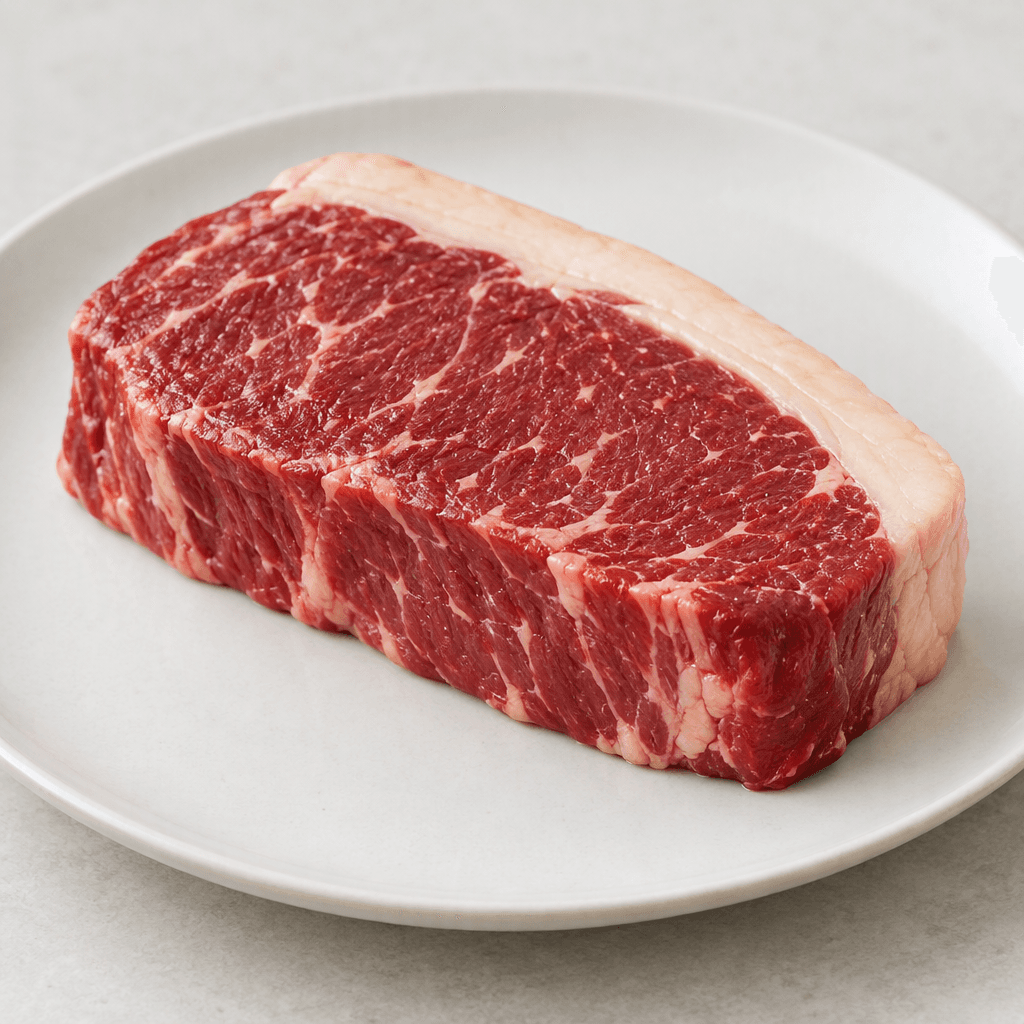
Beef Striploin Calories
High in protein, iron, and B vitamins
In season: Spring · Summer · Autumn · Winter
CALORIES
GI
POTASSIUM
FIBER
Quick answer
1 piece (medium) of Beef Striploin (150 g) has 315 calories. That works out to 210 calories per 100 g. It contains 0 g of carbs, 32.3 g of protein, 21.8 g of fat and 0 g of fiber. Its 3.2 µg of B12 covers 131% of the Daily Value. Its glycemic index is 0 (low), so it raises blood sugar slowly.
What is Beef Striploin?
Beef striploin is a boneless cut from the loin, often sold as a thick steak with a strip of fat along one edge. Fine marbling and the fat cap help keep it flavourful and juicy as it cooks; you can trim the edge after cooking if you prefer a leaner bite.
It is commonly grilled, pan-seared or roasted, then served as a steak with potatoes, vegetables or salad. The centre is tender with a robust beef flavour, especially when cooked until browned outside but still juicy within. Striploin is rich in protein and a source of iron and B vitamins, making it a satisfying centrepiece for a meal. Pair it with vegetables for a balanced plate.
Beef Striploin Nutrition Facts
Selected: 100 g
210
KCAL / 100G
Carbs
0g
· 0% DV
Protein
21.5g
· 43% DV
Fat
14.5g
· 19% DV
Fiber
0g
· 0% DV
DV is the share of the daily value covered, on a 2,000 kcal reference diet.
Calories come from: Carbs 0% · Protein 40% · Fat 60%
Beef Striploin Vitamins & Minerals
Vitamins
B12
2.1µg · 88% DV
B3
4.5mg · 28% DV
B6
0.45mg · 26% DV
B2
0.18mg · 14% DV
Minerals
Zinc
4mg · 36% DV
Phosphorus
180mg · 26% DV
Selenium
14µg · 25% DV
Iron
2mg · 11% DV
How Nutritious Is Beef Striploin?
Nutrient density
High
How many vitamins, minerals and how much fiber this food carries per calorie. A high score means a lot of nutrition for few calories.
Satiety score
Medium
An EatBetter score computed from fiber, protein and calorie density. A high score means staying full longer on the same calories.
Both scores are calculated per 100 g and do not change with the selected portion. The satiety score is EatBetter's own calculation, not a clinical measure.
Beef Striploin Glycemic Index
GLYCEMIC INDEX
GLYCEMIC LOAD
Accounts for portion size — a more realistic measure than GI alone.
How to Burn Off Beef Striploin
To burn the 210 calories in 100 g:
🚶
Walking (5 km/h)
🏃
Running (8 km/h)
🚴
Cycling
🏊
Swimming
Times are calculated with the MET equation for a 70 kg adult. Actual burn varies with your weight, age and pace.
Is Beef Striploin Processed?
NOVA 1
Unprocessed
1. Unprocessed
2. Minimally Processed
3. Processed
4. Ultra-Processed
NOVA classifies foods into 4 groups by industrial processing. NOVA 1 (unprocessed) is the healthiest.
Does Beef Striploin Contain Allergens?
No known major allergens
Which Diets Is Beef Striploin Good For?
Vegan
— Not suitable
Vegetarian
— Not suitable
Gluten-Free
✓ Suitable
Dairy-Free
— Not suitable
Mediterranean
✓ Suitable
Paleo
✓ Suitable
Whole30
— Not suitable
DASH
— Not suitable
Keto
✓ Suitable
Low FODMAP
— Not suitable
Beef Striploin Fat Profile
SATURATED
6.1g
MONOUNSATURATED
6.3g
POLYUNSATURATED
0.3g
Omega 6:3 ratio 2:1
Below the ideal 4:1 — a good omega balance.
Compare Beef Striploin
Foods Similar to Beef Striploin
Frequently Asked Questions About Beef Striploin
What is beef striploin?
Beef striploin is a boneless cut from the short loin along the back of the animal. It is commonly cut into steaks and has a strip of exterior fat, with a firmer texture and fuller beef flavour than tenderloin.
Is beef striploin the same as a New York strip steak?
Usually, yes: a New York strip steak is a steak cut from the striploin. The names vary by country and butcher, but both generally refer to the relatively lean, tender loin steak with a fat edge.
Is beef striploin the same as sirloin?
Not always. In North American butchery, striploin and sirloin are separate cuts, while British and other naming systems use “sirloin” differently. Check the cut’s location or ask the butcher rather than relying on the name alone.
How do you cook beef striploin steak?
Sear beef striploin in a very hot pan or on a hot grill, turning it to brown both sides. For a thick steak, finish over gentler heat so the outside does not burn before the centre reaches your preferred doneness.
Is beef striploin a tender cut?
Yes, beef striploin is generally tender because it comes from a muscle that does relatively little work. It is not as delicate as tenderloin, and overcooking can make it noticeably firmer.
Should you cut the fat off beef striploin before cooking?
No, you can leave the fat strip on while cooking; it adds flavour and helps protect the edge of the steak. Trim any especially thick excess, then remove the remaining fat at the table if you prefer.
How do you roast a whole beef striploin?
Roast whole beef striploin with the fat side facing up so it can baste the meat as it cooks. Use a meat thermometer to judge doneness, then rest the roast before slicing across the grain.
How can you tell if beef striploin is fresh when buying it?
Choose beef striploin that feels firm and moist, with a clean, mild smell and fat that looks creamy rather than grey. A deep red colour is common, but colour alone cannot confirm freshness; check that it has been properly chilled.
Can you freeze beef striploin?
Yes, beef striploin freezes well. Wrap steaks tightly or seal them in a freezer-safe bag with excess air removed, then thaw them in the refrigerator before cooking for more even results.
Should you wash beef striploin before cooking?
No, do not rinse beef striploin. Washing raw meat can spread bacteria around the sink and work surface through splashes; cook it directly and clean your hands, knife and board after handling.
Have another question about Beef Striploin?
Ask the AI nutrition coach — calories, portions, alternatives and more, answered in seconds in the app.

Scan calories with your camera
Instant AI nutrition analysis

Nutrition data compiled from USDA FoodData Central and scientific sources.