

Ready & Packaged Foods
All →Vegetables & Legumes
All →Desserts & Confectionery
All →Meat & Protein
All →Grains & Bakery
All →Beverages
All →Milk & Dairy
All →

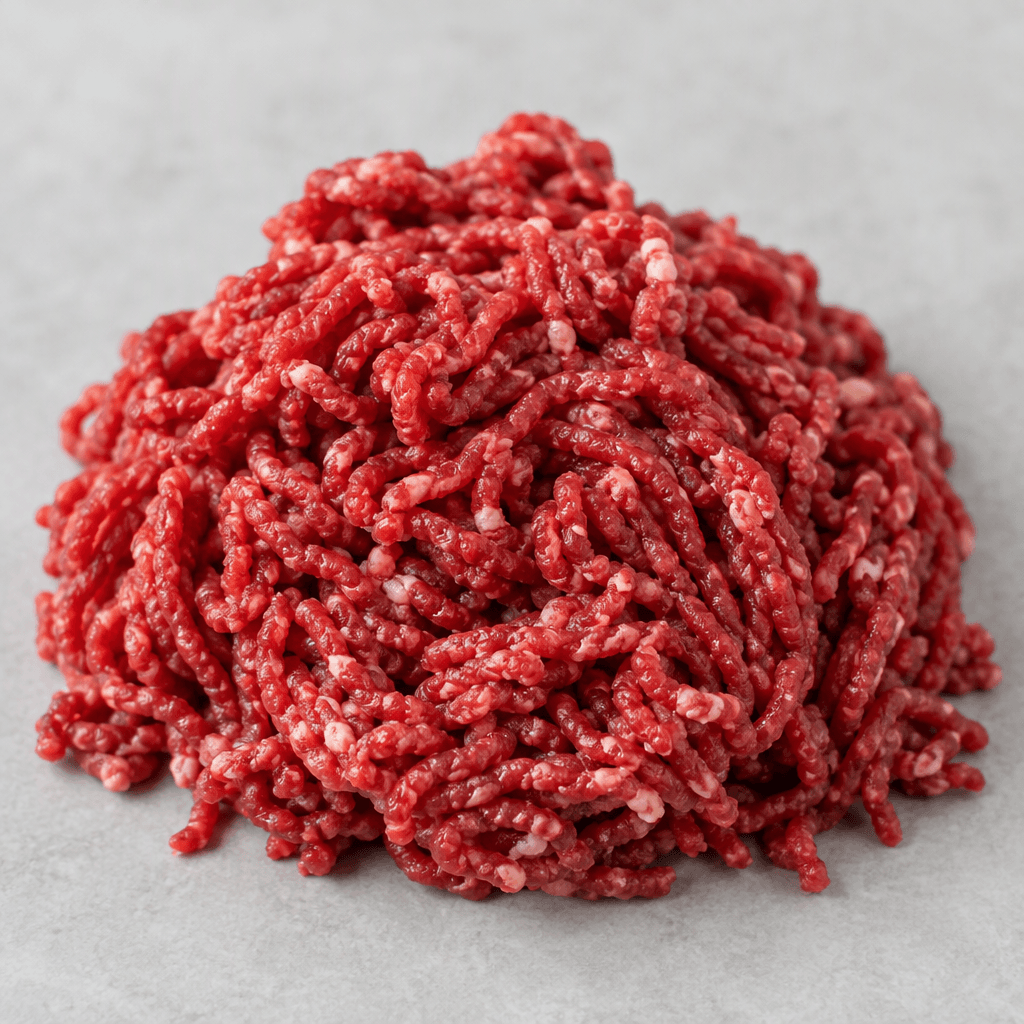
Beef mince, lean, raw Calories
High protein, low fat, source of iron and vitamin B12
In season: Spring · Summer · Autumn · Winter
CALORIES
GI
POTASSIUM
FIBER
Quick answer
100 g of Beef mince, lean, raw has 137 calories. It contains 0 g of carbs, 20.7 g of protein, 5 g of fat and 0 g of fiber. Its 2.3 µg of B12 covers 96% of the Daily Value. Its glycemic index is 0 (low), so it raises blood sugar slowly.
What is Beef mince, lean, raw?
Lean, raw beef mince is beef that has been finely ground and sold uncooked. Its flavour is savoury and its texture becomes tender or firmer depending on how it is cooked. Across many cuisines, it is shaped into burgers or meatballs, browned for sauces and fillings, or cooked with vegetables; seasonings and cooking methods vary from place to place.
It is a protein-rich choice with relatively little fat: a 100 g portion provides 20.7 g of protein. For a lighter meal, cook it with vegetables or beans and use only a little added oil. Brown it thoroughly before serving, whether you are making a quick skillet meal or adding it to a longer-cooked dish.
Beef mince, lean, raw Nutrition Facts
Selected: 100 g
137
KCAL / 100G
Carbs
0g
· 0% DV
Protein
20.7g
· 41% DV
Fat
5g
· 6% DV
Fiber
0g
· 0% DV
DV is the share of the daily value covered, on a 2,000 kcal reference diet.
Calories come from: Carbs 0% · Protein 65% · Fat 35%
Beef mince, lean, raw Vitamins & Minerals
Vitamins
B12
2.3µg · 96% DV
B3
4.5mg · 28% DV
B6
0.36mg · 21% DV
B2
0.18mg · 14% DV
Minerals
Zinc
5mg · 45% DV
Phosphorus
180mg · 26% DV
Selenium
12µg · 22% DV
Iron
2mg · 11% DV
How Nutritious Is Beef mince, lean, raw?
Nutrient density
High
How many vitamins, minerals and how much fiber this food carries per calorie. A high score means a lot of nutrition for few calories.
Satiety score
Medium
An EatBetter score computed from fiber, protein and calorie density. A high score means staying full longer on the same calories.
Both scores are calculated per 100 g and do not change with the selected portion. The satiety score is EatBetter's own calculation, not a clinical measure.
Beef mince, lean, raw Glycemic Index
GLYCEMIC INDEX
GLYCEMIC LOAD
Accounts for portion size — a more realistic measure than GI alone.
How to Burn Off Beef mince, lean, raw
To burn the 137 calories in 100 g:
🚶
Walking (5 km/h)
🏃
Running (8 km/h)
🚴
Cycling
🏊
Swimming
Times are calculated with the MET equation for a 70 kg adult. Actual burn varies with your weight, age and pace.
Is Beef mince, lean, raw Processed?
NOVA 2
Minimally Processed
1. Unprocessed
2. Minimally Processed
3. Processed
4. Ultra-Processed
NOVA classifies foods into 4 groups by industrial processing. NOVA 1 (unprocessed) is the healthiest.
Does Beef mince, lean, raw Contain Allergens?
No known major allergens
Which Diets Is Beef mince, lean, raw Good For?
Vegan
— Not suitable
Vegetarian
— Not suitable
Gluten-Free
✓ Suitable
Dairy-Free
— Not suitable
Mediterranean
✓ Suitable
Paleo
✓ Suitable
Whole30
— Not suitable
DASH
— Not suitable
Keto
✓ Suitable
Low FODMAP
— Not suitable
Beef mince, lean, raw Fat Profile
SATURATED
2.1g
MONOUNSATURATED
2.1g
POLYUNSATURATED
0.2g
Omega 6:3 ratio 2.2:1
Below the ideal 4:1 — a good omega balance.
Compare Beef mince, lean, raw
Foods Similar to Beef mince, lean, raw
Frequently Asked Questions About Beef mince, lean, raw
Can you eat lean beef mince raw?
No, do not eat lean beef mince raw. Grinding can spread bacteria from the meat’s surface throughout the mince, so dishes made with it should be cooked thoroughly rather than served raw or lightly seared.
How long does lean beef mince last in the fridge?
Use lean beef mince within 1–2 days of buying it, keeping it sealed in the coldest part of the refrigerator. If you will not cook it in that time, freeze it instead.
Can you freeze lean beef mince?
Yes, lean beef mince freezes well. Divide it into meal-sized portions, seal each portion in an airtight freezer bag, and label it with the date; thaw only what you plan to use.
What is the safest way to thaw lean beef mince?
Thaw lean beef mince in the refrigerator, in a dish that catches any drips. For a faster option, use the microwave and cook it immediately afterward; never leave mince thawing on the counter.
Should you wash lean beef mince before cooking it?
No, never wash lean beef mince. Rinsing can splash bacteria onto nearby surfaces, and it does not make the meat safer; cooking it thoroughly is the effective way to reduce food-safety risk.
Why does lean beef mince turn brown in the fridge?
Lean beef mince can turn brown when parts of it receive less oxygen, and that color change alone does not prove spoilage. Discard it if it also smells unpleasant, feels slimy, or was stored unsafely.
How do you keep lean beef mince from drying out?
Cook lean beef mince over moderate heat and avoid leaving it in the pan longer than necessary. Its lower fat content means it can dry out faster than fattier mince; adding sauce or broth helps in dishes that simmer.
Why is lean beef mince watery instead of browned?
Lean beef mince can steam rather than brown when a pan is crowded or not hot enough. Brown it in batches in a preheated pan, leaving space around the meat so moisture can evaporate.
What internal temperature should lean beef mince reach?
Cook lean beef mince to an internal temperature of 71°C (160°F). Check the thickest part with a food thermometer, especially for burgers or meatballs, since color alone cannot confirm that the center is safely cooked.
Is lean beef mince different from regular ground beef?
Yes, lean beef mince contains less fat than regular mince, so it releases less fat during cooking but can become dry more easily. It works well in sauces and stews, where added liquid helps keep the dish moist.
Have another question about Beef mince, lean, raw?
Ask the AI nutrition coach — calories, portions, alternatives and more, answered in seconds in the app.

Scan calories with your camera
Instant AI nutrition analysis

Nutrition data compiled from USDA FoodData Central and scientific sources.