

Ready & Packaged Foods
All →Vegetables & Legumes
All →Desserts & Confectionery
All →Meat & Protein
All →Grains & Bakery
All →Beverages
All →Milk & Dairy
All →

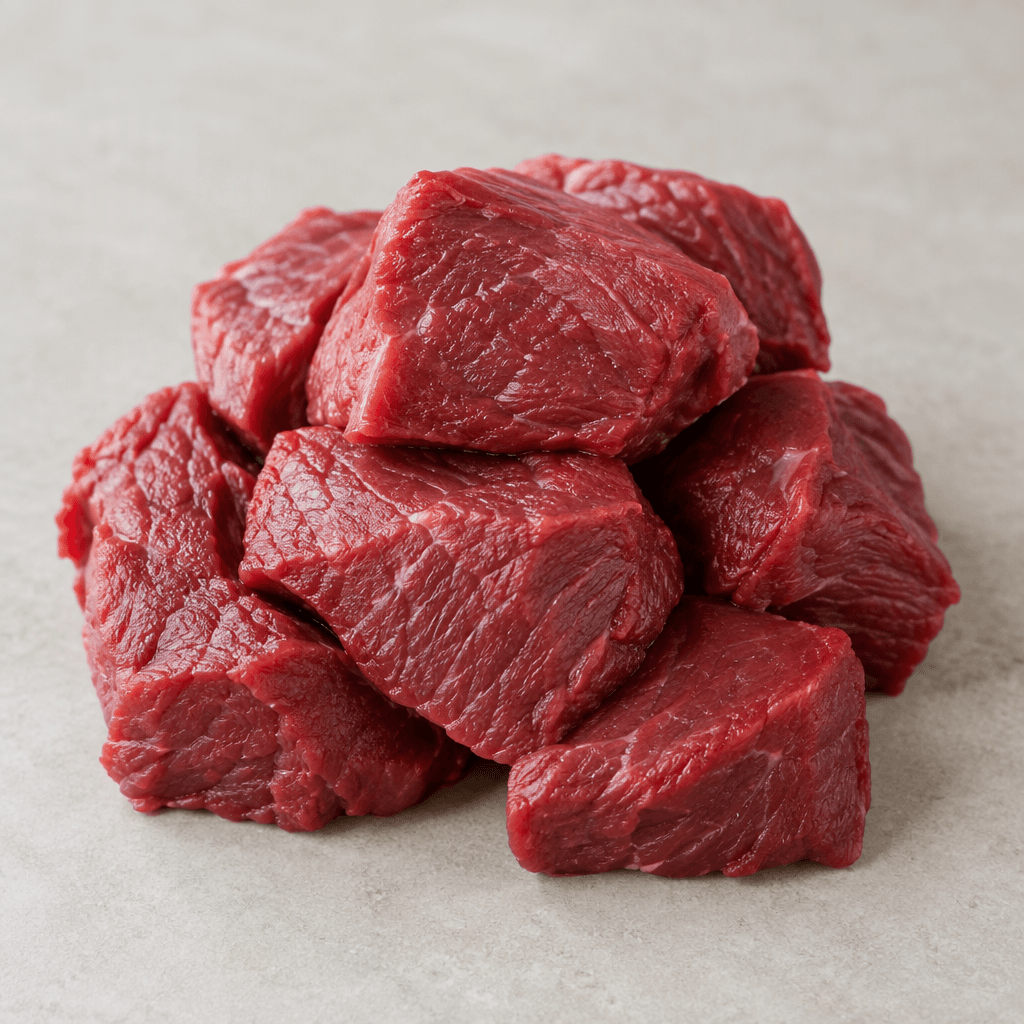
Low-fat beef Calories
Lean red meat, high in protein, low in fat
In season: Spring · Summer · Autumn · Winter
CALORIES
GI
POTASSIUM
FIBER
Quick answer
1 piece (medium) of Low-fat beef (120 g) has 170 calories. That works out to 142 calories per 100 g. It contains 0 g of carbs, 25.8 g of protein, 6 g of fat and 0 g of fiber. Its 2.8 µg of B12 covers 115% of the Daily Value. Its glycemic index is 0 (low), so it raises blood sugar slowly.
What is Low-fat beef?
Low-fat beef refers to beef with little visible or trimmed fat, rather than one specific cut. It is sold raw and can be sliced, cubed or minced for different meals. In its place of origin and in kitchens worldwide, it is commonly grilled, pan-seared, simmered in stews or shaped into burgers and meatballs. Pair it with vegetables, salad, potatoes or grains for a satisfying plate.
It is a protein-rich red meat with relatively little fat: per 100 g, it provides 21.5 g of protein and 5 g of fat. Lean cuts can dry out if cooked for too long, so use a quick, hot method or add them to a moist dish. Choose the cut and cooking method to suit your meal.
Low-fat beef Nutrition Facts
Selected: 100 g
142
KCAL / 100G
Carbs
0g
· 0% DV
Protein
21.5g
· 43% DV
Fat
5g
· 6% DV
Fiber
0g
· 0% DV
DV is the share of the daily value covered, on a 2,000 kcal reference diet.
Calories come from: Carbs 0% · Protein 66% · Fat 34%
Low-fat beef Vitamins & Minerals
Vitamins
B12
2.3µg · 96% DV
B3
4.9mg · 31% DV
B6
0.4mg · 24% DV
B2
0.18mg · 14% DV
Minerals
Zinc
5mg · 45% DV
Selenium
18µg · 33% DV
Phosphorus
180mg · 26% DV
Iron
3mg · 17% DV
How Nutritious Is Low-fat beef?
Nutrient density
High
How many vitamins, minerals and how much fiber this food carries per calorie. A high score means a lot of nutrition for few calories.
Satiety score
Medium
An EatBetter score computed from fiber, protein and calorie density. A high score means staying full longer on the same calories.
Both scores are calculated per 100 g and do not change with the selected portion. The satiety score is EatBetter's own calculation, not a clinical measure.
Low-fat beef Glycemic Index
GLYCEMIC INDEX
GLYCEMIC LOAD
Accounts for portion size — a more realistic measure than GI alone.
How to Burn Off Low-fat beef
To burn the 142 calories in 100 g:
🚶
Walking (5 km/h)
🏃
Running (8 km/h)
🚴
Cycling
🏊
Swimming
Times are calculated with the MET equation for a 70 kg adult. Actual burn varies with your weight, age and pace.
Is Low-fat beef Processed?
NOVA 1
Unprocessed
1. Unprocessed
2. Minimally Processed
3. Processed
4. Ultra-Processed
NOVA classifies foods into 4 groups by industrial processing. NOVA 1 (unprocessed) is the healthiest.
Does Low-fat beef Contain Allergens?
No known major allergens
Which Diets Is Low-fat beef Good For?
Vegan
— Not suitable
Vegetarian
— Not suitable
Gluten-Free
✓ Suitable
Dairy-Free
— Not suitable
Mediterranean
✓ Suitable
Paleo
✓ Suitable
Whole30
— Not suitable
DASH
— Not suitable
Keto
✓ Suitable
Low FODMAP
— Not suitable
Low-fat beef Fat Profile
SATURATED
2.1g
MONOUNSATURATED
2.2g
POLYUNSATURATED
0.2g
Omega 6:3 ratio 2.2:1
Below the ideal 4:1 — a good omega balance.
Compare Low-fat beef
Foods Similar to Low-fat beef
Frequently Asked Questions About Low-fat beef
Is low-fat beef good for you?
Yes, low-fat beef is a nutrient-dense source of protein, iron, and vitamin B12. Choose lean cuts, trim visible fat, and pair the meat with vegetables or whole grains for a balanced meal.
Which cuts are best for low-fat beef?
Tenderloin, top sirloin, eye of round, and top round are commonly lean choices. Ask the butcher for a trimmed cut, since visible fat and the exact leanness can vary even within the same cut.
How do you keep low-fat beef from drying out?
Cook low-fat beef only as long as needed, because it has less fat to keep it moist. Marinating tougher cuts and letting cooked meat rest before slicing also help preserve tenderness and juices.
How should you choose fresh low-fat beef?
Choose low-fat beef that is deep red, cool to the touch, and packaged without torn seals or excess liquid. A little variation in color can happen in sealed packaging, but sour odors or a sticky surface are reasons to avoid it.
How long does raw low-fat beef last in the fridge?
Raw low-fat beef generally keeps for 3–5 days in a refrigerator at 40°F (4°C) or below. Store it in a covered container on the lowest shelf to prevent juices from dripping onto other foods.
Can you freeze low-fat beef?
Yes, low-fat beef freezes well when wrapped tightly to limit air exposure. Divide it into meal-size portions before freezing, then thaw it in the refrigerator rather than on the counter.
Should you wash low-fat beef before cooking it?
No, do not rinse low-fat beef. Water can splash bacteria onto nearby surfaces; cook the meat directly and wash your hands, utensils, and work area after handling it.
What temperature should low-fat beef reach when cooked?
Whole cuts of low-fat beef should reach 145°F (63°C), followed by a 3-minute rest. Ground beef should reach 160°F (71°C), since grinding can spread bacteria through the meat.
Can low-fat beef be used for ground beef?
Yes, low-fat beef can be ground for burgers, meatballs, or sauces. Because lean mince has less fat, avoid overmixing and overcooking it; a small amount of moisture-rich ingredients can help keep patties tender.
Is low-fat beef good for stir-frying?
Yes, thinly sliced low-fat beef works well in a stir-fry. Slice across the grain, heat the pan before adding the meat, and cook in small batches so it browns instead of steaming.
Have another question about Low-fat beef?
Ask the AI nutrition coach — calories, portions, alternatives and more, answered in seconds in the app.

Scan calories with your camera
Instant AI nutrition analysis

Nutrition data compiled from USDA FoodData Central and scientific sources.