

Ready & Packaged Foods
All →Vegetables & Legumes
All →Desserts & Confectionery
All →Meat & Protein
All →Grains & Bakery
All →Beverages
All →Milk & Dairy
All →

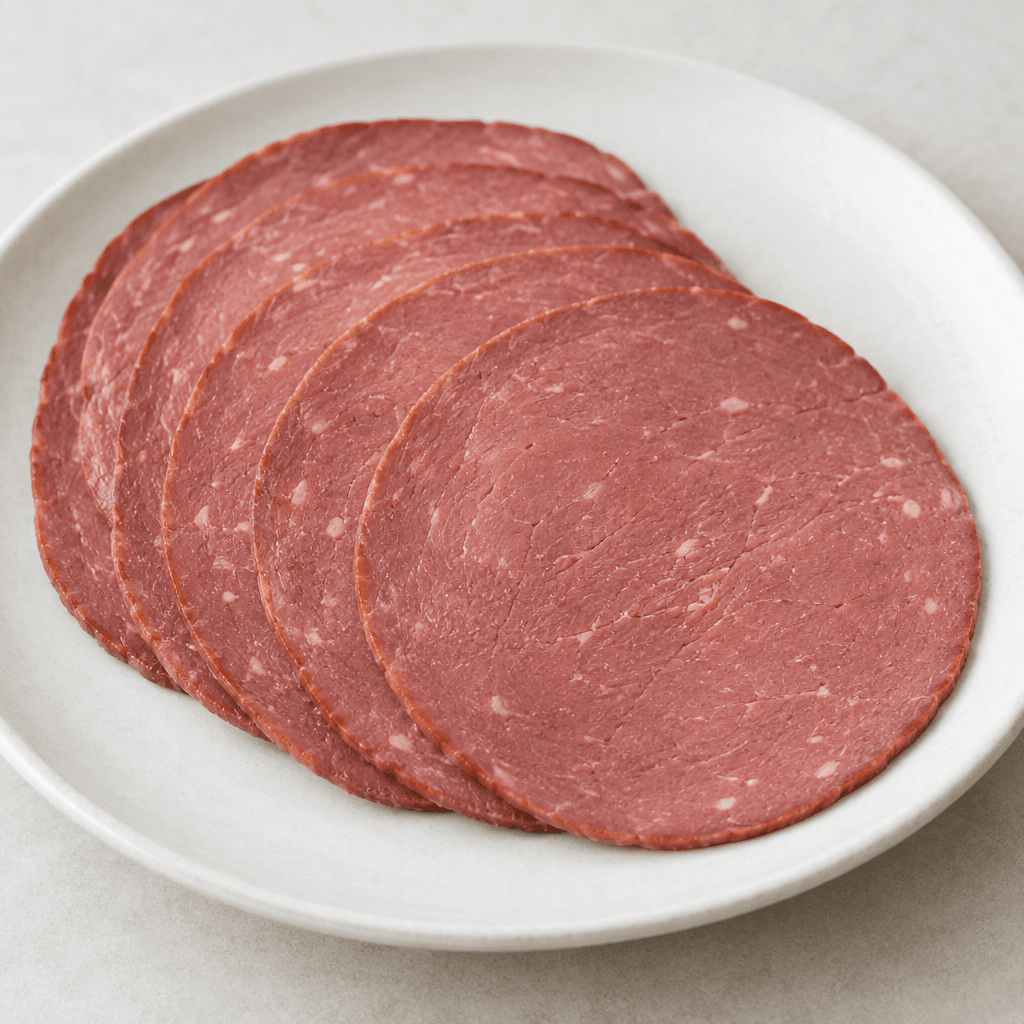
Beef ham Calories
Lean protein, processed beef, low fat
In season: Spring · Summer · Autumn · Winter
CALORIES
GI
POTASSIUM
FIBER
Quick answer
2 slice (medium) of Beef ham (40 g) has 48 calories. That works out to 120 calories per 100 g. It contains 0.5 g of carbs, 8.2 g of protein, 1.4 g of fat and 0 g of fiber. Its 0.8 µg of B12 covers 35% of the Daily Value. Its glycemic index is 0 (low), so it raises blood sugar slowly.
What is Beef ham?
Beef ham is a deli-style meat made from beef and sold in thin, ready-to-eat slices. Its compact, smooth texture and mild, savoury flavour make it easy to use without further preparation; the slices may have small flecks of fat.
It works well in sandwiches and toasties, or served cold alongside bread, salad or cheese. In Turkey, dana jambon is also used on breakfast plates; elsewhere, it can be added to a quick lunch or snack. It is protein-rich and relatively low in fat, with 20.5 g of protein per 100 g. Pair it with fresh vegetables for a lighter meal.
Beef ham Nutrition Facts
Selected: 100 g
120
KCAL / 100G
Carbs
1.2g
· 0% DV
Protein
20.5g
· 41% DV
Fat
3.5g
· 4% DV
Fiber
0g
· 0% DV
DV is the share of the daily value covered, on a 2,000 kcal reference diet.
Calories come from: Carbs 4% · Protein 69% · Fat 27%
Beef ham Vitamins & Minerals
Vitamins
B12
2.1µg · 88% DV
B3
4.3mg · 27% DV
B6
0.36mg · 21% DV
B5
0.8mg · 16% DV
Minerals
Sodium
950mg · 41% DV
Zinc
4mg · 36% DV
Phosphorus
180mg · 26% DV
Selenium
13µg · 24% DV
How Nutritious Is Beef ham?
Nutrient density
Medium
How many vitamins, minerals and how much fiber this food carries per calorie. A high score means a lot of nutrition for few calories.
Satiety score
Medium
An EatBetter score computed from fiber, protein and calorie density. A high score means staying full longer on the same calories.
Both scores are calculated per 100 g and do not change with the selected portion. The satiety score is EatBetter's own calculation, not a clinical measure.
Beef ham Glycemic Index
GLYCEMIC INDEX
GLYCEMIC LOAD
Accounts for portion size — a more realistic measure than GI alone.
How to Burn Off Beef ham
To burn the 120 calories in 100 g:
🚶
Walking (5 km/h)
🏃
Running (8 km/h)
🚴
Cycling
🏊
Swimming
Times are calculated with the MET equation for a 70 kg adult. Actual burn varies with your weight, age and pace.
Is Beef ham Processed?
NOVA 3
Processed
1. Unprocessed
2. Minimally Processed
3. Processed
4. Ultra-Processed
NOVA classifies foods into 4 groups by industrial processing. NOVA 1 (unprocessed) is the healthiest.
Does Beef ham Contain Allergens?
No known major allergens
Which Diets Is Beef ham Good For?
Vegan
— Not suitable
Vegetarian
— Not suitable
Gluten-Free
✓ Suitable
Dairy-Free
— Not suitable
Mediterranean
✓ Suitable
Paleo
✓ Suitable
Whole30
— Not suitable
DASH
— Not suitable
Keto
✓ Suitable
Low FODMAP
— Not suitable
Beef ham Fat Profile
SATURATED
1.4g
MONOUNSATURATED
1.2g
POLYUNSATURATED
0.3g
Omega 6:3 ratio 3:1
Below the ideal 4:1 — a good omega balance.
Compare Beef ham
Foods Similar to Beef ham
Frequently Asked Questions About Beef ham
What is beef ham, and how is it made?
Beef ham is a deli-style product made from beef that has been seasoned and processed, commonly by curing and cooking before it is sliced. Recipes vary by producer, so its texture, flavour and ingredients can differ between brands.
Is beef ham already cooked?
Usually, yes: beef ham sold as sliced deli meat is ready to eat, rather than raw beef. Check the package for handling instructions, especially if it is a specialty product, and keep opened slices refrigerated.
How is beef ham different from pork ham?
Beef ham is made from beef, while traditional ham is made from the hind leg of a pig. The meats have different flavours and textures, and beef ham is not simply pork ham with a different seasoning.
Can you eat beef ham without cooking it?
Yes, most sliced beef ham is ready to eat straight from the package. You can add it to a sandwich or serve it cold; cooking is optional unless the package specifically says the product needs further cooking.
How do you use beef ham in a sandwich?
Layer beef ham in bread with cheese, lettuce, tomato or mustard for a simple sandwich. It also works in a toasted sandwich; add moist ingredients just before eating so the bread is less likely to become soggy.
Can you fry beef ham?
Yes, beef ham can be warmed or lightly browned in a pan, although it is generally already cooked and does not need frying to be safe to eat. Use a dry pan and heat it briefly to avoid making the slices tough.
How long does beef ham last after opening?
Keep opened beef ham refrigerated in a sealed container or tightly wrapped, and follow the storage period on its package. Discard it if it develops an unpleasant smell, a slimy surface or an unusual change in colour.
Can beef ham be frozen?
Yes. Divide beef ham into portions, wrap it well or place it in an airtight freezer bag, and thaw it in the refrigerator when needed. Freezing can affect the texture, so thawed slices are often best used in cooked dishes or sandwiches.
Is beef ham healthy to eat?
Beef ham can provide protein, but it is still processed meat. Frequent consumption of processed meat is associated with a higher risk of colorectal cancer, so it is sensible to vary your protein choices rather than rely on beef ham every day.
Is beef ham the same as corned beef?
No. Beef ham is typically sold as formed or cured deli slices, while corned beef is beef cured in a seasoned brine and commonly sold as a whole cut or in a chopped, canned form. Their preparation, texture and uses differ.
Have another question about Beef ham?
Ask the AI nutrition coach — calories, portions, alternatives and more, answered in seconds in the app.

Scan calories with your camera
Instant AI nutrition analysis

Nutrition data compiled from USDA FoodData Central and scientific sources.