

Ready & Packaged Foods
All →Vegetables & Legumes
All →Desserts & Confectionery
All →Meat & Protein
All →Grains & Bakery
All →Beverages
All →Milk & Dairy
All →

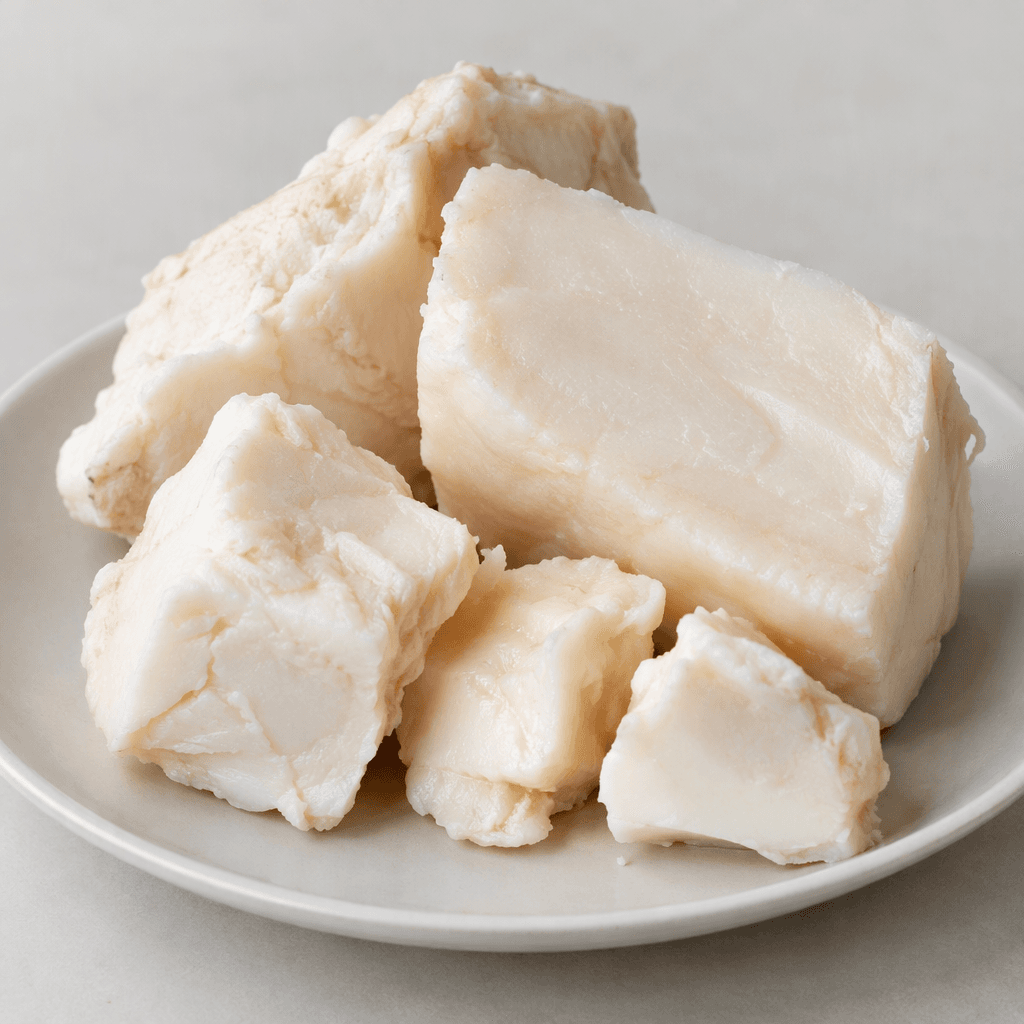
Beef Fat Calories
Animal fat, high energy, saturated fat
In season: Spring · Summer · Autumn · Winter
CALORIES
GI
POTASSIUM
FIBER
Quick answer
1 tablespoon (medium) of Beef Fat (12 g) has 108 calories. That works out to 897 calories per 100 g. It contains 0 g of carbs, 0 g of protein, 12 g of fat and 0 g of fiber. Its glycemic index is 0 (low), so it raises blood sugar slowly.
What is Beef Fat?
Beef Fat is the firm fat taken from around a cow’s internal organs. It can be chopped and cooked with, or slowly rendered into a cooking fat often known as beef tallow. In many food traditions it has been used for frying, roasting and enriching meat dishes; home cooks may also use a little to add depth to savoury pies or vegetables. Solid when cool and fluid when heated, it has a rich, distinctly savoury flavour that pairs naturally with beef and root vegetables.
It is almost entirely fat, so it is very energy-dense and contributes no protein or carbohydrate. Use it sparingly if you want its characteristic flavour without making a dish too rich; a small amount can also be blended with a more neutral cooking oil.
Beef Fat Nutrition Facts
Selected: 100 g
897
KCAL / 100G
Carbs
0g
· 0% DV
Protein
0g
· 0% DV
Fat
99.7g
· 128% DV
Fiber
0g
· 0% DV
DV is the share of the daily value covered, on a 2,000 kcal reference diet.
Calories come from: Carbs 0% · Protein 0% · Fat 100%
Beef Fat Vitamins & Minerals
Vitamins
Vitamin D
1.7µg · 9% DV
Vitamin A
39µg · 4% DV
B2
0.02mg · 2% DV
B1
0.01mg · 1% DV
Minerals
Sodium
18mg · 1% DV
Phosphorus
7mg · 1% DV
Calcium
1mg · 0% DV
Iron
0mg · 0% DV
How Nutritious Is Beef Fat?
Nutrient density
Low
How many vitamins, minerals and how much fiber this food carries per calorie. A high score means a lot of nutrition for few calories.
Satiety score
Low
An EatBetter score computed from fiber, protein and calorie density. A high score means staying full longer on the same calories.
Both scores are calculated per 100 g and do not change with the selected portion. The satiety score is EatBetter's own calculation, not a clinical measure.
Beef Fat Glycemic Index
GLYCEMIC INDEX
GLYCEMIC LOAD
Accounts for portion size — a more realistic measure than GI alone.
How to Burn Off Beef Fat
To burn the 897 calories in 100 g:
🚶
Walking (5 km/h)
🏃
Running (8 km/h)
🚴
Cycling
🏊
Swimming
Times are calculated with the MET equation for a 70 kg adult. Actual burn varies with your weight, age and pace.
Is Beef Fat Processed?
NOVA 2
Minimally Processed
1. Unprocessed
2. Minimally Processed
3. Processed
4. Ultra-Processed
NOVA classifies foods into 4 groups by industrial processing. NOVA 1 (unprocessed) is the healthiest.
Does Beef Fat Contain Allergens?
No known major allergens
Which Diets Is Beef Fat Good For?
Vegan
— Not suitable
Vegetarian
— Not suitable
Gluten-Free
✓ Suitable
Dairy-Free
— Not suitable
Mediterranean
— Not suitable
Paleo
✓ Suitable
Whole30
— Not suitable
DASH
— Not suitable
Keto
✓ Suitable
Low FODMAP
— Not suitable
Beef Fat Fat Profile
SATURATED
50g
MONOUNSATURATED
42g
POLYUNSATURATED
4g
Omega 6:3 ratio 5.7:1
Above the ideal 4:1 (5.7:1).
Compare Beef Fat
Foods Similar to Beef Fat
Frequently Asked Questions About Beef Fat
What is beef fat?
Beef fat is the fat trimmed from cattle, including the firm fat around the kidneys. Raw beef fat can be chopped and rendered; once melted and strained, it is commonly called beef tallow and can be used for cooking.
How do you render beef fat into tallow?
Cut beef fat into small pieces and warm it slowly in a heavy pan over low heat, stirring occasionally. Strain out the browned solids once the fat has melted, then pour the liquid into a clean, dry container. Avoid letting it smoke or burn.
Is beef fat the same as suet?
Not exactly. Suet is the firm fat around a cow’s kidneys, while beef fat can refer to fat from other parts of the animal too. Rendered suet and other rendered beef fat are both called tallow.
Can you fry food in beef fat?
Yes, rendered beef fat works for frying and gives food a savory flavor. Strain it well to remove bits that could burn, heat it without letting it smoke, and avoid repeatedly reusing fat that has darkened or developed an off smell.
What is beef fat used for in cooking?
Beef fat is used to roast or fry foods and to add richness to beef dishes, burgers, and some traditional recipes. Its distinct savory taste can be strong, so start with a small amount when substituting it for a neutral cooking fat.
How should you store beef fat?
Keep raw beef fat covered in the refrigerator if you plan to use it soon, or freeze it for longer storage. Store rendered beef fat in a clean, dry, airtight container in the refrigerator, and discard it if it smells sour or shows mold.
Can you freeze beef fat?
Yes, beef fat freezes well. Divide it into portions and wrap or seal them airtight so you can thaw only what you need. Thaw it in the refrigerator and do not refreeze it after thawing.
Does beef fat make lean ground beef juicier?
Yes, adding beef fat to lean ground beef can make cooked burgers or meatballs richer and less dry. Mix it evenly through the meat, and keep the mixture cold while preparing it so the fat does not soften or separate.
Is beef fat healthy to eat?
Beef fat is high in saturated fat, so using it often or in large amounts can make it harder to keep saturated fat intake in check. Use it sparingly, particularly if you have been advised to limit saturated fat for your heart health.
Can you substitute beef fat for butter or oil?
Sometimes, but beef fat is not a universal one-for-one substitute: it is solid when cool and adds a distinct savory taste. It works well for frying or roasting, but that flavor may not suit sweet baking or dishes that need a neutral oil.
Have another question about Beef Fat?
Ask the AI nutrition coach — calories, portions, alternatives and more, answered in seconds in the app.

Scan calories with your camera
Instant AI nutrition analysis

Nutrition data compiled from USDA FoodData Central and scientific sources.