

Ready & Packaged Foods
All →Vegetables & Legumes
All →Desserts & Confectionery
All →Meat & Protein
All →Grains & Bakery
All →Beverages
All →Milk & Dairy
All →

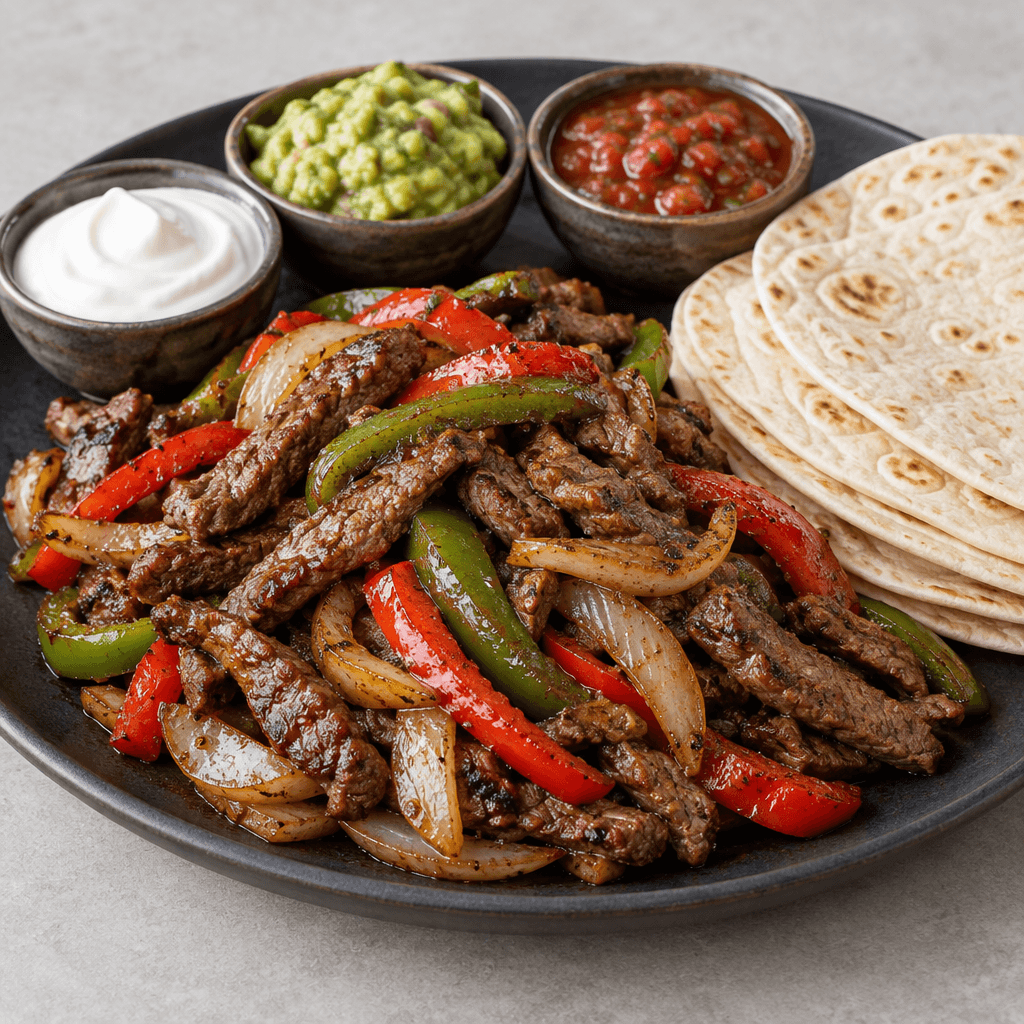
Beef Fajita Calories
Grilled beef strips with bell peppers and onions, served in a tortilla.
In season: Spring · Summer · Autumn · Winter
CALORIES
GI
POTASSIUM
FIBER
Quick answer
1 piece (medium) of Beef Fajita (180 g) has 306 calories. That works out to 170 calories per 100 g. It contains 21.6 g of carbs, 29.7 g of protein, 12.6 g of fat and 3.8 g of fiber. Its 2 µg of B12 covers 83% of the Daily Value. Its glycemic index is 55 (medium), so it raises blood sugar at a moderate pace.
What is Beef Fajita?
Beef fajita is a Tex-Mex favourite: strips of beef are cooked over high heat with bell peppers and onions, then served with warm flour tortillas. Salsa, guacamole and sour cream are common accompaniments, letting everyone build a wrap at the table.
The beef is savoury and often lightly charred, while the peppers bring sweetness and the onions turn soft and mellow. It works well as a casual shared dinner, with extra salad or beans on the side. The filling offers protein alongside vegetables; for a lighter plate, use a leaner cut, keep the cooking oil modest and add more peppers and onions. You can also serve the filling over greens instead of wrapping it in a tortilla.
Beef Fajita Nutrition Facts
Selected: 100 g
170
KCAL / 100G
Carbs
12g
· 4% DV
Protein
16.5g
· 33% DV
Fat
7g
· 9% DV
Fiber
2.1g
· 8% DV
DV is the share of the daily value covered, on a 2,000 kcal reference diet.
Calories come from: Carbs 27% · Protein 37% · Fat 36%
Beef Fajita Vitamins & Minerals
Vitamins
B12
1.1µg · 46% DV
B3
3.8mg · 24% DV
B5
0.7mg · 14% DV
Vitamin C
13mg · 14% DV
Minerals
Zinc
4mg · 36% DV
Phosphorus
155mg · 22% DV
Selenium
11µg · 20% DV
Sodium
340mg · 15% DV
How Nutritious Is Beef Fajita?
Nutrient density
Medium
How many vitamins, minerals and how much fiber this food carries per calorie. A high score means a lot of nutrition for few calories.
Satiety score
Medium
An EatBetter score computed from fiber, protein and calorie density. A high score means staying full longer on the same calories.
Both scores are calculated per 100 g and do not change with the selected portion. The satiety score is EatBetter's own calculation, not a clinical measure.
Beef Fajita Glycemic Index
GLYCEMIC INDEX
GLYCEMIC LOAD
Accounts for portion size — a more realistic measure than GI alone.
How to Burn Off Beef Fajita
To burn the 170 calories in 100 g:
🚶
Walking (5 km/h)
🏃
Running (8 km/h)
🚴
Cycling
🏊
Swimming
Times are calculated with the MET equation for a 70 kg adult. Actual burn varies with your weight, age and pace.
Is Beef Fajita Processed?
NOVA 2
Minimally Processed
1. Unprocessed
2. Minimally Processed
3. Processed
4. Ultra-Processed
NOVA classifies foods into 4 groups by industrial processing. NOVA 1 (unprocessed) is the healthiest.
Does Beef Fajita Contain Allergens?
Contains these allergens:
Which Diets Is Beef Fajita Good For?
Vegan
— Not suitable
Vegetarian
— Not suitable
Gluten-Free
— Not suitable
Dairy-Free
— Not suitable
Mediterranean
✓ Suitable
Paleo
— Not suitable
Whole30
— Not suitable
DASH
— Not suitable
Keto
— Not suitable
Low FODMAP
— Not suitable
Beef Fajita Fat Profile
SATURATED
2.4g
MONOUNSATURATED
2.8g
POLYUNSATURATED
0.4g
Omega 6:3 ratio 2.1:1
Below the ideal 4:1 — a good omega balance.
Compare Beef Fajita
Foods Similar to Beef Fajita
Frequently Asked Questions About Beef Fajita
What is a beef fajita?
A beef fajita is a Tex-Mex dish of seasoned beef strips, commonly cooked with peppers and onions and served with warm tortillas. Diners can fill and fold their own tortillas, adding toppings such as salsa, guacamole, or sour cream.
What cut of beef is best for beef fajitas?
Skirt steak is a classic choice for beef fajitas because it cooks quickly and has a pronounced beefy flavor. Flank steak or sirloin also works; whichever cut you choose, slice it thinly across the grain for a more tender bite.
How do you keep beef fajitas from being tough?
For tender beef fajitas, slice the beef across the grain, heat the pan or grill thoroughly, and cook the strips quickly. Avoid crowding the pan, which traps steam instead of searing the meat, and let the beef rest briefly before serving.
What seasoning goes in beef fajitas?
Beef fajita seasoning commonly includes cumin, chili powder, paprika, garlic, and black pepper; some blends also use oregano or cayenne. Lime juice adds brightness, while salt brings out the flavors. Use extra cayenne only if you want noticeable heat.
How are beef fajitas different from steak tacos?
Beef fajitas usually feature grilled or pan-seared beef strips with peppers and onions, often served separately from the tortillas. Steak tacos are already assembled in tortillas and may include other toppings. You can, of course, use fajita filling to make tacos.
How do you slice steak for beef fajitas?
Let the cooked steak rest, then identify the direction of its long muscle fibers and cut across them into thin strips. Slicing against the grain shortens the fibers, making beef fajitas easier to chew; cutting with the grain can leave them stringy.
Should you marinate beef for beef fajitas?
Marinating beef for beef fajitas is optional, but a short marinade with oil, lime juice, garlic, and spices adds flavor. Avoid leaving the meat in an acidic marinade for too long, as the surface can turn soft or mushy.
What is the best way to cook beef fajitas in a skillet?
Cook beef fajitas in a very hot, preferably heavy skillet so the meat and vegetables brown instead of steaming. Sear the beef in batches, set it aside, then cook the peppers and onions before combining everything briefly to serve.
Can you freeze cooked beef fajitas?
Yes, cooked beef fajita filling can be frozen in an airtight container once it has cooled. Freeze the beef, peppers, and onions without tortillas or fresh toppings; thaw it in the refrigerator and reheat it until steaming hot.
What should you serve with beef fajitas?
Serve beef fajitas with warm flour or corn tortillas and toppings such as salsa, guacamole, and sour cream. Rice, beans, or a simple salad make useful sides. Keeping wet toppings separate helps prevent the tortillas from becoming soggy.
Have another question about Beef Fajita?
Ask the AI nutrition coach — calories, portions, alternatives and more, answered in seconds in the app.

Scan calories with your camera
Instant AI nutrition analysis

Nutrition data compiled from USDA FoodData Central and scientific sources.