

Ready & Packaged Foods
All →Vegetables & Legumes
All →Desserts & Confectionery
All →Meat & Protein
All →Grains & Bakery
All →Beverages
All →Milk & Dairy
All →

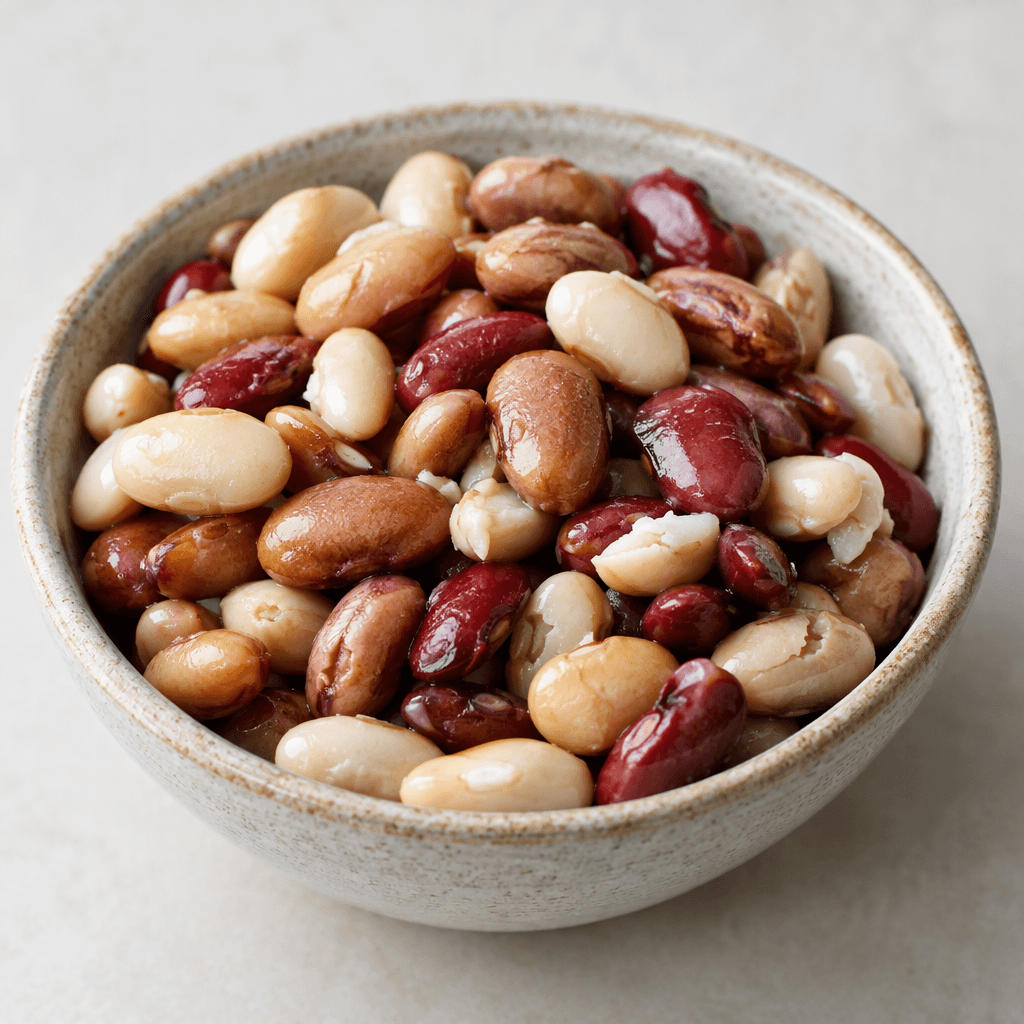
Beans Calories
Plant-based protein, fiber, vitamin and mineral source
In season: Spring · Summer · Autumn · Winter
CALORIES
GI
POTASSIUM
FIBER
Quick answer
1 cup (medium) of Beans (170 g) has 216 calories. That works out to 127 calories per 100 g. It contains 38.8 g of carbs, 14.8 g of protein, 0.9 g of fat and 12.6 g of fiber. Its 221 µg of Folate covers 55% of the Daily Value. Its glycemic index is 28 (low), so it raises blood sugar slowly.
What is Beans?
Beans are the edible seeds of legume plants, with varieties ranging from white and cream to red and mottled. Once cooked, they become tender and creamy inside, and are used in dishes around the world—from stews and soups to salads and spreads.
In many English-speaking kitchens, beans are served in chilli, baked dishes, or as a simple side; elsewhere, they may be simmered with local spices or added to rice. They provide plant-based protein and fibre, with 7.4 g of fibre per 100 g. For a filling meal, pair them with grains and vegetables; if using dried beans, cook until fully tender.
Beans Nutrition Facts
Selected: 100 g
127
KCAL / 100G
Carbs
22.8g
· 8% DV
Protein
8.7g
· 17% DV
Fat
0.5g
· 1% DV
Fiber
7.4g
· 26% DV
DV is the share of the daily value covered, on a 2,000 kcal reference diet.
Calories come from: Carbs 70% · Protein 27% · Fat 3%
Beans Vitamins & Minerals
Vitamins
Folate
130µg · 33% DV
B1
0.21mg · 18% DV
B6
0.13mg · 8% DV
Biotin
2.5µg · 8% DV
Minerals
Phosphorus
140mg · 20% DV
Potassium ⭐
405mg · 12% DV
Iron
2mg · 11% DV
Magnesium
43mg · 10% DV
How Nutritious Is Beans?
Nutrient density
High
How many vitamins, minerals and how much fiber this food carries per calorie. A high score means a lot of nutrition for few calories.
Satiety score
High
An EatBetter score computed from fiber, protein and calorie density. A high score means staying full longer on the same calories.
Both scores are calculated per 100 g and do not change with the selected portion. The satiety score is EatBetter's own calculation, not a clinical measure.
Beans Glycemic Index
GLYCEMIC INDEX
GLYCEMIC LOAD
Accounts for portion size — a more realistic measure than GI alone.
How to Burn Off Beans
To burn the 127 calories in 100 g:
🚶
Walking (5 km/h)
🏃
Running (8 km/h)
🚴
Cycling
🏊
Swimming
Times are calculated with the MET equation for a 70 kg adult. Actual burn varies with your weight, age and pace.
Is Beans Processed?
NOVA 1
Unprocessed
1. Unprocessed
2. Minimally Processed
3. Processed
4. Ultra-Processed
NOVA classifies foods into 4 groups by industrial processing. NOVA 1 (unprocessed) is the healthiest.
Does Beans Contain Allergens?
No known major allergens
Which Diets Is Beans Good For?
Vegan
✓ Suitable
Vegetarian
✓ Suitable
Gluten-Free
✓ Suitable
Dairy-Free
— Not suitable
Mediterranean
✓ Suitable
Paleo
✓ Suitable
Whole30
— Not suitable
DASH
— Not suitable
Keto
— Not suitable
Low FODMAP
— Not suitable
Beans Fat Profile
SATURATED
0.12g
MONOUNSATURATED
0.04g
POLYUNSATURATED
0.21g
Omega 6:3 ratio 3.6:1
Below the ideal 4:1 — a good omega balance.
Compare Beans
Foods Similar to Beans
Frequently Asked Questions About Beans
Are beans good for you?
Yes, beans are a nutritious staple, providing plant protein and fiber along with useful vitamins and minerals. Including them in meals can add substance and variety; rinse canned beans if you want to remove some of their added salt.
Do beans cause gas?
Yes, beans can cause gas because gut bacteria ferment certain carbohydrates in them. Soaking dried beans, discarding the soaking water, rinsing them, and increasing portions gradually may make them easier to tolerate.
Do beans need to be soaked before cooking?
No, most dried beans do not have to be soaked, but soaking usually shortens cooking and helps them cook more evenly. Drain and rinse the soaking water before cooking; always cook beans until fully tender.
How do you cook dried beans?
Rinse dried beans, remove any debris, and simmer them in fresh water until tender. Soaking first can shorten cooking time; add acidic ingredients such as tomatoes after the beans soften, since they can slow softening.
Are canned beans as healthy as dried beans?
Yes, canned beans can be a nutritious choice, and they are already cooked and convenient. Dried beans let you control the seasoning and texture; draining and rinsing canned beans can reduce some of their sodium.
Can you eat beans raw?
No, do not eat dried beans raw or undercooked. Some varieties, especially red kidney beans, contain natural toxins that are reduced by proper cooking; soak them if desired, then boil and cook them thoroughly.
Are beans a complete protein?
Most beans are not considered complete proteins because they are low in some essential amino acids. Eating beans with grains such as rice or bread during the day provides a wider mix; they do not have to be combined in the same meal.
Are beans good for people with diabetes?
Yes, beans can fit into a diabetes-friendly meal because their fiber and protein contribute to a filling meal, though they also contain carbohydrates. Pair the portion with your overall meal plan and follow any individualized guidance you have.
How long do cooked beans last in the fridge?
Cooked beans generally keep for 3–4 days in a covered container in the refrigerator. Refrigerate them promptly rather than leaving them at room temperature, and discard them if their smell or appearance changes.
Can you freeze cooked beans?
Yes, cooked beans freeze well. Cool them, portion them into airtight containers, and include a little cooking liquid to help preserve their texture; thaw them in the refrigerator or reheat them from frozen.
Have another question about Beans?
Ask the AI nutrition coach — calories, portions, alternatives and more, answered in seconds in the app.

Scan calories with your camera
Instant AI nutrition analysis

Nutrition data compiled from USDA FoodData Central and scientific sources.